Garlic harvest differences often begin with the clove. Mixed clove size, uneven depth, and a compact or wet bed create plants that mature on different schedules, making curing and storage harder to manage as a single crop.
Sort planting cloves before they enter the field
Use sound cloves with a reasonably consistent size within each planting block. Mixing very small and large cloves makes stand strength and bulb timing harder to interpret later.
Set aside a sample from each lot. Soft tissue, damaged basal plates, or obvious size extremes should not be hidden in the main planting row.
Plant at a depth the soil can hold
Cloves need protection from surface swings while still being able to emerge evenly. The right depth depends on soil and weather, but inconsistency is more damaging than a small adjustment from the ideal.
Dig behind the planter in several soil zones. Check that cloves are upright enough and covered by similar soil depth, not sitting in loose pockets.
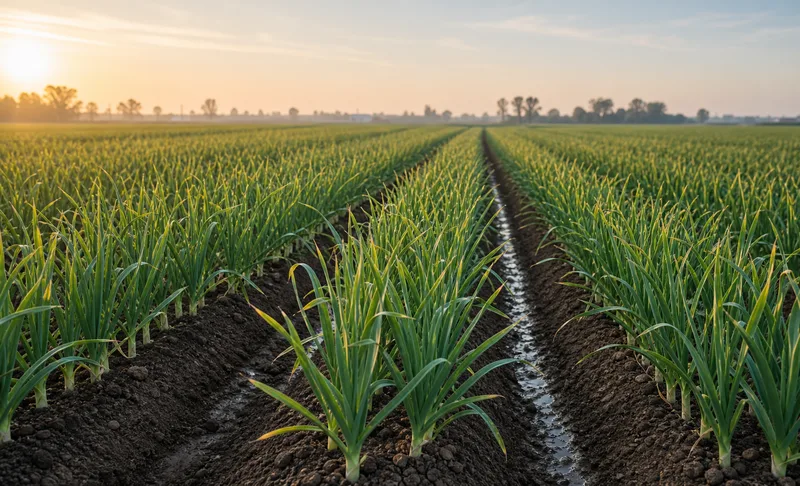
Keep the lower profile aerated through bulb formation
Garlic roots need moisture without long periods of saturation. A surface that looks dry can still sit above an airless layer, especially in compacted or poorly drained ground.
Push a narrow probe beside several plants. Soil should crumble rather than smear, and water should not collect around the lower roots after irrigation.
Cure only bulbs that have reached a usable finish
Curing is part of quality, not an afterthought. Harvest timing, gentle lifting, ventilation, and avoiding unnecessary handling determine whether bulbs enter storage dry and intact.
Lift a few bulbs from different field areas. Compare wrapper condition, neck dryness, and bulb firmness before choosing the main harvest pass.
For root-zone water timing, see the garlic water-timing guide. The final handling process is in the garlic curing and storage guide.
A uniform garlic crop is easier to cure and store because it began with uniform planting material and a root zone that stayed workable.