Garlic often gets treated as if more spring water simply means faster growth. The better question is whether water timing matches the stage of the crop. Green-up, scape growth, bulb bulking, and pre-harvest dry-down each ask for a different rhythm. Water too early or too heavily, and the root zone can stay cold and tight. Let the crop run dry at the wrong time, and leaves may fade before the bulbs finish sizing.
This article follows the broader garlic growing guide on clove size, planting depth, and even stands. Here the focus is narrower: spring water timing, feeding around green-up, moisture during scape growth, and the transition into bulb maturity.
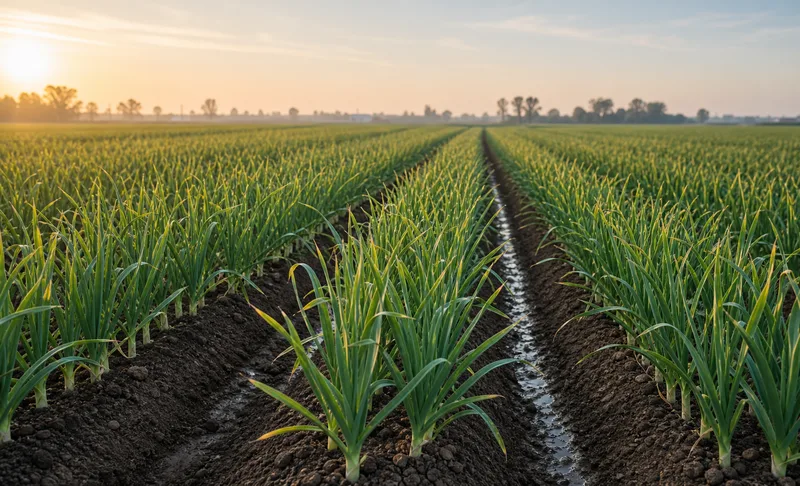
Green-up water should follow soil warmth and plant condition
When garlic begins spring green-up, leaves shift from dull or yellowing growth toward active green growth, and roots start working again. Moisture matters here, but the timing should not be based only on the calendar. If soil is still cold and already moist, heavy irrigation can slow recovery. If the bed is dry, hard, and the plants are weak, timely water helps the roots restart.
Before watering, check leaf posture, bed firmness, moisture just below the surface, and the weather ahead. The goal at this stage is not to force lush top growth. It is to reconnect roots, leaves, and the coming scape stage without creating a cold, wet root zone.
Feed with water, but do not make nitrogen the whole plan
Spring feeding often works best when it moves with water into the active root zone. The risk is treating pale leaves as a reason to push nitrogen every time. Nitrogen can help leaf recovery, but garlic still has to move through scape growth, bulb bulking, skin maturity, and curing. Overly strong top growth can make the timing harder to read later.
A steadier approach is to look at the base fertility, stand uniformity, and plant vigor first. A strong, even stand usually does not need to be pushed aggressively at green-up. A weaker stand may need a modest feed with irrigation. The late-season logic is similar to onion moisture and curing management: support growth early, then help the crop finish cleanly.
The scape stage is when moisture gaps show quickly
Around scape emergence, garlic leaves are largely built, and both the scape and the bulb draw on the plant’s supply. If this stage turns dry, scape quality and later bulb sizing can suffer. If the bed stays wet and airless, roots can weaken. The point is steady moisture, not constant wetness.
Walk the rows and look for scape tips, leaf function, and whether furrows can drain after watering or rain. Low spots should not stay wet for long. This is close to the logic in potato ridge and moisture checks during tuber bulking: underground yield needs water, but the root zone still has to breathe.
After scape harvest, bulb bulking is still active
Scape harvest is not the end of garlic management. In many crops, the period after scape removal is when bulbs add important weight. If leaves are still functional, steady moisture and measured feeding can help the bulb finish. If the field is allowed to dry too hard right after scape harvest, leaves may decline before that transfer is complete.
Scape harvest should also avoid unnecessary damage to leaves and the false stem. Those leaves still feed the bulb. After harvest, avoid sudden swings between dry soil and heavy water. Keep the bed consistent while bulbs size, then begin easing the crop toward maturity.
Pre-harvest dry-down protects skins and storage quality
Reducing water before harvest is not about stressing garlic suddenly. It is about letting the outer skins, neck area, and bulb maturity settle before lifting. If the field is still being watered heavily close to harvest, soil can stay wet and heavy, making lifting, curing, and sorting harder. If water is stopped too early, bulbs may not have finished sizing.
The better check is a sample: bulb size, wrapper development, natural leaf yellowing, and the weather forecast. The crop needs to move from “support bulking” to “prepare for curing.” When that transition is gradual, lifting, drying, seed selection, and storage sorting become much easier.