Radish is quick, which is exactly why mistakes are hard to hide. A rough seedbed, a dense row, or a delayed harvest can turn a short crop into uneven roots before there is time for a broad correction.
Prepare a fine, drainable seedbed
Radish roots respond directly to stones, clods, compaction, and uneven moisture near the surface. The bed should be loose enough for a straight root but firm enough to hold a consistent sowing depth.
Run your hand through the top few centimeters. Large clods, hard layers, or standing water in one section will show up later as irregular roots.
Sow smaller batches for a usable harvest window
Successive sowing spreads work and avoids a single large patch becoming overmature at once. Batch size should match how much can be harvested, washed, and used in a few days.
Label each sowing date and compare emergence. A simple record helps separate a seed issue from a weather or bed-condition issue.
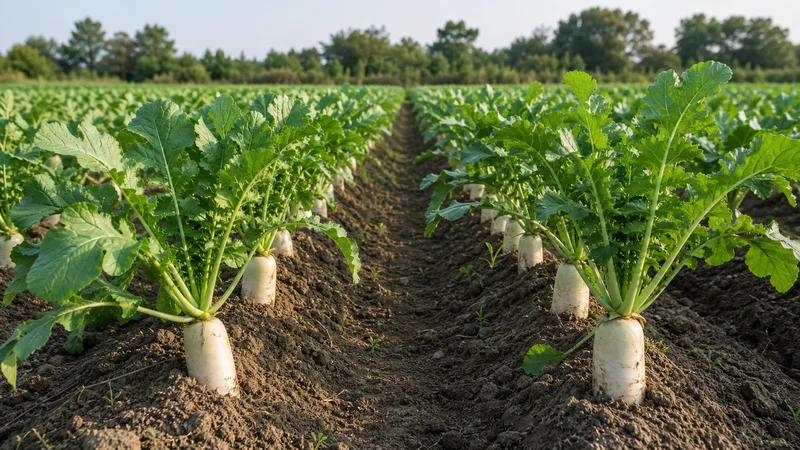
Thin before roots begin competing
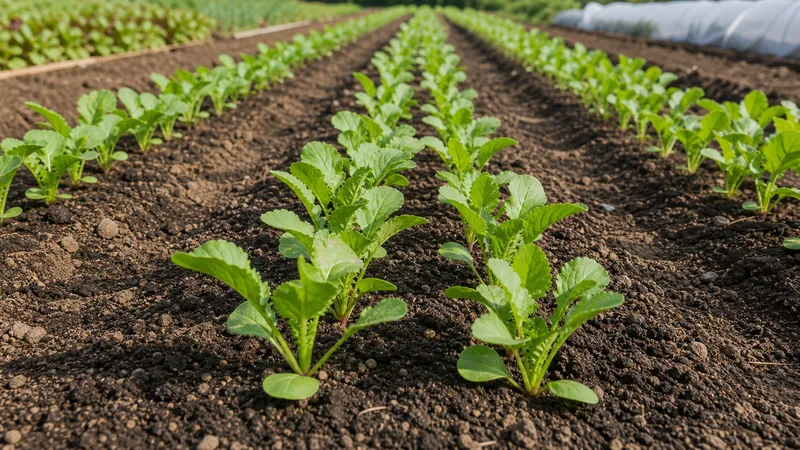
Crowded seedlings may look harmless at first, but they quickly create roots that cannot expand evenly. Thinning is easiest while plants are small and the intended spacing can still be seen.
Check a short row from above. Seedlings should have visible space to develop rather than forming a continuous green band.
Harvest by root condition, not only days listed
Weather and soil change the crop speed. Pull test roots regularly and harvest when size, shape, and texture meet the intended use, before the batch becomes coarse or hollow.
Slice roots from the earliest and latest part of the bed. Differences in texture or pithiness help decide whether the batch needs a faster harvest pass.
The bulking-stage details are in the radish thinning guide. Warm-season emergence is handled separately in the summer radish guide.
Radish rewards small, repeatable decisions. A clean bed and staggered sowing create a harvest rhythm that is easier to keep than a large emergency harvest.