Sweet potatoes are not finished when they come out of the ridge. Scraped skin, damp soil, rough handling, curing conditions, and the first storage decision can all change how long the roots keep. Many losses begin in the first few days after harvest, before storage looks like a problem.
For the field stage before digging, start with the sweet potato bulking and harvest-readiness guide. This article begins after the roots are lifted: how to separate damaged roots, steady the skin, and avoid carrying harvest problems into storage.
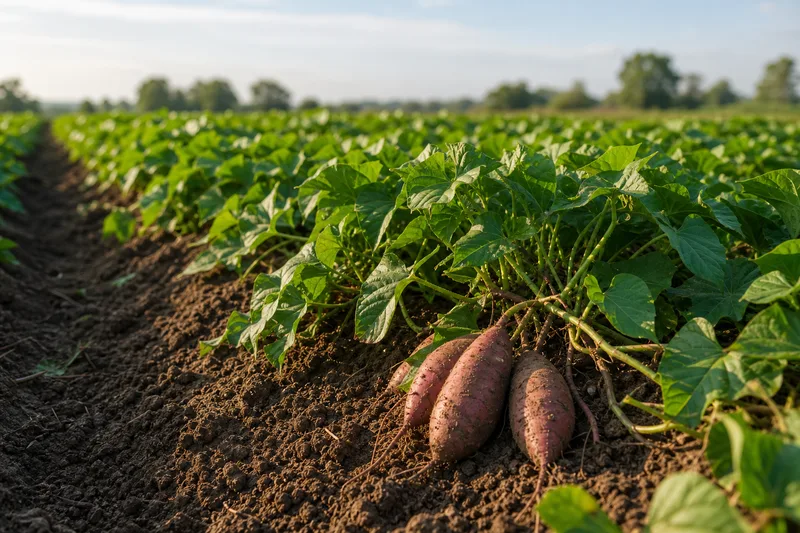
Separate damaged roots on harvest day
Sweet potato skin is easy to injure. Digging tools, hard soil, rough crates, and high piles can leave small scrapes that are easy to miss. Those wounds may not look serious at first, but they should not be stored with the best roots.
The first sorting pass should pull out cut, bruised, cracked, chilled, or water-soaked roots. They can still be useful for quick use, processing, or short holding, but they should not set the condition for the whole storage batch.
Curing is gentle drying, not harsh sun
After harvest, sweet potatoes need a short period for the surface to steady. Good curing helps the skin become less fragile, lets field moisture ease off, and reduces the chance of new handling damage. It should not mean long exposure to harsh sun or cold wind.
A practical setup is protected from rain, well ventilated, and not exposed to sharp temperature swings. If roots were lifted from wet soil, remove wet clods and let the surface dry gradually. If nights are turning cold, do not leave the crop exposed just because the daytime harvest looked fine.
Storage starts with temperature and airflow
Sweet potatoes are sensitive to cold. Chilling injury may not show immediately, but it can reduce eating quality and increase later storage loss. Before roots are held, temperature risk should be considered along with airflow and pile size.
Storage should not be treated as sealing the crop away. If roots are packed too tightly, moisture and heat can collect inside the pile. Leave room for air movement, keep roots off damp surfaces when possible, and avoid mixing newly wet or damaged roots into a stable batch.
Keep sound roots, damaged roots, and seed roots apart
Sorting is not just cosmetic. Very different root sizes lose moisture differently. Damaged roots can weaken a batch. Roots saved for planting material or observation should not be mixed with roots intended for immediate eating.
The same postharvest logic appears in garlic curing and storage checks: the best storage group is the one with stable skin, limited damage, and similar maturity. The rest still has value, but it should move through the kitchen or market sooner.
Storage losses point back to the field
If one batch of sweet potatoes breaks down quickly, the storage room may not be the only cause. Wet soil before harvest, rough digging, uneven root maturity, or cold exposure between field and storage can all show up later as storage loss.
Those notes should feed back into the main sweet potato growing guide. Postharvest handling is the last step in the season, but it also tells you which field zones, ridge conditions, and harvest windows were actually reliable.