The day after heavy rain is a poor time to decide that a corn field has either recovered or failed. Water can still be moving below the surface, a few rows may look worse than the rest, and plants that lean in the morning can look different once the ground firms and the leaves dry. A useful first walk is about separating those conditions rather than reacting to the most dramatic patch.
Start at a safe field edge and look along the rows before stepping into them. You are trying to see a pattern: where water is still visible, where the soil has opened enough to carry weight, where plants are only leaning, and where a row has been pressed flat or cut off by a wet low point. That picture is more useful than a quick count from the gate.
Make a map of water before you touch the plants
Walk the higher ground first, then compare it with the low spots and any place where a wheel track, residue line, or shallow furrow changes how water moves. A field can look uniformly wet from a distance while only a few areas are holding water for longer. Mark those areas in a simple way: clear, slow to drain, and still carrying visible water.
This is also the moment to avoid compaction from unnecessary passes. If a row is soft enough that each step changes the surface, the field may be giving you information without inviting more work. Return to the same zone when it has had time to drain instead of trying to solve every wet place during the first visit.
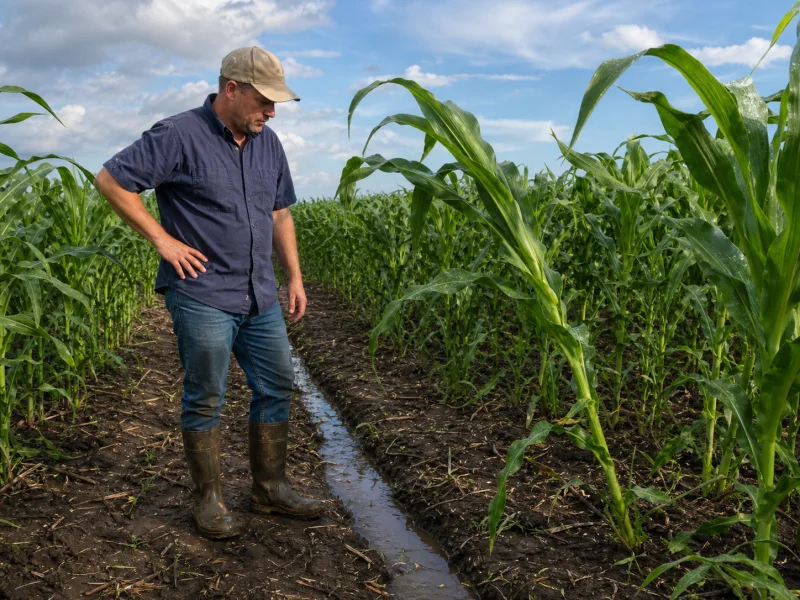
Tell a lean from a plant that needs closer attention
Rain and wind can leave corn at several angles. A plant that is simply leaning but remains rooted in place is not the same as one lying flat, buried in soil, or separated from its base. Look along a short run of plants rather than judging one stalk. Are they leaning in one direction with the row still intact, or does the problem collect in a low patch where water and soft soil met the crop together?
Do not rush to straighten every inclined plant. Handling a plant while the soil is loose can disturb roots that are already beginning to recover. A better field note records the kind of lean, the location, and whether the plant is still able to lift its leaves toward the light. That makes the next observation more meaningful than an immediate cosmetic fix.
Choose the second visit before you leave
The value of a post-rain walk comes from returning after a real change: drainage has progressed, the surface is firmer, or the crop has had a day or two of drying weather. Visit the same edge, middle, and low areas again. Check whether the water map has shrunk, whether leaning plants are changing their posture, and whether one zone is still lagging behind the rest.
Corn fields rarely recover in a perfectly even line after a storm. The practical goal is to know which difference is temporary and which deserves follow-up. A calm second look keeps a wet-weather decision connected to what the field is actually showing.