Corn fields are often judged by their tallest plants, but yield and harvest timing are shaped by the middle of the stand. Uneven emergence creates plants that compete at different stages for the rest of the season.
Prepare a seed zone with consistent depth
Corn seed needs firm contact and a depth that is consistent across the field, not merely a worked-looking surface. Residue, clods, and changing soil moisture can turn one planting pass into several crop stages.
Dig behind the planter in several zones. Seed depth and soil contact should be similar in the wheel tracks, field center, and lighter edges.
Count plants by stage, not just by total
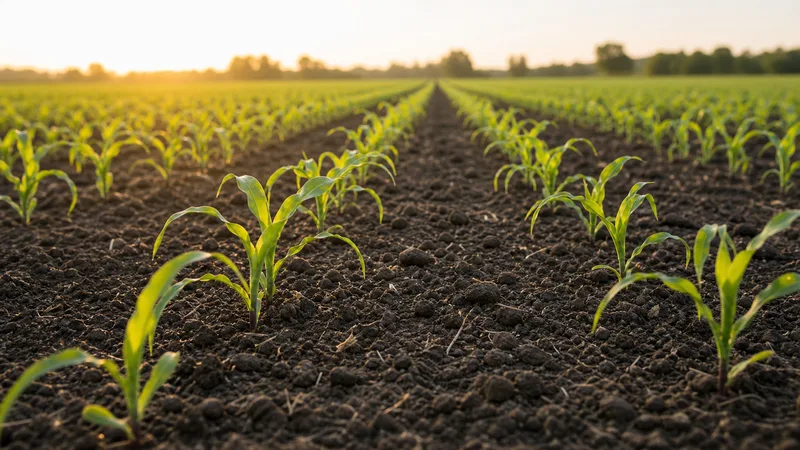
A stand count that ignores late plants can look acceptable while hiding uneven competition. Record how many plants have emerged and how many are one leaf stage behind the main group.
Mark a short row segment and note the stage of every plant. A few delayed plants matter less than a repeating pattern across the field.
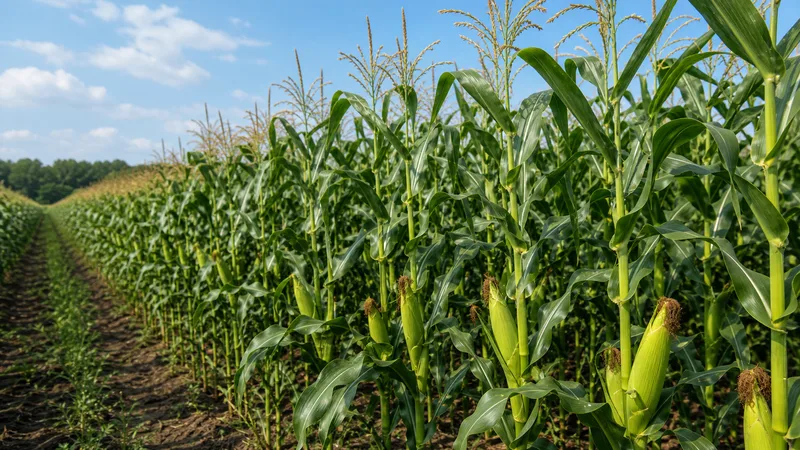
Protect the field edge from becoming the weak edge
Compaction, changing moisture, and variable planting depth often show first at turns and margins. These areas deserve their own checks instead of being averaged into a whole-field impression.
Compare a field edge with an interior row. If leaf color or plant height changes at the same location in multiple passes, inspect soil and traffic history there.
Plan harvest around uniformity and end use
Silage, grain, and fresh-market corn use different maturity signals, but all benefit from a stand that reaches its target together. Separate unusual patches instead of letting them dictate the whole field schedule.
Before harvest, sample ears from both the strongest and weakest zones. If maturity differs widely, plan the operation around the main crop and record the cause of the outlier area.
Water and nitrogen decisions after establishment are covered in the corn water-and-nitrogen guide. For the final field pass, see the corn harvest-timing guide.
The useful corn field is not the one with a few exceptional plants. It is the one whose plants can be managed, fed, and harvested as a coherent stand.