When grapes begin to color, a few clusters usually stand out first. They may be on the outer canopy, near the end of a row, or on a vine carrying a lighter load. Those clusters are useful signals, but they should not decide the harvest date for the whole block.
This article is not another general grape growing guide. It focuses on the period after veraison, when the grower has to decide which part of the vineyard is ready, which part needs more time, and how to avoid mixing fruit that should have been picked separately.
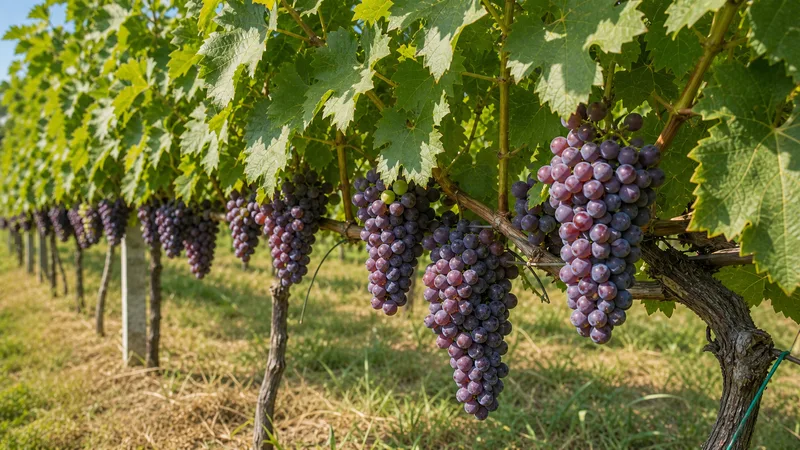
Do not sample only the outside clusters
The easiest mistake is to walk the sunny side of the row and judge from the best-looking fruit. Outer clusters, row ends, and lighter-cropped vines can mature ahead of shaded or heavier sections. If those samples lead the decision, harvest often begins too early for the average fruit.
A stronger sampling routine separates the vineyard into practical zones: open canopy, shaded canopy, heavier crop load, lighter crop load, and rows with different soil moisture. Checking several clusters from each zone gives a clearer picture of whether the block is truly moving together.
Color is a signal, not the whole decision
Color matters, but it is not enough. After veraison, berry feel, skin firmness, cluster looseness, stem condition, and flavor development all need to be read together. A cluster can look good while the berries still feel hard or the flavor still feels thin.
The opposite can also happen. Some clusters may not have the deepest color but are already close to the right eating texture. That is why harvest timing should be based on zones and samples, not a single visual threshold.
Canopy differences show up at harvest
Earlier shoot spacing, cluster load, and light management become very visible near harvest. Open canopy areas usually mature more evenly. Dense or crowded areas often need longer, and their fruit may be harder to sample accurately.
This is where the earlier grape cluster load and canopy guide connects with harvest. The point of balancing clusters is not only better fruit growth in midseason. It also makes the final sampling and picking plan easier to read.
Several harvest passes can protect quality
If maturity is uneven, one full harvest can mix early fruit, ready fruit, and fruit that needed more time. A planned first pass can remove the clearly ready clusters while leaving slower sections on the vine to finish.
Those passes need order. Marking zones before picking is better than asking a crew to follow color alone. Fruit from different passes should also be handled separately, so sorting does not become confused after the bins leave the row.
Near harvest, keep the clusters readable
Late management should avoid sudden swings. Sharp water changes, abrupt canopy removal, or waiting too long can make clusters harder to interpret and harder to handle. The goal is not to push new growth; it is to keep the fruit stable enough to sample and sort well.
The same principle applies in other fruit crops. In the kiwifruit firmness and harvest guide, harvest is treated as a window, not a single perfect-looking moment. Grapes benefit from the same kind of disciplined sampling before the picking decision is made.