Kiwifruit harvest can feel counterintuitive because the fruit usually should not be picked when it is soft enough to eat. A vine can carry firm fruit that is already mature enough for postharvest ripening, while another block can look full but still produce fruit that stores poorly and never develops a satisfying flavor.
This article focuses on the harvest window and the first handling decisions after picking. For establishment, trellis layout, and annual vine structure, start with the kiwifruit growing guide. For cane renewal and keeping the canopy readable before harvest, the kiwifruit pruning guide is the closer companion.
Firm fruit can still be harvest-ready
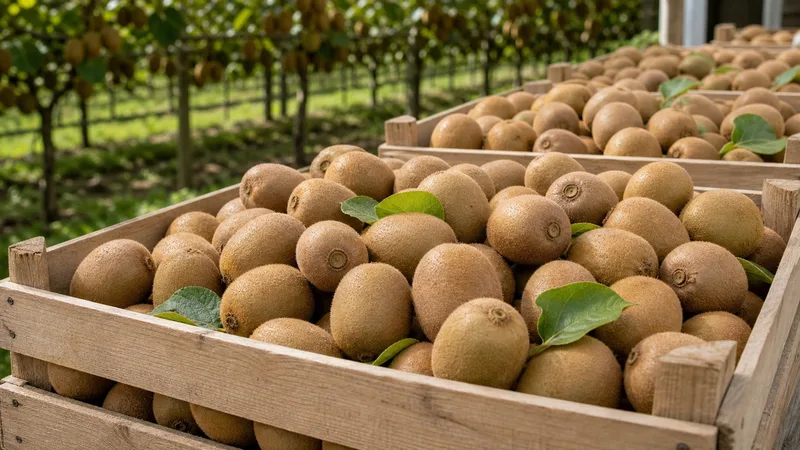
The key distinction is harvest maturity versus eating ripeness. Eating ripeness comes later, after the fruit has softened. Harvest maturity is judged while the fruit is still firm, using field sampling, fruit size, internal development, and the consistency of fruit from different parts of the vine.
If the fruit is picked too early, it may soften unevenly and taste flat after storage. If it is left too long, bruising, soft spots, and storage loss become easier to trigger. The best harvest window sits between those two problems, not at the moment when the fruit already feels ready for the table.
Sample from the canopy, not only from the easiest fruit
A useful harvest check should include fruit from sunny edges, shaded interior areas, heavy clusters, lighter vines, and parts of the block that grew differently during the season. The first fruit a picker reaches may not represent the crop.
Look for consistency in size, firmness, skin condition, and the general feel of the fruit. When one side of the canopy is clearly behind the rest, a single picking pass can mix mature and immature fruit in the same container. That makes ripening and storage harder to manage later.
Uneven vines need staged picking
Staged picking is slower, but it can protect quality when maturity is uneven. Picking the most ready zones first lets the weaker or shaded zones stay on the vine longer without forcing the whole block into one average decision.
This is where canopy management before harvest matters. A vine that has been kept open is easier to sample, and fruit distribution is easier to read. The same principle shows up in other trellised crops: the grape cluster load guide also treats fruit exposure and load as quality decisions, not just appearance.
Handle the crop as if bruising has already started
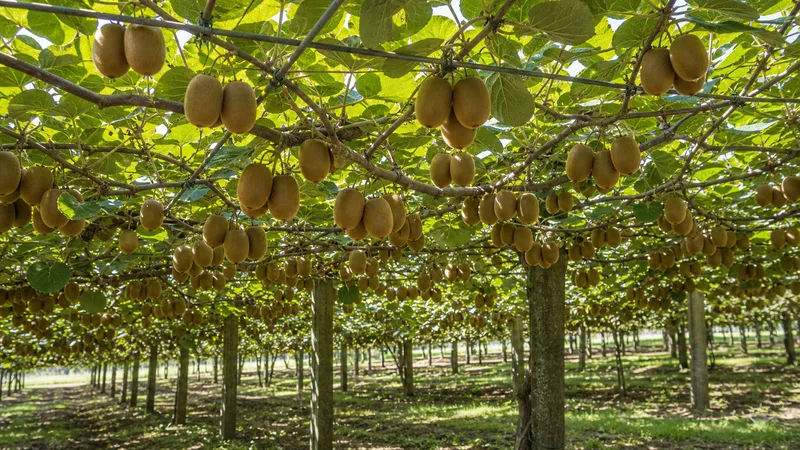
Firm kiwifruit can still bruise when it is dropped, squeezed, or piled too deeply. Harvest during cooler, dry periods when possible, keep bins shaded, and avoid dragging filled containers across rough ground. A few rough minutes after picking can erase the advantage of a good harvest date.
Field heat should be reduced through shade, airflow, and prompt movement out of the sun. Fruit that sits warm in a closed container is more likely to soften unevenly and develop handling marks before it reaches storage or packing.
Sort before storage decisions become expensive
Sorting should separate damaged fruit, misshapen fruit, undersized fruit, and fruit that is already soft. Those fruit may still have uses, but they should not be stored with the main batch. One soft or bruised group can shorten the storage life of cleaner fruit nearby.
The marketable batch should be as even as possible in size and maturity. Uniform fruit is easier to cool, check, ship, and ripen. Mixed fruit forces every later step to compromise between the fruit that is ready and the fruit that still needs time.
Use harvest records to improve next season
Good harvest notes are practical, not complicated. Record which rows ripened first, where fruit stayed small, where shade delayed maturity, and which bins had the most sorting loss. These notes point back to pruning, fruit load, water rhythm, and canopy density.
Kiwifruit harvest quality is built before the picking crew arrives, but the final decision still matters. Sample carefully, pick by maturity instead of softness, protect firm fruit from bruising, and sort early enough that storage starts with a clean, even batch.