After grapes set fruit, it is easy to judge the season by cluster count alone. A full trellis can look promising, but too many clusters, dense shade, and uneven cane strength can show up later as slow coloring, uneven berries, lower sweetness, and harder sorting at harvest.
The existing grape trellis guide focuses on keeping the structure clean before chasing larger clusters. This article moves one step later: what to watch between fruit set and color change, when cluster load and canopy light begin to shape harvest quality.
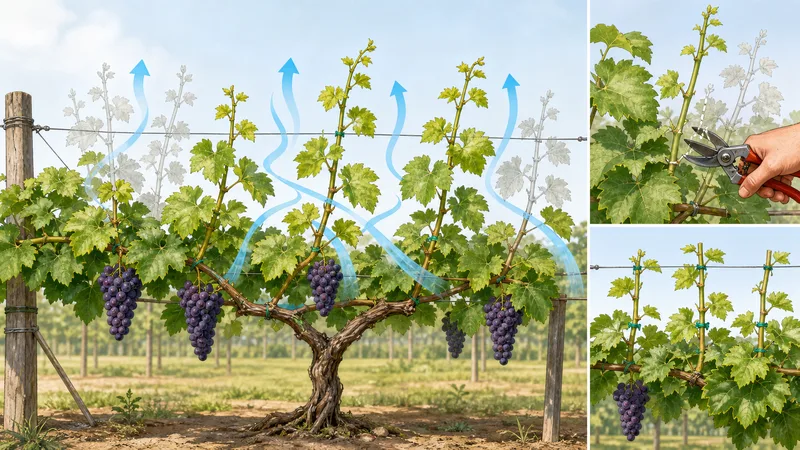
Judge cane strength before deciding cluster load
There is no useful one-number rule for every vine. A strong cane with active leaves and good position can support more fruit than a weak, shaded cane. If every cluster is kept simply because it is there, the vine may carry more than the canopy can finish well.
A practical check is to separate canes into strong, average, weak, and poorly positioned groups. Strong canes can carry the main crop. Average canes need to be judged by space and light. Weak or shaded canes may be better used to support vine balance instead of being pushed to carry heavy clusters.
More leaves are not always better
Grapes need leaves to feed fruit, but a dense wall of leaves does not mean the canopy is working well. Leaves buried inside shade contribute less and can slow airflow around the clusters.
Canopy work after fruit set should not expose clusters harshly all at once. The goal is filtered light and air movement. Old leaves, overlapping shoots, and growth blocking the picking path can be adjusted in stages so the vine keeps enough leaf area while the fruit zone becomes easier to manage.
Pre-veraison load shapes sweetness and uniformity
Before grapes begin to color, heavy crop load can stretch the vine's resources across too many clusters. The result is not always more usable fruit. It can mean uneven coloring, mixed berry size, slower sugar accumulation, and more work at harvest sorting.
This is close to the logic in kiwifruit canopy and fruit load management. Vine crops need more than fruit count; they need light, leaves, and crop load to fit the structure that will carry them.
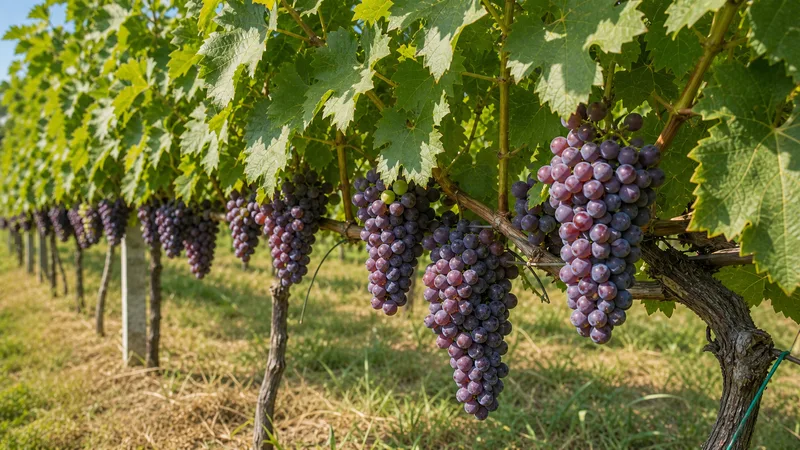
Do not leave every correction until harvest
If clusters are uneven, inner fruit colors slowly, and outer clusters ripen first, the problem usually did not begin in the final week. It often comes from uneven cane load, uneven light distribution, and poor airflow earlier in the season.
Fruit trees and vines share this timing problem. Pear fruit load and canopy distribution also need to be balanced before harvest pressure arrives. With grapes, earlier canopy and load decisions reduce the amount of quality sorting needed later.
Small plantings still benefit from simple notes
A small home trellis does not need a complicated record system, but three notes help: which section of the trellis stays most shaded, which canes carried too many clusters, and which clusters colored slowly. Those observations are more useful next season than a harvest date alone.
Grape quality is not fixed in the final week before picking. After fruit set, cane strength, canopy light, and cluster load should be read together so color, sweetness, and harvest sorting stay more even.