A grapevine can look vigorous while becoming impossible to manage. The useful question is not whether the canopy is green, but whether clusters, shoots, and renewal wood can still be seen and handled without tearing through a wall of leaves.
Start with a trellis that has a job
Choose wire positions and row access around the work that must happen later: shoot positioning, leaf removal, cluster checks, and picking. A trellis that only holds vines upright usually creates expensive hand work once the canopy closes.
Walk one representative row at full growth. If a picker cannot find clusters or a worker cannot reach the renewal zone without moving several shoots, the layout is already too crowded.
Keep shoots separate before clusters disappear
Early shoot spacing is less disruptive than a late attempt to open a dense canopy. Remove weak or misplaced shoots while their removal does not create a large wound or expose every cluster at once.
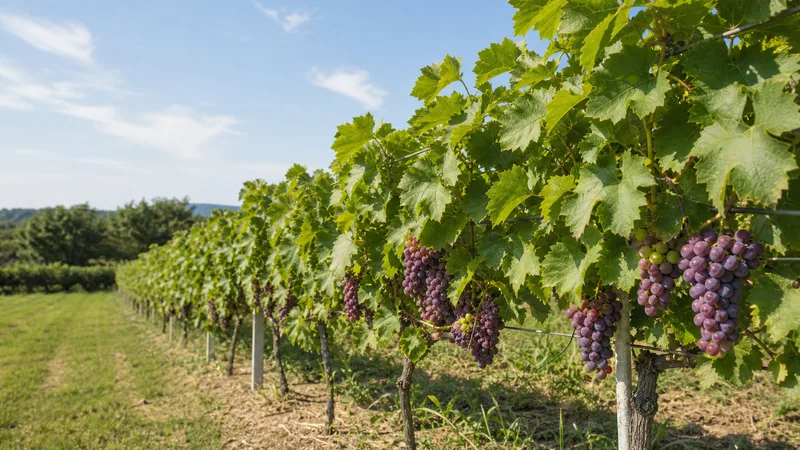
Look through the fruiting zone from both sides of the row. You should be able to identify clusters and follow the main shoots rather than seeing an unbroken layer of leaves.
Treat crop load as a vine-by-vine decision
Uniform cluster counts do not create uniform vines. Weak positions, young vines, and shaded canes often need a lighter load, while a balanced vine can carry more without losing ripening capacity.
Compare two vines with the same apparent cluster number. Check cane thickness, exposed leaf area, and whether the cluster zone is still drying after a humid morning.
Plan the picking route while berries are still firm
Harvest quality is damaged when ladders, bins, and people repeatedly force their way through the canopy. Keep headlands clear and decide where full bins will travel before the first ripe blocks need attention.
Bring an empty picking container into the row. It should move without brushing clusters or requiring workers to step across irrigation lines.
For a tighter look at balancing clusters with leaf area, see the grape cluster-load guide. The final ripening pass is covered separately in the veraison and harvest timing guide.
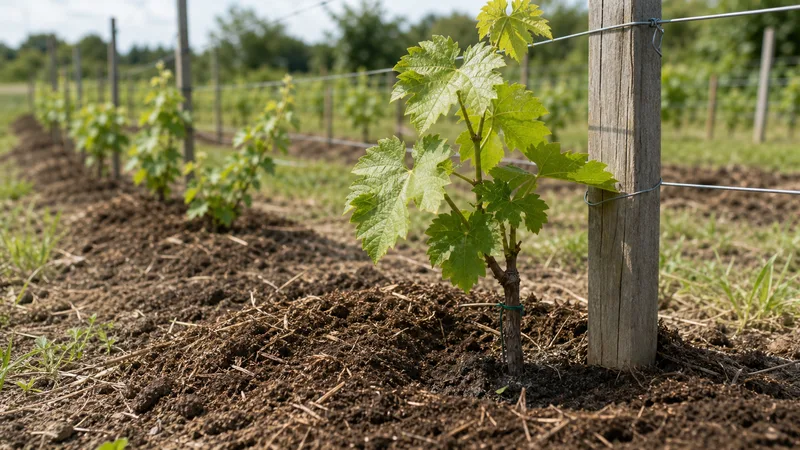
Good grape management leaves the vineyard legible. When the crop, the wood for next year, and the picking route can all be seen, later decisions become smaller and more reliable.