A pineapple harvest can lose its shape before the first crate is full. The fruit may be cut carefully, then left in a warm patch of path, stacked too deeply, or mixed with fruit that needs a different next step. None of those decisions look dramatic on their own, but together they decide whether a picking pass stays calm and readable.
This is a harvest workflow guide rather than a calendar for any one variety or climate. Its purpose is simple: give each pineapple a clear place to go once it leaves the plant, and make the route from row to shade easy enough to repeat.
Pick a group, not a single perfect fruit
Pineapple colour, scent, and firmness are useful observations, but they do not all change at the same pace across a field. A fruit at the edge of a row can look farther along than one closer to the centre, and a single bright fruit is not automatically the right benchmark for the rest of the block. Start by deciding what the current pass is meant to collect: fruit for a near handoff, fruit that still needs more time, or fruit that deserves a second look before it joins a crate.
That small sorting decision is more useful when it happens at the plant than after several fruits have already been mixed together. It also keeps harvest from turning into a search for the most colourful fruit. The same value of sampling across a group appears in this grape harvest sampling guide: a dependable decision comes from a pattern, not from the best-looking example.
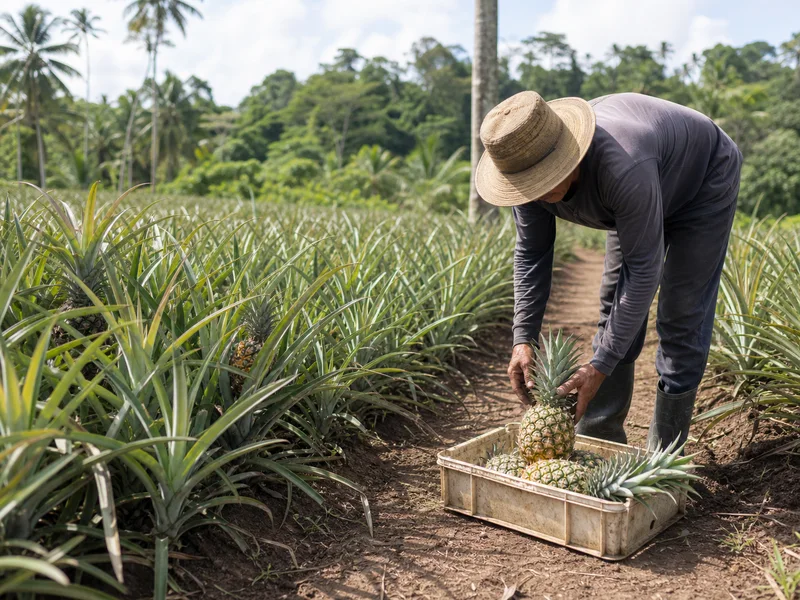
Make the first crate a destination, not a waiting room
Before work starts, place clean, shallow crates where a picker can reach them without carrying fruit through foliage or across a busy path. A crate is not just a container. It is the first handoff point, so it should keep fruit from rolling, pressing against a hard edge, or disappearing beneath a loose pile.
Keep the load low enough that each pineapple can be lifted out without dragging across another one. If the row is long, several smaller collection points are often easier to manage than one distant pile. The aim is not to impose a single crate size; it is to keep the route short, visible, and gentle for the fruit and the people moving it.
Give the picked fruit shade before the next decision
A temporary shaded place beside the field separates picking from the next job: looking, grouping, and moving fruit onward. It does not need to be elaborate. What matters is that the same place is ready before harvest begins, that crates can sit level, and that workers can tell which group arrived first.
The handoff is especially useful when the day is warm or the picking pass will take time. In a different crop, the blueberry harvest shade workflow makes the same practical point: a picked crop should not have to wait in the most exposed part of the work area while the rest of the row is finished.
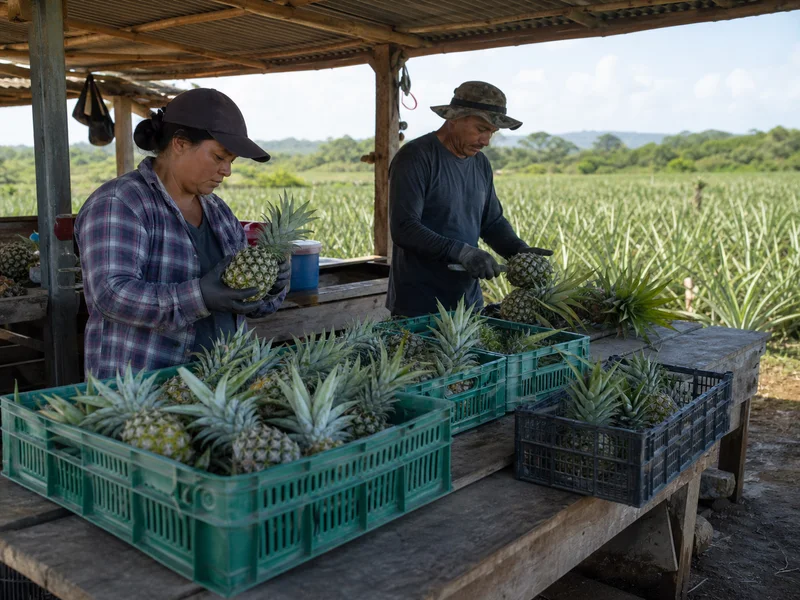
Keep different questions in different crates
One crate can hold fruit that is ready for the same next step. A second, smaller crate can hold fruit that needs a closer look because its maturity, shape, or handling condition is unclear. This prevents a few uncertain pieces from slowing down an otherwise consistent group, and it gives the team a chance to decide without treating every fruit as an exception.
Do not let a later inspection turn into a hunt through every crate. A clear division at the shaded handoff point preserves the context of the picking pass: what came from which area, what was set aside, and what can move forward together. That information is often more useful than a complicated note made after the fruit has been mixed.
Leave the row ready for the next pass
At the end of a picking pass, take one look back along the route. Remove empty containers, keep the path clear, and note any part of the row where fruit was difficult to see or carry out. Those details do not need a long report. A short observation such as “far corner took two returns” can be enough to change where the next shade point or crate is placed.
A good pineapple harvest workflow does not depend on handling every fruit in exactly the same way. It gives the crop a repeatable route: observe the group, place fruit gently, move it out of the sun, and keep the next decision visible. That is what makes the work easier to repeat when the field and the season are never quite identical.