Pear trees can remain in the orchard for a long time, which makes early spacing and structure decisions unusually important. A row that feels generous when trees are young may become a shaded, expensive pruning problem years later.
Leave room for mature trees and real equipment
Row spacing should accommodate the final canopy, not just a young planting. Access for mowers, bins, pruning crews, and air movement needs to remain after limbs have filled their intended space.
Measure the narrowest alley during peak growth. If equipment already brushes foliage, future pruning decisions are being forced by a layout issue.
Build branches that carry light and fruiting wood
Permanent limbs should be placed so they do not stack directly above one another or shade the lower canopy. Small branch-angle corrections early are more valuable than severe removal later.
Look along the row at midday. Lower fruiting positions should receive broken light, not remain in permanent shadow cast by the upper scaffold.
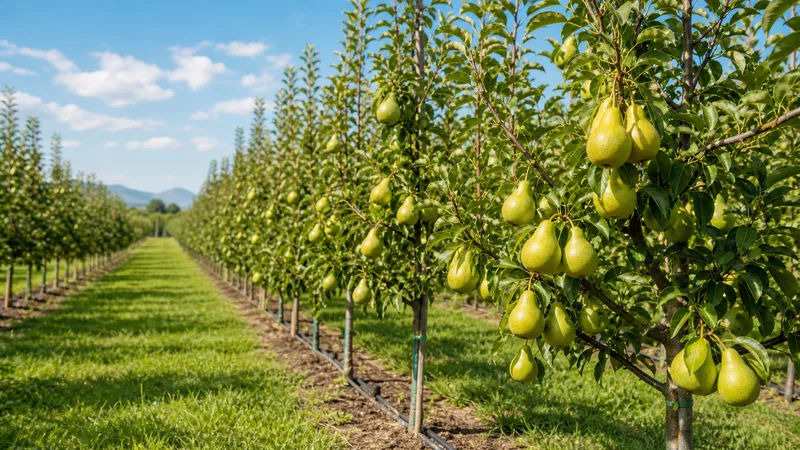
Use crop load to protect tree condition
A pear tree can carry a crop while producing too little useful renewal growth. Assess fruit distribution alongside shoot growth and leaf condition rather than waiting for a weak season to make the decision obvious.
Compare loaded spurs near the interior with spurs on exposed branches. Interior fruiting sites that remain small or shaded should not be asked to carry the same load.
Keep the orchard floor useful, not competitive
Groundcover, irrigation access, and drainage all influence root activity and harvest movement. The best floor is one that supports traffic and moisture management without competing heavily around the tree base.
After irrigation or rain, inspect the tree row separately from the alley. The root zone should not remain sealed or wet simply because the traffic lane drains well.
For crop distribution decisions, use the pear fruit-load guide. The orchard-floor relationship is explored in the pear orchard-floor guide.
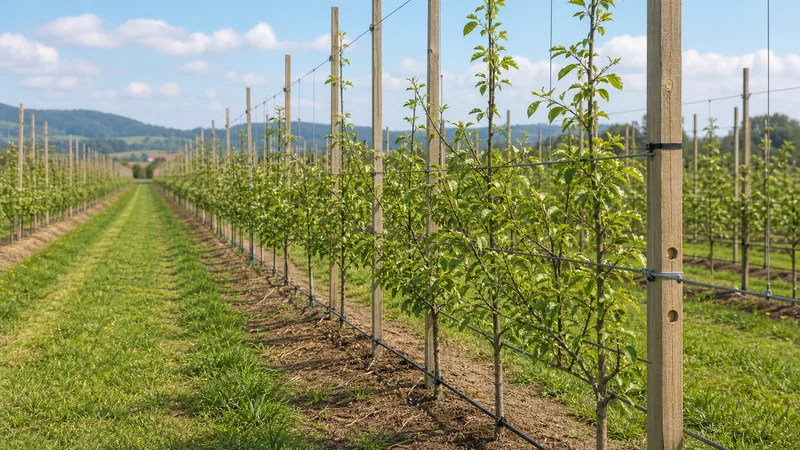
Pear orchard design is a long conversation with future pruning. Space and branch choices made early decide whether that conversation stays manageable.