Apple yield is not just a count of fruit on the tree. A useful crop load leaves enough light for color, enough branch strength for safe picking, and enough order in the block that fruit can be moved out of field heat quickly.
Keep the tree narrow enough to inspect
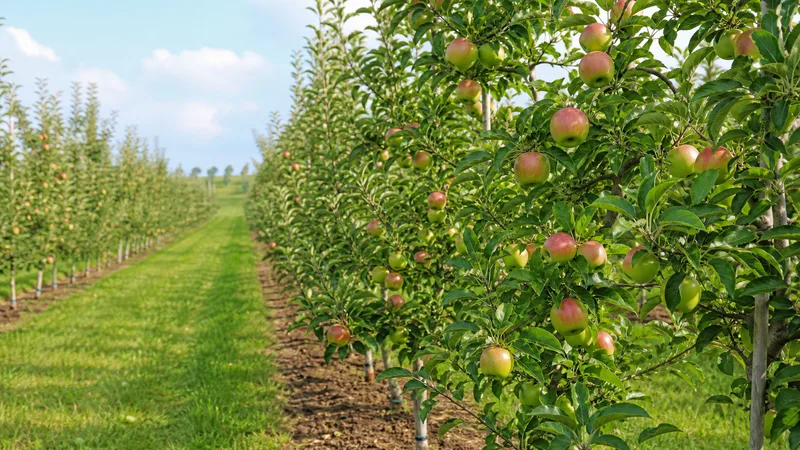
Tree form should let workers see fruiting wood, trunk condition, and the spaces where weak or shaded branches are building up. A dense outer shell with a dark interior makes thinning and picking less accurate.
From the alley, identify whether fruit is distributed through the canopy or concentrated only on the outer surface. Hidden interior fruit often signals a light-management problem.
Thin for distribution, not just for numbers
Fruit that is crowded on one spur or one side of a branch competes differently from fruit spaced across the tree. Start by removing damaged, shaded, or poorly positioned fruit before chasing a uniform count.
Gently lift a loaded branch. If fruit clusters touch or hang in a tight shaded pocket, separate that local load before making broad reductions elsewhere.
Use summer work to protect next season
Water sprouts and dense upright growth can block color and steal attention from productive wood. Small summer decisions are usually easier to judge than dramatic dormant cuts.
Check whether a new shoot is filling a real gap or simply standing above the fruiting zone. Keep the first; remove or redirect the second.
Separate harvest maturity from storage readiness
A fruit that tastes ready in the orchard may need different handling when it will be held or shipped. Picking order, bin sanitation, shade, and cooling should be decided before the first mature block is opened.
Compare fruit from sunny and shaded positions. If the block is uneven, plan several passes rather than forcing one maturity standard across every tree.
For timing the canopy around bag removal and color development, see the apple color-management guide. The underlying branch structure is developed further in the apple fruiting-wood guide.
The practical apple target is not the fullest tree. It is a crop that stays visible, reachable, and cool enough to retain the quality earned in the orchard.