The ground between pear rows is easy to ignore until it starts creating problems. Bare soil can crust, wash, overheat, or dry too quickly; heavy growth can compete with young trees; and a wet alley can keep roots under stress long after the rain has stopped.
This guide looks at the orchard floor as part of pear management, not as empty space under the canopy. For row spacing, basic tree structure, and long-term orchard layout, start with the pear growing guide. For fruit load and summer shoot decisions, the pear fruit load guide covers the canopy side of the same season.
Orchard floor management starts before the trees look stressed
A pear tree may show stress in the canopy, but the cause often begins at the soil surface. Compacted alleys, shallow runoff, exposed roots, and uneven moisture all change how the tree grows before leaves or fruit make the problem obvious.
The first check is simple: walk the row after irrigation or rain. If water moves too fast through one area and sits too long in another, the orchard floor is not helping the root zone. A clean-looking alley is not automatically a healthy one.
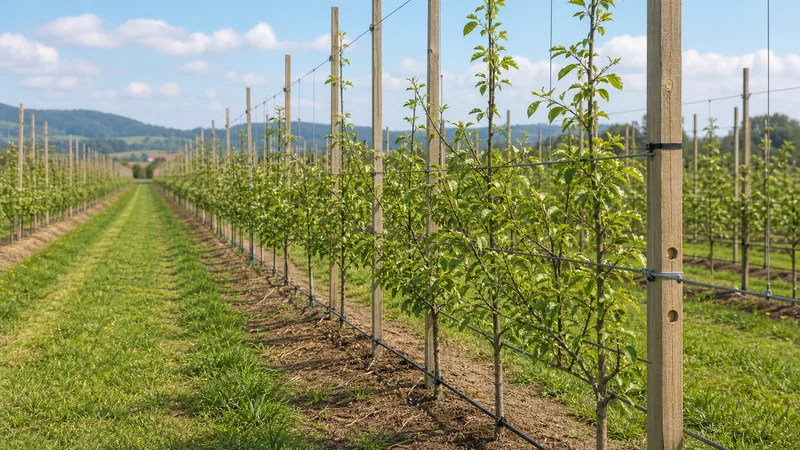
Grass and cover growth need a purpose
Keeping some growth between rows can protect soil structure, reduce erosion, soften machinery traffic, and keep the surface from baking in hot weather. It can also help a grower see where water is moving and where the ground is sealing over.
That does not mean the alley should become uncontrolled vegetation. Tall, dense growth near young trees can compete for water and make inspection harder. A practical floor plan separates the tree row, where roots and irrigation need priority, from the alley, where managed cover can be useful.
Dry periods and wet periods need different responses
During dry weather, bare soil can lose surface moisture quickly, especially where wind and heat move through the orchard. Light cover, mulch, or a stable surface can reduce sudden swings, but the tree row still needs direct checks for root-zone moisture rather than a guess from the alley.
After rain, the question changes. The grower needs to know whether water is draining, whether low strips stay wet, and whether the soil surface has sealed. Pear roots do not benefit from an orchard floor that keeps the upper layer wet while the deeper root zone lacks oxygen.
Young trees need less competition than mature trees
A young pear block should not be managed exactly like a mature orchard. Young trees are still building root volume and canopy structure, so the area close to the trunk needs less competition and more predictable moisture.
Mature trees can often tolerate a more developed alley system, but the same rule still applies: the cover should support orchard access and soil condition without taking over the tree row. If fruit size or shoot growth starts to weaken, the floor plan should be checked before adding more inputs.
Canopy decisions and floor decisions should be read together
A thick canopy can hide soil problems because the grower focuses on shoots and fruit first. But water stress, weak renewal, and uneven fruit growth can all be connected to what is happening below the tree.
When summer pruning opens the canopy, it is a good moment to inspect the ground as well. Similar orchard logic appears in apple fruiting wood and crop-load management: top growth and root-zone support have to match, or the tree keeps asking for corrections in more than one place.
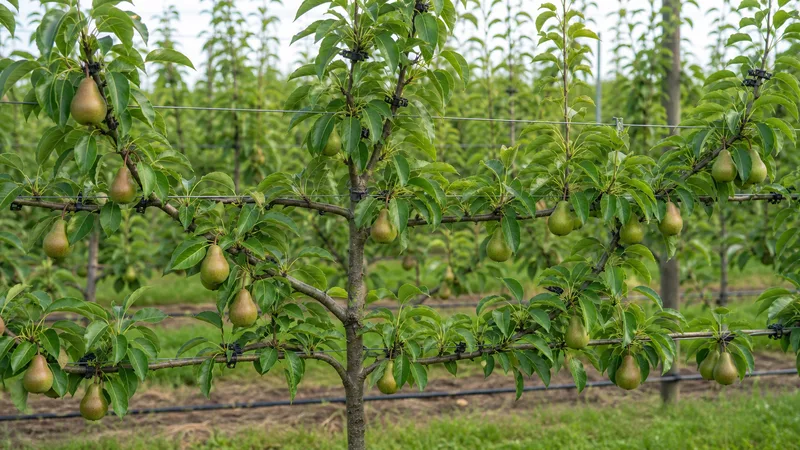
Keep the floor plan easy to inspect
The best orchard floor system is not the one that looks most natural or the cleanest. It is the one that lets the grower inspect water movement, root-zone competition, machinery access, and tree response without guessing.
For pears, that usually means keeping the tree row controlled, the alley purposeful, and the seasonal adjustments clear. If the orchard floor helps water enter, drain, and stay available at the right times, the canopy and fruit decisions become easier to manage.