Apple pruning is easy to reduce to “shorten this” or “thin that,” but fruit quality often depends on a quieter balance: fruiting wood age, flower-bud distribution, light, and crop load. A branch can look tidy and still be poorly placed. Another branch may look vigorous but be useful if it can become renewal wood.
This guide builds on the broader apple growing guide, which covers tree shape, crop load, and postharvest handling. Here the focus is narrower: how pruning decisions affect fruiting wood, next year’s renewal, and the way the crop is carried through the canopy.
Identify which wood is actually carrying the crop
Not every short spur is worth keeping, and not every long shoot should be removed. Short fruiting spurs, medium fruiting shoots, longer shoots with flower buds, and one-year wood can all behave differently depending on variety, tree vigor, and light. Before cutting, look for fruiting wood that has good bud quality, good position, and enough light.
If cuts are made only by branch length, the tree may lose useful renewal wood or keep too many weak flowering points. Apple pruning should consider position, angle, light, and nearby replacement options, not just whether a branch has flowers this year.
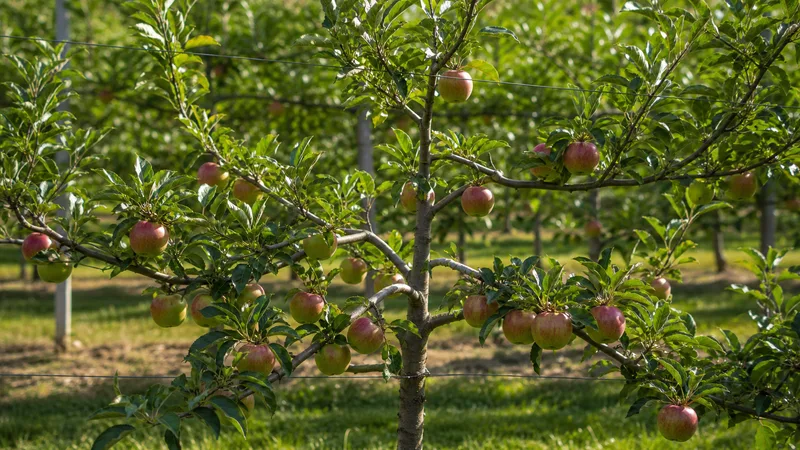
Heavy crop years need better flower distribution
When flower buds are crowded on one part of the tree and sparse elsewhere, later thinning and fruit sizing become harder. Pruning can reduce some of that imbalance before the crop is set. A more even distribution of flowering wood usually gives the grower more room to manage fruit size and tree strength.
The same idea appears in grape cluster load and canopy balance. Apples and grapes carry fruit very differently, but both crops suffer when too much crop is concentrated in the wrong place.
Vigorous wood is not always the enemy
On a strong apple tree, repeated hard heading cuts can push even more upright shoots. That makes the canopy look busy while delaying useful fruiting wood. A better response is often to open branch angles, remove wood that blocks light, and guide some shoots into future replacement positions.
Weak trees need a different reading. Keeping too many thin branches does not always protect yield. If light and leaf quality are poor, the crop may still be uneven. Pruning a weak tree should keep useful leaf area while removing crowded, exhausted, or poorly placed fruiting wood.
Renewal wood needs space before the old wood fails
In older apple canopies, fruiting wood can creep outward while the interior becomes less useful. Waiting until an entire fruiting section is exhausted makes recovery slower. Good pruning leaves room for renewal shoots before the old wood has fully declined.
This is related to, but different from, the lesson in citrus canopy light and harvest access. Citrus pruning often focuses on evergreen canopy access and airflow; apple pruning must also think carefully about replacing fruiting wood in stages.
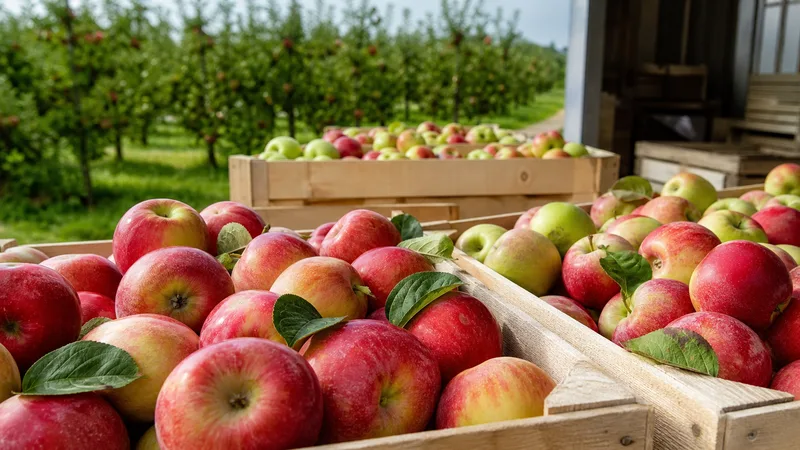
Use harvest notes to improve the next pruning pass
Apple pruning is not finished when the cuts are made. Bloom, fruit set, and harvest all show whether the tree carried the crop in the right places. Record where bloom was too dense, where fruit size lagged, and which fruiting sections lost strength first.
If the same part of the canopy becomes overloaded or shaded every year, the next pruning pass should adjust that structure earlier. Good pruning records make next year’s choices sharper instead of turning pruning into the same rescue job again.