A good strawberry plant is not simply the one with the largest leaves. Transplant recovery depends on the crown position, fresh roots, runner-plant maturity, and bed moisture. A leafy plant with a weak root system can stall after planting, while a crown planted too deep or roots left exposed can slow the whole crop rhythm.
This guide adds an earlier step to the main strawberry growing guide. The broader article covers bed cleanliness, airflow, and harvest handling; here the focus is on seedling quality, runner plants, crown placement, and transplant readiness.
Check the crown before the leaf size
Strawberry transplants need careful planting depth. If the crown is buried, new leaf growth can suffer. If the plant sits too high, roots dry quickly and the plant struggles to settle. When choosing plants, look for a clear crown, active roots, and leaves that are open but not overgrown.
More leaves do not always mean a better plant. A large top with a weak root system can lose water faster after transplanting. A steadier plant has a clean crown, enough root mass, and leaves that are neither old nor stretched.
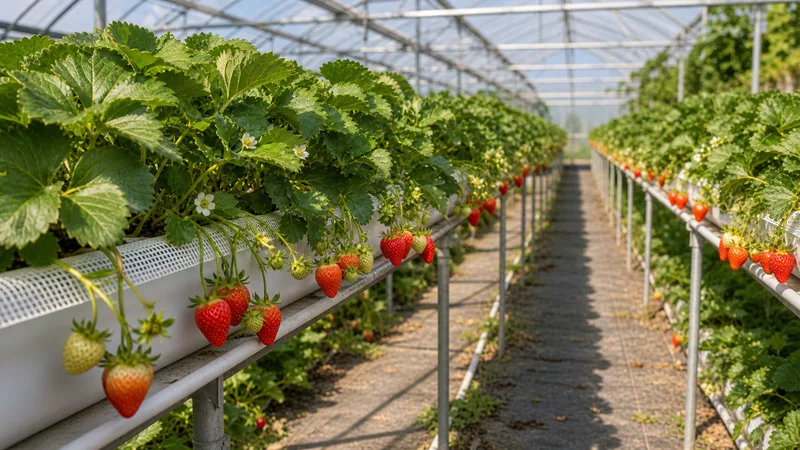
Runner plants need rhythm, not just numbers
Many production strawberry plants come from runners. If every runner plant is kept without control, the nursery may produce many plants but not all of them will be equally useful. A better approach is to guide runner direction, keep daughter plants evenly placed, and select plants that are close enough in maturity to manage as one batch.
This is similar in spirit to lettuce succession timing. The crops are very different, but the lesson is the same: a manageable batch is often more valuable than the largest possible number of plants.
Holding plants before final planting can improve uniformity
Some strawberry plants benefit from a short holding or nursery step before final planting. The goal is not to add work for no reason. It gives the roots time to settle, helps even out the plant batch, and makes it easier to remove weak, old, or overly young plants before they enter the production bed.
A plant that holds its root ball, keeps its crown clean, and does not wilt for long after handling will usually transplant more smoothly. Mixing uneven plants into the same bed often creates a crop that is hard to water, shade, and harvest evenly.
Prepare the bed moisture before the plants arrive
Strawberry roots are shallow. They dislike both dry surface soil and standing water around the crown. Before planting, the bed should be loose, drained, and evenly moist enough for quick root contact. If bed moisture is wrong, even good plants have to spend energy recovering instead of growing.
The same root-zone logic appears in the grape growing guide, even though grapes and strawberries are managed very differently. Planting success starts before the plant is placed in the soil.
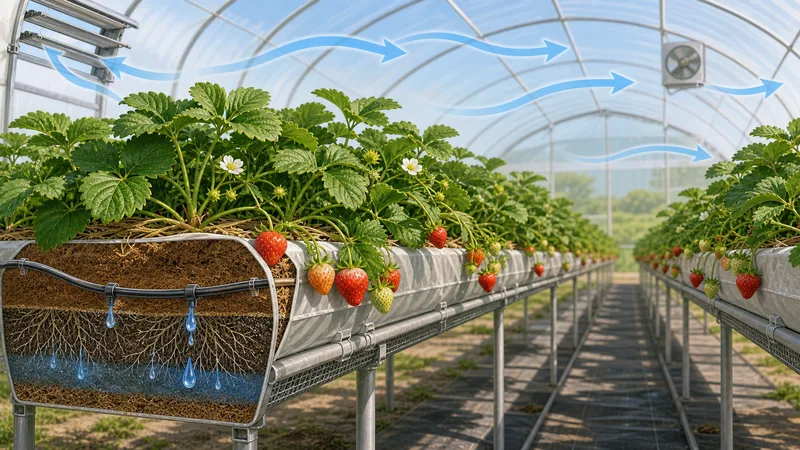
Watch recovery before chasing early fruit
After transplanting, the first signs to watch are new leaf activity, crown condition, and whether the roots are taking up water again. Pushing for early flowers before the plant has recovered can weaken the first crop instead of improving it.
Record plant source, planting date, recovery speed, and later flowering rhythm for each batch. At harvest, those notes will show which plants and beds gave the most even start. That makes the next nursery and transplant plan more precise.