Lettuce is often treated as a quick crop, but the main challenge is not simply getting leaves to grow. Quality changes fast when the bed dries out, midday heat builds, or harvest is delayed a few days too long.
For a home garden or a small farm bed, lettuce usually performs better in small repeated plantings than in one large sowing. The useful decisions are timing, spacing, shade, moisture, and harvest rhythm, not a fixed calendar copied from another climate.
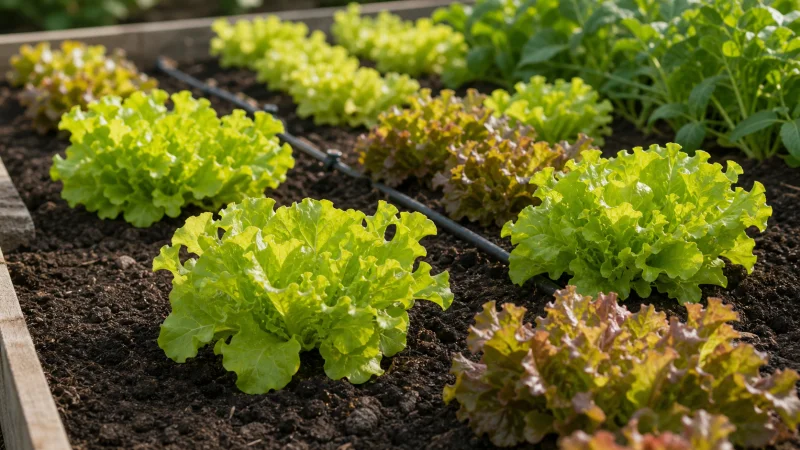
Start with the harvest style you actually want
Loose-leaf harvest, baby leaves, mini heads, and full heads all need different spacing. If you plan to pick leaves over time, the bed can be managed more flexibly. If you want compact heads or uniform bunches, spacing and airflow need to be settled earlier.
A common mistake is sowing heavily because the bed looks productive when seedlings first fill in. Later, crowded lettuce shades itself, holds moisture in the wrong places, and becomes harder to cut cleanly. The same practical logic appears in spinach succession sowing and thinning decisions: leafy crops often fail from crowding before they fail from too little seed.
Read the next two weeks, not only the seed packet
Lettuce prefers a steady start. Before sowing, look at the weather likely to follow germination: heat, dry wind, hard sun, and rapid moisture swings all matter. Seedlings that emerge into stress often stay uneven even after later watering improves.
Small plantings every seven to ten days are usually safer than one full bed at once. If one batch meets poor weather, the next can still carry the harvest. This approach also keeps the kitchen or market supply more useful because everything does not mature in the same week.
Keep moisture even without making the root zone heavy
Lettuce reacts quickly to dry surface soil, but a sealed, airless root zone is not a solution. The goal is quiet consistency: water that reaches the active roots, a surface that does not crust badly, and enough drainage that the bed can breathe.
Drip irrigation, gentle hand watering, shallow mulch, or a well-shaped raised bed can all work. The method matters less than the habit of checking the soil. If you grow several vegetables together, do not assume they need the same rhythm. Celery stalk quality depends on a longer run of steady moisture, while lettuce often hinges on a shorter window before leaves become coarse or bitter.
Use shade to lower stress, not to grow lettuce in the dark
Shade helps when it reduces the sharpest midday heat and slows leaf water loss. It becomes a problem when it removes too much light for too many hours. Lettuce grown under heavy shade can stretch, soften, and lose the compact texture that makes it worth harvesting.
In warm periods, partial shade during the hottest part of the day is usually more useful than all-day cover. In containers, the container itself may be the weak point: a small pot can heat and dry much faster than a garden bed, so moving the container may help more than adding another layer of shade cloth.
Harvest before every plant looks perfect
The best lettuce harvest is often earlier than beginners expect. Outer leaves can be picked once they are large enough, or crowded plants can be removed as a thinning harvest. Waiting until every plant reaches maximum size often means texture and flavor are already slipping.
For full heads or larger loose-leaf plants, cut during the cooler part of the day and move the crop into shade quickly. Remove damaged outer leaves, avoid crushing, and keep the crop cool if it will be stored briefly. This is different from Chinese cabbage spacing and heading management; lettuce is less forgiving because eating quality can change within a short harvest window.
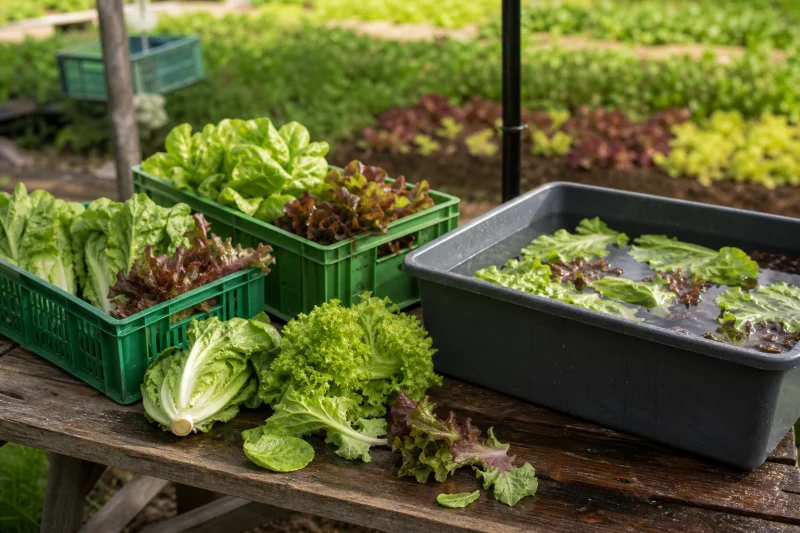
Use small bed rotations to keep lettuce useful
A small garden does not need a permanent lettuce block. Lettuce fits well into short rotations: sow a small strip, harvest it cleanly, remove old leaves, refresh the surface, and move the next sowing to another open space.
Rotation does not mean packing leafy crops into the same tired bed without rest. If the previous crop left compacted soil, heavy residue, or poor airflow, the next lettuce batch will start unevenly. Lettuce can also use short gaps beside taller crops, but it should not be buried in deep shade. For a very different vegetable rhythm, compare it with tomato seedling, flowering, and fruit-set management, where the plant must carry a much longer season.
Keep records by batch, not by season
For lettuce, the useful notes are simple: sowing date, emergence quality, shade method, first harvest date, and when leaves began to lose tenderness. After a few batches, local patterns become clearer than any generic planting calendar.
Lettuce is not a difficult crop, but it gives quick feedback. Too much crowding, too much heat, uneven watering, or a late harvest shows up directly in the leaves. Good lettuce management is mostly the discipline of acting before that feedback becomes permanent.