Garlic chives are perennial leaf crops, so winter management should not be treated like one more short leafy harvest. As the weather turns cold, the crown and roots recover more slowly. Cutting too hard at the end of the season may add a small harvest, but it can weaken the stand before winter growth or spring recovery.
For row spacing, normal cutting rhythm, and long-term crown renewal, start with the main garlic chives growing guide. This article is narrower: it focuses on the winter transition, when the bed needs rest, cleanup, cover management, and slower harvest decisions.
Before winter, stop cutting long enough for the crown to recover
When temperatures fall, garlic chive leaves slow down and the crown does not rebuild as quickly. If the bed is cut again and again during this period, the plant enters winter with less stored strength. A better approach is to reduce cutting and shift attention to root recovery and bed condition.
Stopping harvest does not mean ignoring the bed. Old leaves, collapsed leaves, and crowded row edges should be checked because they can reduce airflow after covering. Cleanup should be light and gradual. Pulling too aggressively around the crown can cause damage at a time when recovery is slow.
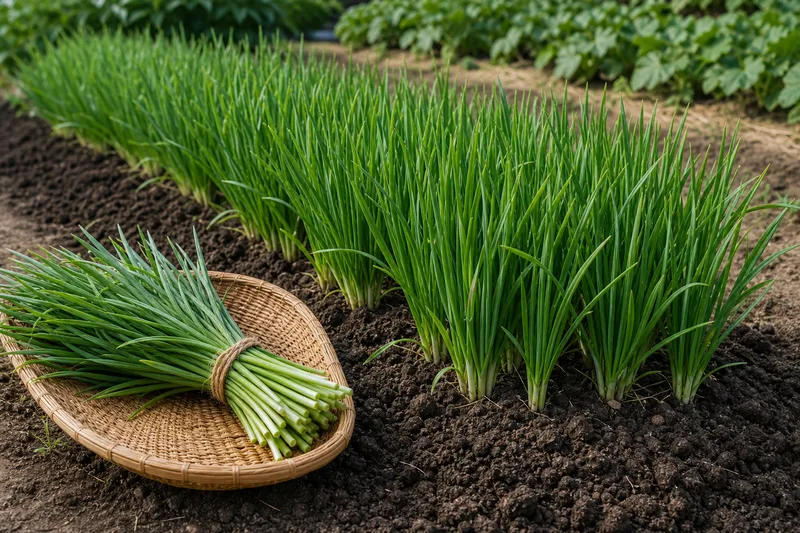
Clean the bed before covering, but do not disturb it heavily
If a bed will be covered with a tunnel, film, or other winter protection, the surface should be tidy first. Weeds, old leaves, and matted material make the covered space harder to ventilate and inspect. The goal is a cleaner bed, not a full rebuild of the root zone.
This is related to garlic bed preparation before cold weather, but garlic chives need a lighter touch because the same crown must keep producing over multiple seasons.
Winter cover should hold warmth without trapping stale air
Covering can protect garlic chives from harsh cold and help the bed restart under more controlled conditions. But a sealed, damp cover can create its own problems. Warmth, light, humidity, and airflow need to be managed together.
On mild sunny days, brief ventilation can help reduce stagnant moisture and let the leaves receive better light. At night or during cold spells, the cover can be closed again. Fixed, never-opened covering is less useful than a system that can respond to weather.
Winter harvest intervals should be slower than warm-season cuts
If covered garlic chives begin producing usable leaves, the harvest rhythm still needs to be conservative. Winter growth is slower, and the crown takes longer to rebuild after each cut. The first cut can be based on height and leaf quality, but later cuts should be spaced by recovery, not habit.
Cutting height matters too. Cutting too low slows recovery; leaving too much old base can make the next flush uneven. The same quality-window thinking appears in celery stalk quality management: a crop is not better just because it is pushed faster.
Water only after reading temperature and bed moisture together
Winter garlic chives should not be watered by a fixed calendar. If the covered bed is warm and leaves are actively growing, moisture demand rises. If the weather is cold, cloudy, or the root zone is already wet, watering should be restrained.
After cutting, avoid immediately forcing the next flush with heavy water and feeding. Check the cut surface, new leaf movement, and bed moisture first. A perennial bed depends on repeated recovery, not a single strong push after harvest.
Before spring, decide whether the bed still has enough strength
Late winter is a useful time to judge whether the garlic chive bed should continue as it is. Crowded crowns, thinner leaves, slower recovery, and poor row airflow all suggest the bed may need division or renewal later. Covering and watering can help, but they cannot fully fix an old, congested stand.
The main winter decision is to put root strength ahead of one more cut. Rest the crown, clean the bed lightly, manage cover and ventilation, and lengthen harvest intervals. That gives both winter leaves and spring recovery a better chance.