When celery stalks become coarse, stringy, or split near the base, it is easy to blame the variety. Variety matters, but field rhythm often matters more. If the crop has already followed a sound celery seedling and transplanting plan, the next question is whether moisture, heat, and harvest timing are still supporting tender stalk growth.
Tough stalks usually build up over time
Celery has a shallow root system, so it reacts quickly when the surface layer dries. If the bed stays dry for too long and then receives a heavy watering, stalk growth can become uneven. Under hot or windy conditions, leaves lose water quickly while roots struggle to keep up, and the stalks are less likely to stay crisp.
Celery should not be managed as a drought-tolerant crop. After transplanting, a short period of moderate water control can help roots settle, but that is different from letting the bed turn dry for long stretches. Once the crop enters active stalk growth, small and regular watering is usually safer than repeated swings between dry soil and sudden soaking.
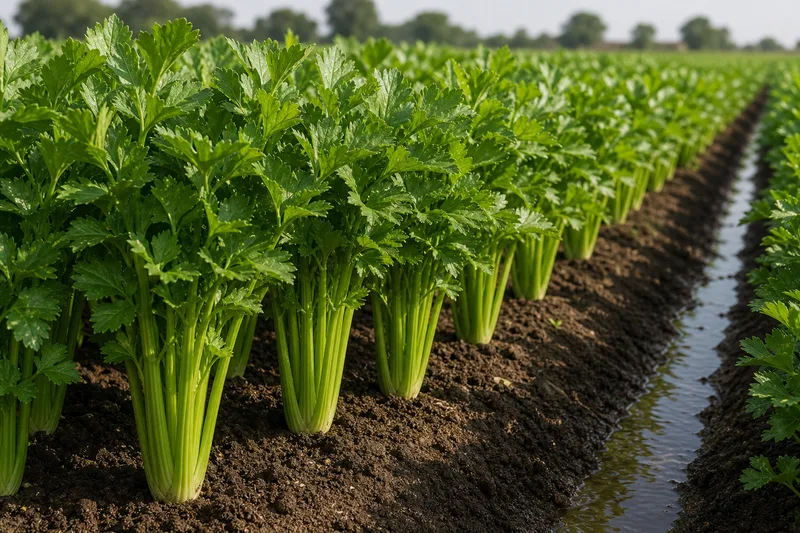
Settle the roots first, then keep growth steady
The first days after transplanting are about recovery. Too much water can leave the root zone heavy and short of air; too little water slows recovery and keeps the plant under stress. A better target is soil that stays moist without becoming waterlogged, with stronger feeding and watering added only after new growth looks steady.
During active growth, celery responds quickly to both water and nutrition. Dry soil can make stalks tougher, while sudden heavy feeding may push uneven tissue growth. Instead of forcing a fast jump in size, it is better to keep growth continuous. The same quality-first thinking applies to lettuce and other leafy crops grown for texture: fast growth is useful only when the plant still eats well.
In hot weather, protect quality before pushing size
Celery prefers cool, moist conditions and struggles when heat and dryness arrive together. In summer plantings or warm regions, watering alone may not protect stalk quality. Shade, ventilation, bed moisture, and drainage all need to work together. Soil that stays wet and airless can hurt quality just as surely as dry soil can.
On hot days, water is usually better applied in the morning or evening rather than during the harshest part of the day. Shade cloth can help, but it should not make the crop weak or stagnant. The goal is not simply bigger leaves; it is even stalk growth, stable color, and a base that does not become hollow or loose.
A delayed harvest can cost crispness first
Celery does not keep improving just because it stays in the bed. Once plants reach a suitable market or kitchen size, waiting too long can increase fiber, hollowness, and splitting. This is similar to the way Chinese cabbage needs attention once the head is forming: size matters, but internal quality decides whether the crop is still at its best.
Keep moisture steady in the days before harvest, and avoid sudden cycles of dryness and heavy watering. Before cutting a full bed, check a few plants for stalk snap, hollow bases, and visible cracking. If maturity is uneven, harvesting in passes is often better than waiting for every plant to match the largest ones.
Four field signs are worth checking
First, look at whether the bed has been swinging between dry and wet. Second, check whether plants recovered slowly after transplanting or held a dull, stressed color. Third, ask whether hot weather was managed only with extra water, without shade or airflow. Fourth, consider whether the crop has already reached harvest size but is being held for more weight.
Good celery stalk quality comes from keeping roots, leaves, water, and harvest timing in step. When stalks grow continuously, face less dry heat stress, and are cut in the right window, they are much more likely to stay crisp, clean, and useful in the kitchen.