After rain, a ginger bed can look healthy at first glance. The leaves are rinsed clean, the soil is dark, and the rows may appear settled. The more useful view is often lower down: the furrow between the ridges, the places where water has slowed, and the edges that have begun to soften.
Ginger develops in a root zone that benefits from being protected, not repeatedly opened up. A post-rain walk is therefore less about rushing to correct every wet patch and more about deciding whether the field is returning to a readable, workable state on its own.
Begin where the water leaves the row
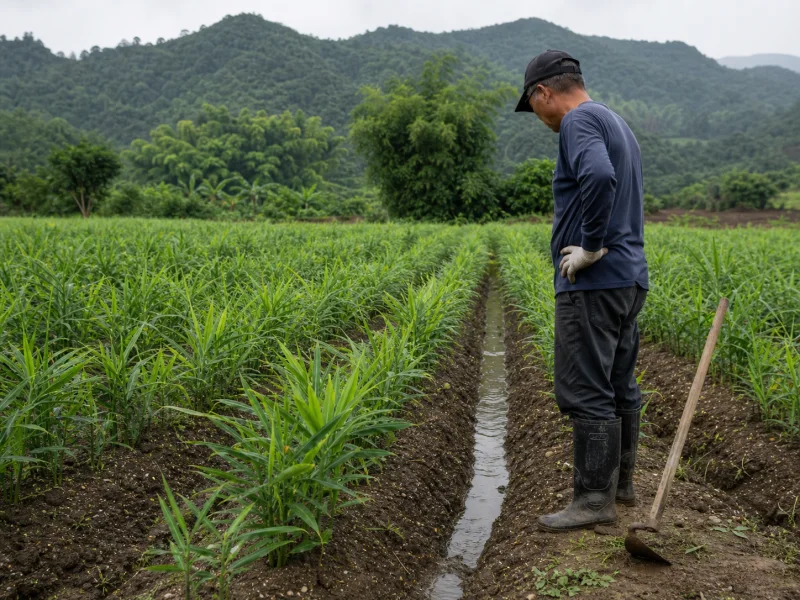
Stand at the end of a ginger row and look along the furrow before walking through it. Can the route of the water still be seen? Has loose soil slipped from a ridge into one part of the channel? Is one section holding water while the next section is already clearing? A furrow does not need to look perfectly dry immediately after rain; it needs to remain understandable enough that the next change will be visible.
This is why the lowest-looking point is not always the whole story. Follow the line toward the exit and note where the rhythm changes. A small obstruction near the end can make an otherwise sound section look wetter than it really is. Starting with the water's path keeps the check focused on what can be observed rather than on a general impression of damp soil.
Read the ridge edge before touching the mulch
Raised ginger rows protect the area where new growth is developing. After rain, the ridge shoulder may look firm in one place and fragile in another. Check whether the soil still has its shape, whether mulch has shifted into the furrow, and whether the base of the plants is still clearly separated from the drainage route.
Mulch can be useful when it stays where it was meant to work. When it mats tightly against a wet ridge or blocks the visible channel, it can make the bed harder to read. The first decision may simply be to leave a section alone until the surface settles, or to restore a clear line at the edge without digging into the root zone.
Compare a dry-looking row with a slow-clearing row
One row is rarely enough to explain the condition of a ginger patch. Choose a place that is clearing normally and compare it with one that seems slower. Look at the furrow depth you can see, the ridge shape, the way the leaves stand, and the route toward the field edge. The contrast often says more than a single close inspection.
Do not assume that every slower section needs the same response. Soil texture, small changes in slope, and routine traffic around the bed can all affect how water moves. The aim is to identify a repeatable pattern, then return to the same two places after the field has had time to settle.
Keep the next check possible
A careful post-rain routine leaves the ginger bed easier to observe the next time. Avoid turning every wet visit into a major reshaping job. Preserve a visible furrow, keep the ridge edge distinct, and give the surface enough time to show whether it is recovering or remaining uneven.
- Trace the furrow from the row entrance toward its exit.
- Notice where soil or mulch interrupts the water line.
- Compare one normally clearing area with one slower area.
- Protect the ridge shape before making deeper changes near the plants.
For ginger, drainage is not only a matter of moving water away. It is also about keeping the bed legible. When the furrow and ridge can still be read after rain, the grower has a calmer basis for deciding what should happen next.