Taro rows can look vigorous above ground while the ridge and furrow are becoming harder to manage below the leaves. As the plants settle into the field, loose soil may wash away from the base, a shallow depression can begin to hold water, or the walking side can become too soft to inspect without compacting it. Mid-season ridge work is about restoring a clear root-zone shape, not piling soil high for its own sake.
A practical pass combines three questions: is the plant base supported, is the ridge still shedding water in the intended direction, and can the furrow be read after the next rain? Those answers matter more than making every row look identical.
Look at the base before moving any soil
Start by checking whether the lower stems and leaf stalks have a stable, open base. The soil around the plant should support the root zone without burying the growing points or leaving a deep pocket that collects water. If the ridge has slumped, bring a modest amount of loose soil toward the base and stop when the plant is stable again.
Do not treat every plant as needing the same amount of soil. A well-shaped ridge may only need a light correction; a low spot may need attention because it changes how water moves across a whole section of the row.
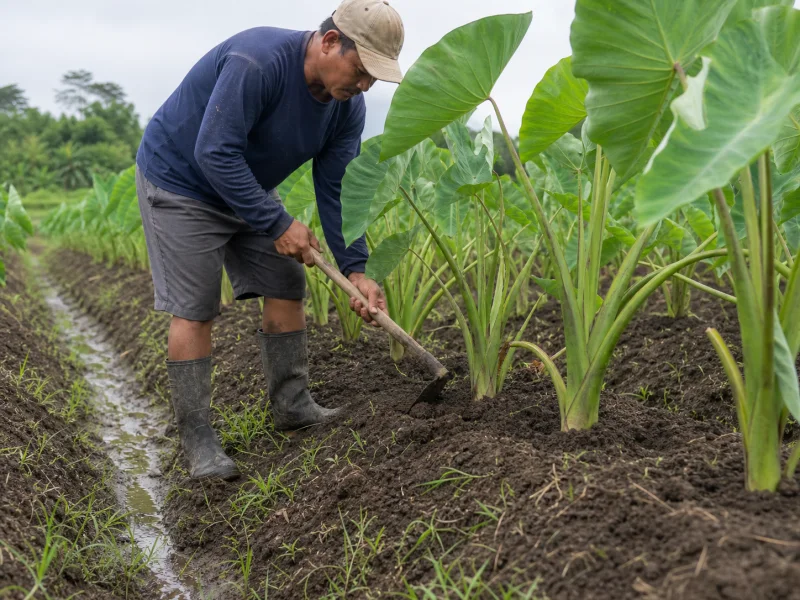
Keep the furrow able to show you what water is doing
The furrow is not empty space. After irrigation or rain, it shows whether water is leaving the ridge, collecting at one point, or cutting a new path through the soil. Clear only the material that blocks the intended route, and avoid throwing heavy clods against the plant base where they can seal the surface.
Walk the furrow from the higher end to the lower end. One puddle may be a local footprint; repeated water at the same point is a row-shape problem worth correcting before it becomes harder to reach the plants.
Use leaves as a signal, not as a reason to disturb the ridge
Large taro leaves make it tempting to push soil around just because the canopy looks full. Instead, use the leaves to find where access has become difficult, then look underneath before acting. A vigorous canopy does not prove the root zone is in order, and a temporarily drooping leaf does not automatically mean the ridge needs more water or more soil.
Compare several plants and check the actual soil condition near the base. This keeps a small observation from becoming a blanket response across the whole field.
Return after weather changes
Ridge and drainage work is best reviewed after a real field event: a strong irrigation, a rain, or a day when the furrow was used repeatedly for access. Check for exposed soil around the base, fresh erosion lines, and places where the walking route now pushes water toward plants.
Small corrections made at that point are usually enough. The aim is a ridge that supports developing corms while still letting water move through the row predictably, not a high mound that hides the condition of the plant base.
Leave the row ready for the next pass
Finish by making sure the next person can see the ridge edge, the drainage route, and the lower part of the plants without stepping into soft soil. That repeatable access is what turns ridge maintenance into a useful crop check rather than a heavy operation performed once and forgotten.
When the base is supported and the furrow remains readable, later crop decisions begin from a calmer field. The ridge has done its job: it holds the plant’s working zone without trapping the water that needs to leave it.