Summer radish problems often begin before the root has any chance to form. If the seedbed surface dries too fast, the cover soil varies from one section to another, or the first seedlings meet heat and bright sun too abruptly, later watering cannot fully repair the uneven start.
This article is not another general radish growing guide. It focuses on the first 7 to 12 days after warm-season sowing, when even emergence matters more than almost anything else.
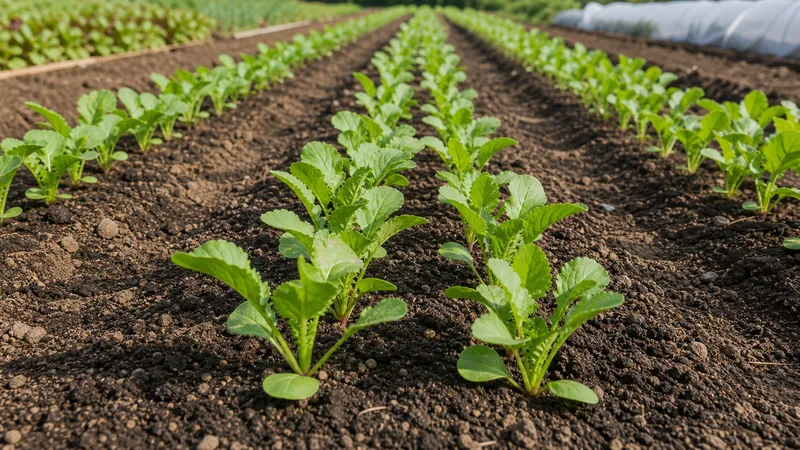
The seedbed should be fine, not powdery
Radish seed needs close contact with a stable surface layer. If the bed is too cloddy, seed can fall into gaps and lose moisture quickly. If the surface is pressed too hard, the young root struggles to move downward. A good bed has a fine upper layer, a firm but open lower layer, and no hard crust after watering.
In warm weather, pre-sowing moisture matters more than it seems. Water added only after sowing may stay shallow. Seed can swell, then meet a dry layer before the root is established, leaving the stand patchy from the start.
Soil cover controls how evenly seedlings appear
Covering too deeply delays emergence. Covering too lightly exposes seed to quick drying. The larger problem is uneven cover within the same bed, because heat turns a small depth difference into a visible stand difference. Use fine, even soil so seed sits at a similar depth across the row.
If shade or a temporary cover is used, the goal should be cooling and moisture protection, not holding the seedlings in a closed space for too long. Once the row begins to emerge, adjust the cover so seedlings do not stretch, lean, or lose color.
Before emergence, water lightly and evenly
The seedbed should not be flooded before seedlings appear. Heavy water can move seed into low spots and make the problem look like poor germination. A steadier approach is to keep the surface from turning dry-white while avoiding runoff or standing water.
After seedlings break the surface, do not suddenly switch to heavy irrigation. Let young roots begin moving downward, then gradually shift moisture a little deeper. This is different from the later rhythm described in the radish bulking and thinning guide, where the crop is already building root size.
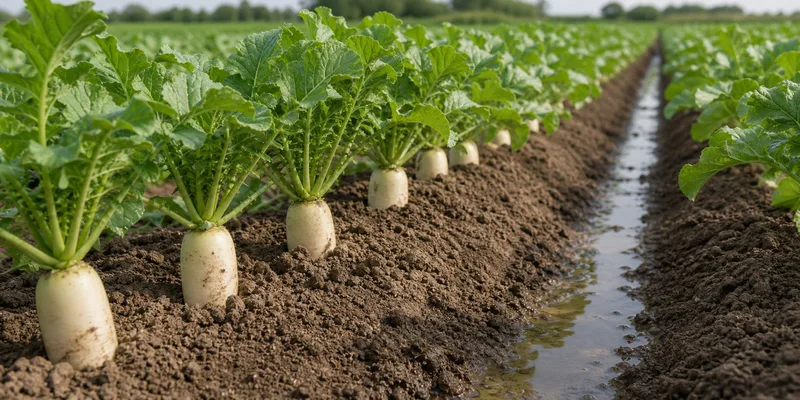
Thin early, but choose the right seedlings
When seedlings are too crowded, they compete for light first and moisture next. Root shape can be affected before the grower sees any swelling. The first thinning can be light: remove seedlings that are clearly crowded, weak, leaning, or poorly placed.
Do not keep only the tallest seedlings. In warm beds, tall seedlings may simply be stretched by crowding or shade. Better choices have normal color, a steady base, and enough space to grow into the row without pushing the next plant.
Root management starts after the stand is even
Once the row is even, spacing is clear, and surface moisture is stable, the crop can move toward root-shape management. Avoid sharp wet-dry swings, but also avoid pushing too much leaf growth before the root can keep up. If one section emerged late, do not overwater the whole bed just to support the late patch.
Small-seeded root crops share some seedbed risks. The surface-moisture lesson is close to the one in summer carrot emergence, but radish moves faster. A weak start shows up sooner in root shape, harvest timing, and sorting quality.