Radishes do not wait politely once the stand is too crowded. A bed can look fine from above while the roots underneath are already short of space, swinging between dry and wet soil, or being pushed toward a harvest window that is too late.
The main radish growing guide covers sowing in small batches and building loose soil before the crop starts. This article starts after emergence: how thinning, early watering restraint, root bulking, and harvest timing work together so the roots stay clean, crisp, and usable.
Thin before the roots begin to decide their shape
Radish spacing is not only a neat-row issue. When seedlings stand too close for too long, the strongest leaves may hide the fact that the roots are already competing. Later watering or feeding cannot fully undo that early pressure.
Thin in stages if the stand is dense. Remove weak, crowded, or off-type seedlings first, then leave the final plants with enough room for the type you are growing. Long white radishes need more soil volume than small round types. A container crop needs a different spacing decision again.
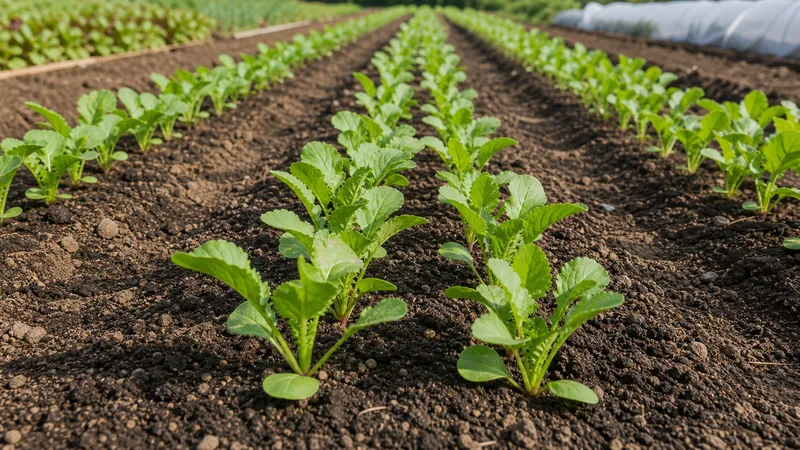
After thinning, press the soil lightly around the remaining plants if the roots were disturbed. The goal is not to compact the bed, but to let seedlings stand firmly again. This is close to the logic behind carrot seedbed moisture and emergence: small root crops respond quickly when the first few centimeters of soil are uneven.
The early root stage should not be pushed with constant water
Once seedlings are established, radishes benefit from a short period when the taproot can move downward rather than being held near the surface by frequent shallow watering. The bed should not dry hard, but it also should not stay wet every day.
This is a useful difference between germination water and early root water. At sowing, moisture needs to be even enough for emergence. After the plants stand, the water rhythm should help the root explore the loosened layer. If the soil surface crusts after rain or irrigation, shallow cultivation before the canopy closes can restore air and reduce competition from weeds.
Bulking needs steady moisture, not sudden rescue watering
When the fleshy root begins to swell, the crop changes character. The leaves are still needed, but the main quality question is now underground: is the root sizing steadily, or is it being forced through dry spells and sudden heavy watering?
Large swings matter. Soil that dries hard and then receives a heavy soak can lead to rough texture, cracking, uneven shape, or hollow centers in susceptible roots. A better pattern is small, timely watering that keeps the root zone evenly moist without leaving the bed waterlogged.
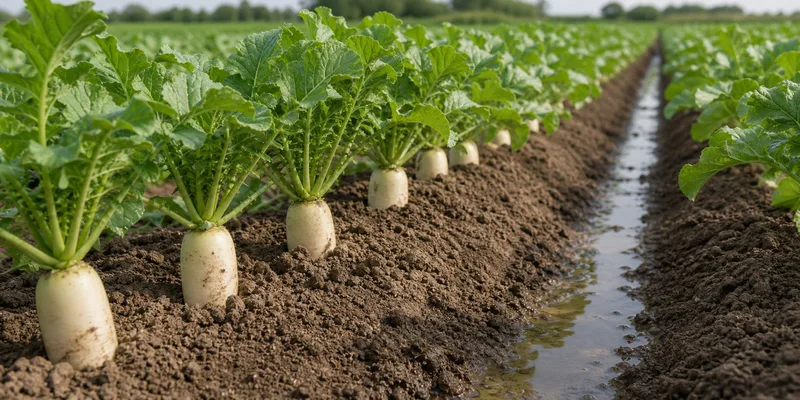
Drainage still matters at this stage. If rain collects in furrows or beds stay wet after storms, open the flow before the roots sit in stagnant soil. The same practical habit appears in potato ridge and trial-dig management: root and tuber crops need air in the soil as much as they need water.
Do not remove leaf area just because roots are swelling
Some growers trim older leaves near the end of the crop, especially when the canopy is heavy and airflow is poor. That can make sense only when it is light, selective, and timed late. Cutting too much too early removes the leaf area that feeds root bulking.
A safer rule is to keep enough healthy leaf area to support the root, remove only leaves that are clearly collapsed or blocking necessary work, and avoid turning leaf trimming into a routine shortcut. If a bed is too dense, it is usually better to solve spacing earlier than to strip leaves later.
Harvest by root quality, not by the calendar alone
Radishes can pass from crisp to woody faster than a bed appears to change from above. Pull a few sample roots before committing the whole bed. Check root size, firmness, skin smoothness, internal texture, and flavor. If the roots are already where you want them, waiting for more size may cost more quality than it adds.
Harvest in batches when possible. The largest and most exposed roots may be ready before the rest. A small planting can be pulled over several days; a larger field can be divided by bed, sowing date, or root size. The same staged thinking helps with Chinese cabbage spacing and harvest decisions, where a clean stand and a realistic harvest window often matter more than forcing every plant to finish at once.
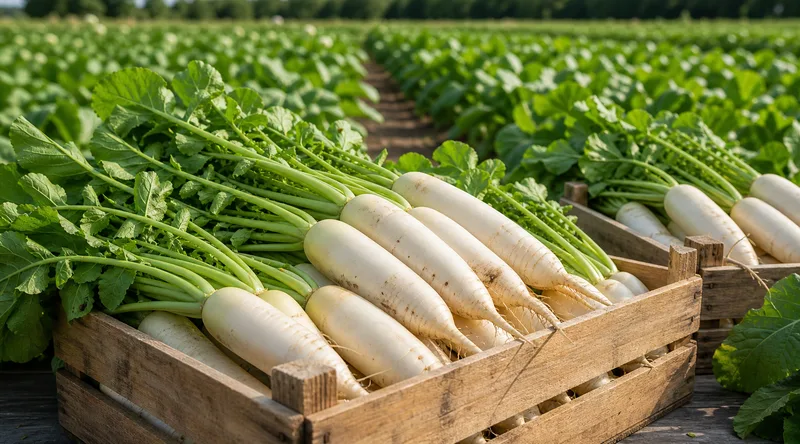
After harvest, remove loose soil gently and separate roots by size and use. Roots meant for quick cooking or fresh eating can be handled differently from roots meant for short storage. If cold weather, heat, or heavy rain is approaching, adjust harvest timing around the real forecast rather than around a fixed number of days from sowing.
The quiet work matters most: thin early, let the taproot establish, keep bulking moisture steady, and sample before the roots get old. That is what makes a radish bed more useful than a row that only looks good from the path.