Potato vines can stay green while the ridge underneath is already changing shape. Rain, irrigation, soil settling, and repeated field traffic can thin the shoulders of the ridge. When that happens, shallow tubers may sit too close to light, or the soil around them may dry and wet too sharply.
This is not another full planting guide. For seed pieces, basic spacing, and early hilling, start with the main potato growing guide. This article focuses on the later part of the crop, when ridge shape, moisture, and a few trial digs can prevent a good-looking stand from turning into an uneven harvest.
The ridge still needs attention after the vines fill in
A good potato ridge should protect the forming tubers while leaving the root zone loose enough for air and drainage. Early ridge building helps, but it does not last unchanged. Heavy rain can wash soil down. Dry weather can open cracks. Foot traffic and tools can flatten shoulders before anyone notices.
Do not judge the field only by leaf cover. Pull back a little soil along the ridge shoulder and check for cracks, exposed tubers, thin spots, or water sitting in the furrow. The check takes very little time, but it often catches the problems that are hardest to fix at harvest.
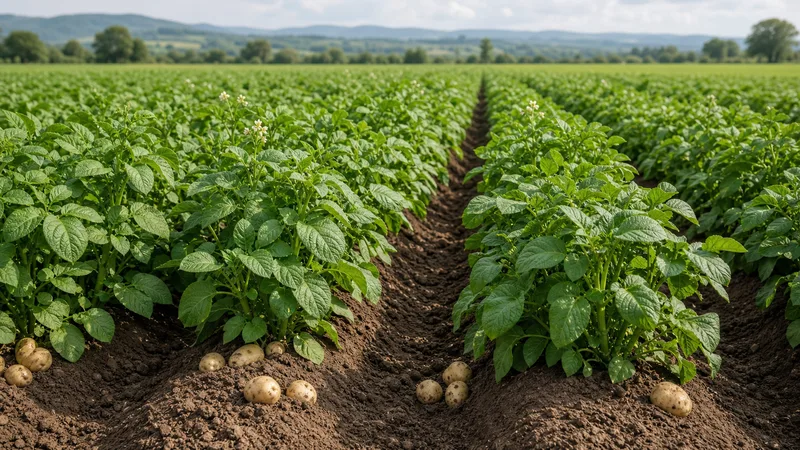
Hill early enough that exposed tubers are not already the warning sign
Hilling is not about burying the plant deeper for appearance. It is about keeping developing tubers covered, shaded, and surrounded by soil that still has room to breathe. If a ridge is opening, add fine soil while it is workable. Soil that is too wet can dry into a hard crust. Soil that is too cloddy can press against shallow tubers instead of protecting them.
Timing matters. When the canopy is still active and tubers are sizing, a light ridge repair can help. When the crop is already naturally yellowing and the skin is setting, heavy disturbance does more harm than good. At that stage the goal changes from pushing growth to protecting skin finish.
Keep bulking moisture steady, then ease toward harvest
Potatoes do not respond well to large swings during tuber bulking. A long dry spell followed by heavy irrigation can make growth uneven. Water sitting in furrows can make the soil heavy and short of air. Both situations make harvest harder and can leave a crop that looks less uniform than the vines suggested.
The principle is similar to the way water swings affect other crops. The tomato cracking guide talks about uneven moisture from a fruit perspective; potatoes show the problem differently, but they still reward a steadier rhythm. Before harvest, avoid a sudden heavy watering just because the soil looks dry at the surface.
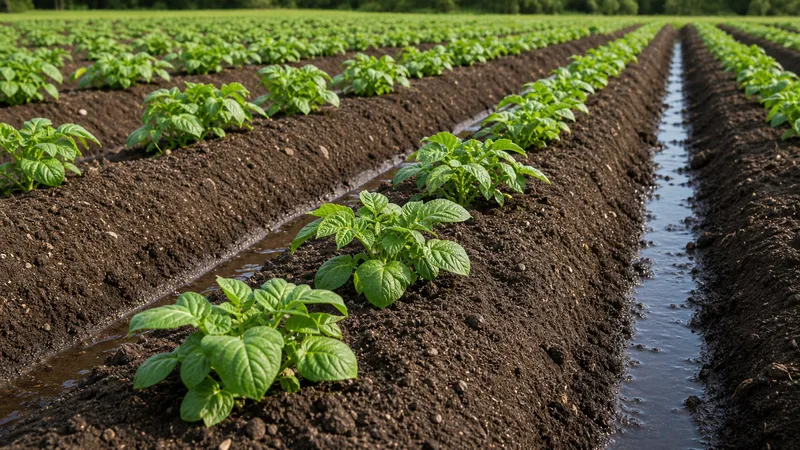
Trial digs give better information than guessing from the row
Near harvest, dig a few representative plants before committing the whole block. Look at tuber size, skin set, and how evenly the crop is grading. If the larger tubers are ready but many smaller ones are still far behind, the decision depends on weather risk, market need, and how quickly the crop is declining.
Do not take every sample from the best-looking row. Check a field edge, a lower wet spot, a normal middle section, and any ridge that looked thin earlier. A few honest samples are more useful than one perfect plant. For small gardens, even one or two careful trial digs can make the harvest day less uncertain.
After lifting, protect the skin before sorting too aggressively
Freshly lifted potatoes should not be handled like stones. If the skin is still tender, every scrape becomes part of the storage and appearance story. Reduce drops, avoid rough piles, and separate cut, green, misshapen, or very small tubers before they are mixed into the main batch.
For immediate kitchen use, grading can stay simple. For storage or sale, skin set, surface moisture, and airflow matter more. This is where potatoes connect with other underground crops such as carrots: the final quality is shaped below the surface long before the crop is carried away.
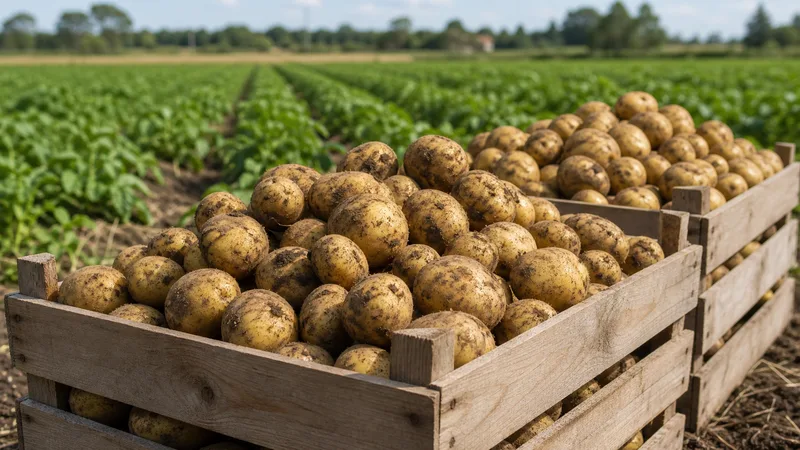
A practical pre-harvest order
Check ridge shape first. Confirm that furrows still drain. Look for cracks or exposed tubers. Keep moisture steady during bulking and avoid dramatic late watering. Then make a few trial digs before choosing the harvest window.
None of these steps is complicated. The value is in doing them before the crop forces a decision. Potato harvests become more predictable when ridge shape, water, and trial digs are treated as part of the crop, not as last-minute details.