After pepper seedlings are transplanted, the first goal is not to force fast flowering. The crop needs to reconnect its roots, settle into the new soil, and recover evenly before it can carry repeated flowers and fruit.
The existing pepper guide on balancing flowers, branches, and repeat harvests focuses more on the production rhythm. This article sits earlier in the season: transplant recovery, root-zone moisture, spacing, and airflow before the first fruit load becomes heavy.
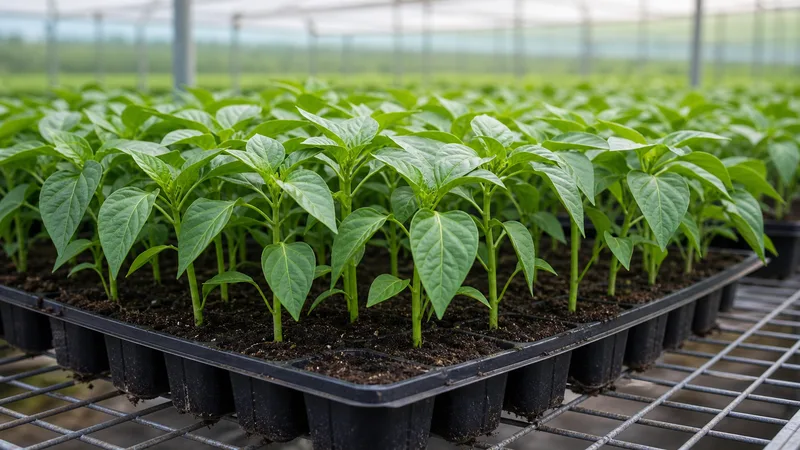
Watch recovery before counting flowers
For a few days after transplanting, pepper leaves may soften in the middle of the day. That alone is not a failure. A better check is whether the plants recover by evening, whether the center leaves keep expanding, and whether the stem base remains firm.
Early flowers can look encouraging, but they are not always the best sign on a plant that has not settled. Weak seedlings, root-damaged plants, or transplants that are still slow should be allowed to rebuild root contact before carrying too much fruit load.
Water in well, then avoid a constantly wet bed
The first transplant watering should help the root ball and surrounding soil connect. After that, the bed should not stay saturated simply because the seedlings are young. Watering needs to follow soil texture, weather, and plant recovery rather than a fixed daily habit.
Too little moisture slows new root growth, while too much moisture reduces air in the root zone. This is similar to tomato transplant watering and ventilation: warm-season vegetables often need both moisture and air around the roots, not just a wet surface.
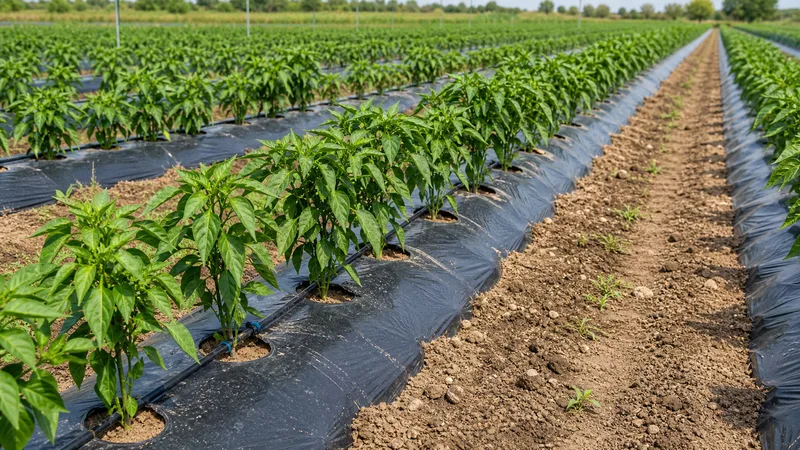
Crowded spacing becomes a later airflow problem
Young pepper plants may look small enough to plant tightly, but the problem appears later when branches spread and fruit begins to hang. Dense spacing can reduce airflow, make harvest harder, and leave the lower canopy slow to dry after watering or rain.
If the planting is already tight, the later work becomes more important: keep rows passable, remove leaves that stay too close to wet soil when needed, and avoid letting the canopy seal over the bed. The same logic appears in eggplant root-zone and canopy management, where roots, leaves, airflow, and picking access are connected.
Fix small problems before the first heavy fruit load
Once the first set of peppers begins to size up, the plant has less room to recover from early stress. Uneven watering, weak transplants, crowded rows, or poor root contact may not show as one dramatic failure, but they can make later flowering less consistent.
Two to three weeks after transplanting is a useful checkpoint. Look for missing plants, uneven irrigation, rows that are hard to enter, and seedlings that still lag behind. It is easier to correct those details before the first fruit load than after the crop is already carrying too much.
Good pepper transplant care is about steadiness, not speed. Even recovery, stable moisture, and breathable spacing give the crop a better base for repeat flowering and harvest.