Tomato problems are often blamed on a missing input when the crop is actually reacting to an uneven root zone. A plant can carry dark leaves and still struggle if the soil alternates between saturation, dryness, and abrupt changes in fruit load.
Set plants at a depth that encourages recovery
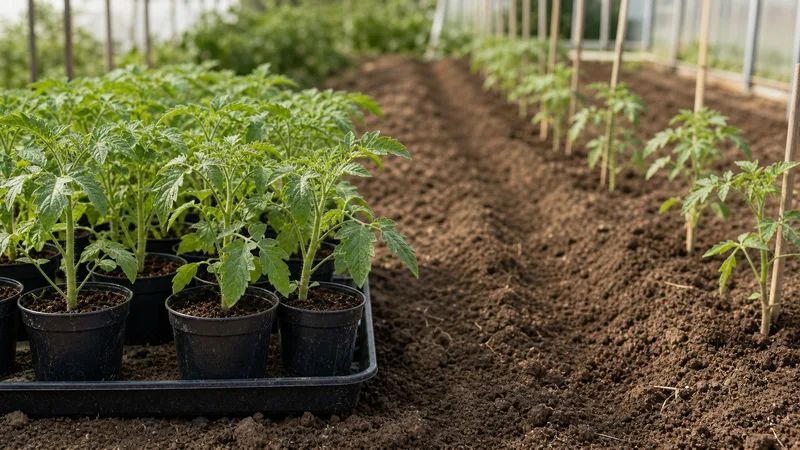
Transplants need settled roots before they are asked to carry a heavy first truss. A firm planting zone and enough room for roots to explore are more useful than trying to force early size with repeated feeding.
Check new growth after planting. Leaves should expand steadily and stems should remain firm; stalled tips and repeated afternoon wilt point back to root establishment first.
Read water at root depth, not at the surface
Tomato roots respond badly to large swings even when the bed surface looks manageable. Irrigation should match rooting depth, weather, and fruit stage rather than follow a fixed daily volume.
Take a small soil sample below the dry surface after irrigation. The root zone should be evenly moist without a slick, airless layer around the lower roots.
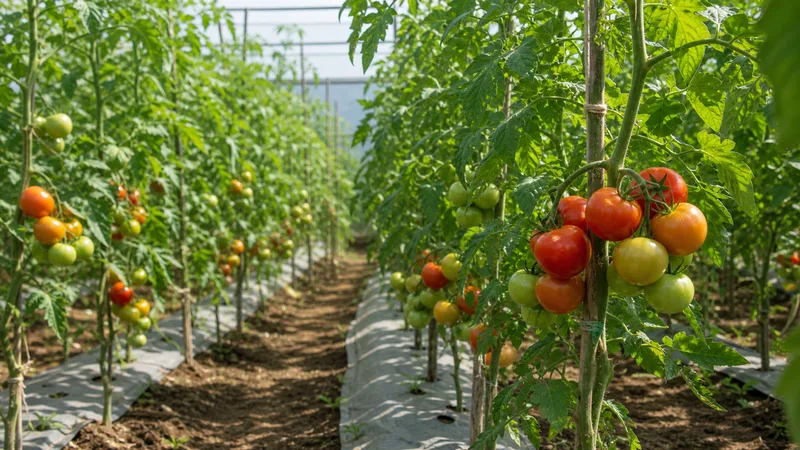
Open the canopy for observation, not for a bare stem
Pruning and support should make fruit trusses visible and allow foliage to dry, while still leaving enough healthy leaf area to shade fruit. Over-removing leaves can trade humidity for sun stress.
Stand at the row end and look for a continuous green wall. If no fruit trusses or tie points are visible, the canopy needs earlier, lighter adjustments.
Pick on a repeatable rhythm
Regular harvest protects both quality and future flowering because heavy, overripe fruit does not stay on the plant. Sort by intended use instead of letting every fruit reach the same color stage.
Carry two picking containers and compare the fruit at the bottom after one row. Any pressure marks mean the harvest container or handling sequence needs changing.
For a narrower discussion of fruit defects after moisture swings, use the tomato cracking and water-rhythm guide. New plants need a different set of checks in the tomato transplant recovery guide.
A tomato crop becomes easier to steer when the root zone, foliage, and harvest load are checked together rather than corrected as separate problems.