The first cherry tomato truss changes the way a plant needs to be read. Until then, a row can look like a collection of young stems and leaves. Once small fruit is hanging, the support, stem direction, lower leaves, irrigation line, and walking side all start affecting the same working space.
This is not the moment to strip every lower leaf or force every plant into one shape. It is a good moment to make the first fruiting area visible and protected, so the next rounds of growth can be managed from an open, understandable row.
Check the truss and the stem as one unit
Begin by finding where the first fruit cluster joins the main stem. The cluster should hang without being twisted around a string, trapped behind a tie, or pressed into a dense leaf pocket. If the main stem is leaning, correct the support gently rather than moving the fruit cluster itself. The stem should carry the load; the support should guide the stem.
Work in short sections of the row. A small adjustment made while the first truss is light is easier than trying to untangle a plant after several clusters and side growth have accumulated around the same point.
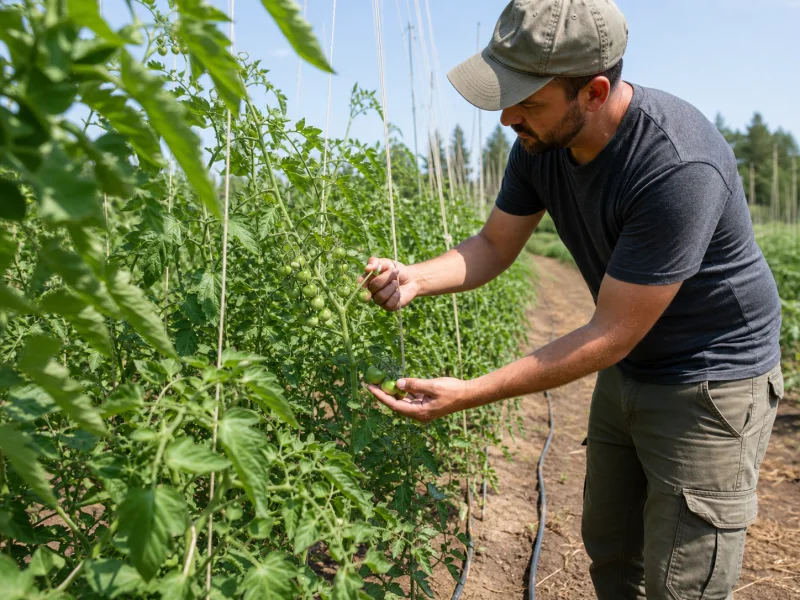
Keep a window around the first fruiting area
Lower leaves are useful plant tissue, so they should not disappear simply because fruit has set. Instead, look for leaves that lie directly on soil, stay wet against the stem, or completely hide the first truss from the working side. Remove only what is clearly interfering with observation, air movement, or access, and leave the rest of the canopy to keep doing its job.
A useful test is simple: can you see the fruit cluster, follow the main stem to the support, and reach the irrigation side without pulling foliage apart? If yes, the plant may need no further adjustment. A clear observation window is more valuable than a uniformly bare lower stem.
Let the support follow growth, not squeeze it
As the plant gains height, check that clips, ties, or strings are guiding the stem without pinching it. The first truss is also a good reference point for whether the support system is keeping the plant upright as the fruit load begins. Reposition a loose line or an awkward tie early, before the stem is carrying more weight.
Do not make a hard bend to match a support that was placed badly. Change the support route where possible, and keep the fruiting truss out of rubbing points. The aim is a stable plant with a path for later growth, not a perfectly straight visual line.
Use the truss to organize the next inspection
When you pass the row again, compare plants at the same stage. Is one truss hidden while its neighbors are visible? Is one section crowding around the string? Is water reaching the root zone evenly below the plants? These comparisons catch structural differences before they become a harvest-access problem.
Once fruit begins to size, avoid sudden shifts in the plant environment. The related tomato watering and cracking guide explains why steady root-zone conditions matter later in the fruiting cycle; the first-truss walkthrough gives that later care a clearer plant structure to work with.
Keep the decision specific to the plant in front of you
One plant may need a tie adjusted, another may only need a leaf lifted off the soil, and a third may already have a good open window. That variation is normal. Avoid turning a quick inspection into a fixed-count leaf-removal routine or a blanket pruning pass.
When the first truss remains visible, supported, and easy to revisit, the row is ready for the next stage without sacrificing useful foliage or making the fruiting area harder to manage.