Tomato cracking usually does not begin on harvest day. It often starts earlier, when fruit is sizing and the root zone moves from too dry to too wet. The flesh expands quickly, while the skin cannot always stretch at the same pace.
The main tomato guide on seedlings, moisture, and fruit set covers the broader crop rhythm. This article looks at one narrower problem: how watering, ventilation, harvest timing, and sorting affect cracking as fruit begins to color.
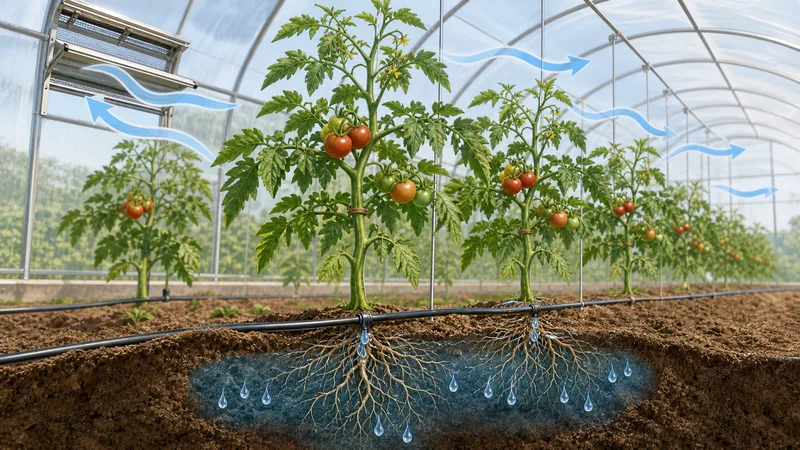
Start with the watering rhythm
Tomatoes need moisture during fruit sizing, but they do not handle sharp swings well. A long dry spell followed by heavy watering can push fruit expansion faster than the skin can adjust, leading to radial cracks, ring cracks, or small surface splits.
The goal is not simply to water less. It is to keep soil moisture from moving too sharply. Drip irrigation, mulch, drainage, and watering intervals all matter. If water is adjusted only after the fruit has started to color, the crop may already be close to cracking.
High humidity slows the fruit surface down
In protected growing spaces, cloudy weather, poor airflow, or high night humidity can keep the fruit surface damp for longer. Even when irrigation has not changed much, the combined effect of a wet root zone and humid air can raise cracking risk.
This is similar to pepper transplant care, where root-zone moisture and airflow need to be managed together. Warm-season vegetables rarely respond well when water is treated as a separate issue from ventilation.
Do not wait for every tomato to be fully red
When a batch of tomatoes is already changing color, waiting for every fruit to become fully red can concentrate cracking after rain, irrigation, or humid weather. Harvest timing should match the use: immediate eating, short storage, transport, or processing.
Picking a little earlier for the right use is often better than holding everything on the plant. Separate sound fruit, cracked fruit, soft fruit, and uneven fruit before judging the crop. That makes it easier to see whether the issue came from variety, irrigation, airflow, or delayed harvest.
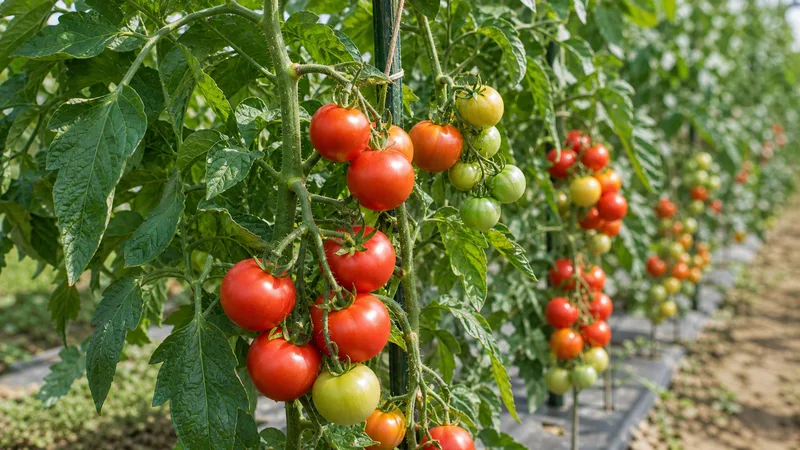
Heavy fruit load needs steadiness, not a final push
A tomato plant carrying many fruit has more pressure on roots, leaves, and developing fruit. Trying to push fast sizing or fast color at the end can make quality less stable instead of improving the crop.
The same logic appears in cucumber watering and training. During harvest, the question is not only whether one fruit grows quickly, but whether the plant can keep supplying fruit without large swings in moisture or airflow.
Preventing tomato cracking is not just sorting out damaged fruit later. It works better when moisture swings, greenhouse humidity, and harvest maturity are managed before the fruit is already under pressure.