After the first pepper harvest, the plant may look lighter, but the crop is entering a sensitive management window. Fruit held too long can tire the branches. Fruit removed too aggressively can leave the canopy and new flowers out of balance. The next flush often depends on what happens in the days right after the first picking.
This guide is narrower than the general pepper growing and repeat harvest guide. It focuses on the first picking and the short recovery period that decides whether the next flowers and fruits can continue smoothly.
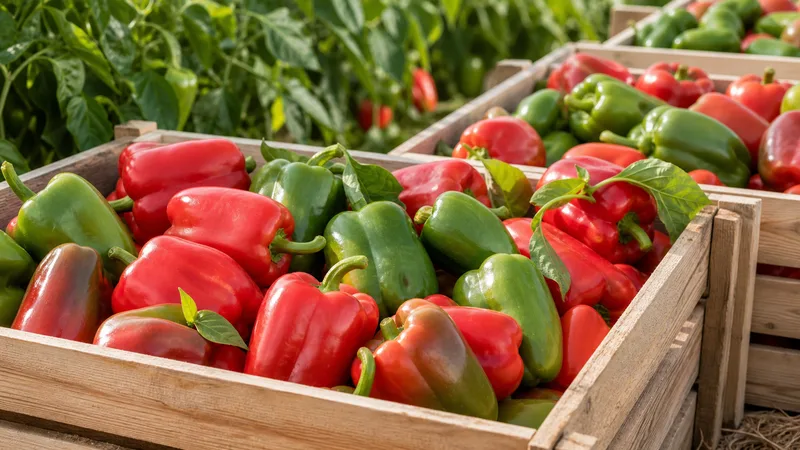
The first crop should not tire the plant
If the first fruits are held too long, they keep drawing strength from the branches. A slightly heavier first harvest may look productive, but it can slow the next flowering wave and leave the plant drooping. In a repeat-harvest crop, marketable fruit should usually be removed in passes rather than left until every fruit is oversized.
Do not judge only by the biggest fruits. Misshapen fruit, small crowded fruit, and low fruit that blocks airflow can also be removed when they are no longer helping the crop. Keeping weak fruit does not always improve yield; sometimes it delays the next flush.
Read branch recovery after picking
Branch posture after the first harvest tells a lot. Strong branches begin to lift as the fruit load drops, and leaves regain tension. If branches stay low, leaves look thin, or the nodes feel empty, the plant has already been pushed hard by the first crop.
In that condition, it is risky to keep every new flower. Favor flowers and young fruit on well-supported branches with good leaf area. Scattered flowers on weak branches should be treated more carefully, because the plant may not have enough recovery strength to carry them well.
Restore water rhythm without forcing the plant
A common reaction after harvest is to push the crop with heavy water and feed. The better first step is a steady root-zone rhythm. After fruit is removed, the plant needs time to rebalance leaf demand, root uptake, and new growth.
This is connected to the same principle used after planting in the pepper transplant watering guide. Recovery is built through consistent moisture, not one large correction after the plant has already become tired.
Open the canopy without stripping it
After the first picking, old leaves, low crowded growth, and shaded inner branches can make it harder for the next flowers to set well. Some cleanup helps, especially where leaves block airflow or harvest access. But the canopy should not be stripped too far.
Pepper plants need leaf area to support the next flush. The goal is to make flowers visible, reduce fruit crowding, and keep air moving, while still leaving enough leaves to feed new fruit. A clean-looking plant is not always a stronger plant.
The second harvest starts with the first notes
Do not wait until the next fruits are large before planning the second harvest. After the first picking, note which rows recover quickly, which rows show fewer flowers, and where fruit is concentrated. Those observations help guide the next irrigation, cleanup, and picking pass.
The same idea appears in other repeat-bearing crops. In eggplant regrowth management, renewal starts with roots and new shoots. In pepper, the key is to connect mature fruit, new flowers, and branch strength before the next flush becomes uneven.