Spinach grows best when conditions are cool, moist, and well drained. When the weather is already warm, the crop needs a different plan from a normal fall or cool-season sowing. Heat can slow germination, dry small seedlings quickly, and shorten the window when leaves still taste tender.
For the basic approach to small sowings, seedbed preparation, thinning, and tender-leaf harvest, start with the main spinach growing guide. This article is narrower: it focuses on warm-weather spinach, where the goal is to reduce heat stress rather than simply push faster leaf growth.
Make germination easier before waiting for a stand
Warm soil and fast-drying surface layers are often the first problem. Spinach seed may take up water and still emerge unevenly if the surface dries or crusts. A fine seedbed, even shallow cover, and good moisture before sowing are more useful than trying to rescue a dry bed afterward.
In hot periods, sowing late in the day can help the seed avoid the strongest sun during the first hours after watering. It is also safer to test a small bed first. If emergence is poor and uneven, later fertilizer or heavy watering will not fully rebuild a uniform crop.
Shade should lower stress, not remove all light
Temporary shade can reduce bed temperature and help seedlings avoid the harshest midday heat. The point is not to grow spinach in darkness. Too much shade and poor airflow can leave seedlings weak, stretched, and slow to recover.
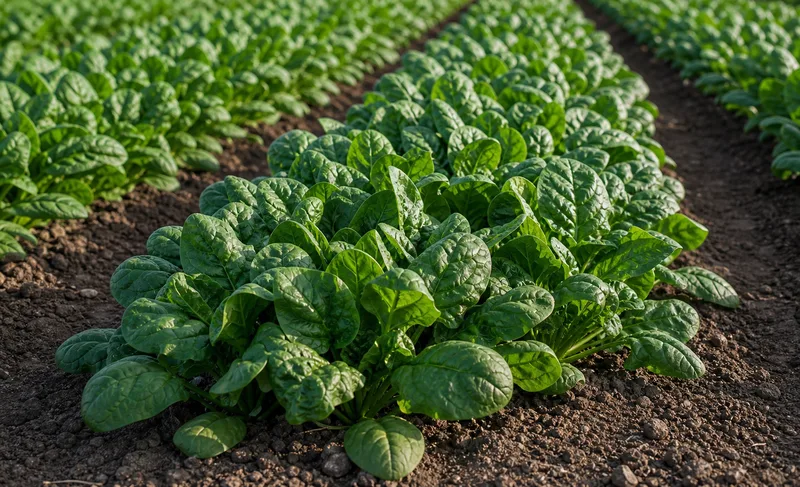
Use shade in a way that can be adjusted. Morning, evening, and cloudy periods can provide softer light, while the hottest part of the day may need protection. This is similar to lettuce management when leaf texture matters in warm weather: the aim is not just speed, but keeping the leaves usable.
Morning and evening watering beat midday soaking
Warm weather dries beds quickly, but spinach still suffers when the root zone stays wet and airless. A heavy midday watering may look helpful for cooling, yet it can leave the soil heavy and then expose seedlings to another hot afternoon. Smaller watering in the morning or evening is usually steadier.
Watch rain-to-sun transitions closely. After heavy rain, the root zone may already be wet. If strong sun returns suddenly, leaves can lose water fast even while the soil is still heavy. Drain the bed, restore airflow, and then decide whether light watering is actually needed.
Warm-weather spinach ages faster than cool-season spinach
In cool conditions, spinach can often wait for fuller leaves. In warm conditions, waiting too long can make leaves coarse and bases older. A small garden should usually pick usable leaves early and in passes, rather than holding the whole bed for maximum size.
The same quality window appears in other crops under heat. In celery stalk quality management, delayed harvest and heat stress can also reduce eating quality before the crop looks obviously failed.
When heat stays high, shorten the crop plan
If nights remain warm and the bed never cools properly, spinach quality has a lower ceiling. In that situation, the goal should change: get an even enough stand, harvest one or two useful cuts, and avoid keeping the crop until the leaves become old. Sometimes the best decision is to pause sowing until cooler weather returns.
Warm-weather spinach is mostly a risk-management crop. Keep the area small, keep water gentle, adjust shade instead of leaving it fixed, and harvest sooner than you would in fall. That makes the crop more realistic and keeps it from competing with the main cool-season spinach plan.