Spinach can look ready before it actually eats well. A bed may be green and closed over, but the useful question is smaller: are the leaves still tender, broad enough to pick, and supported by soil moisture that has not been pushed too far?
This is a harvest-timing note, not a full planting guide. For sowing, spacing, and basic crop setup, start with the spinach growing guide. Here the focus is the last stretch before cutting: leaf texture, water rhythm, and whether to take the crop in one pass or several small passes.
A ready bed still needs a hand check
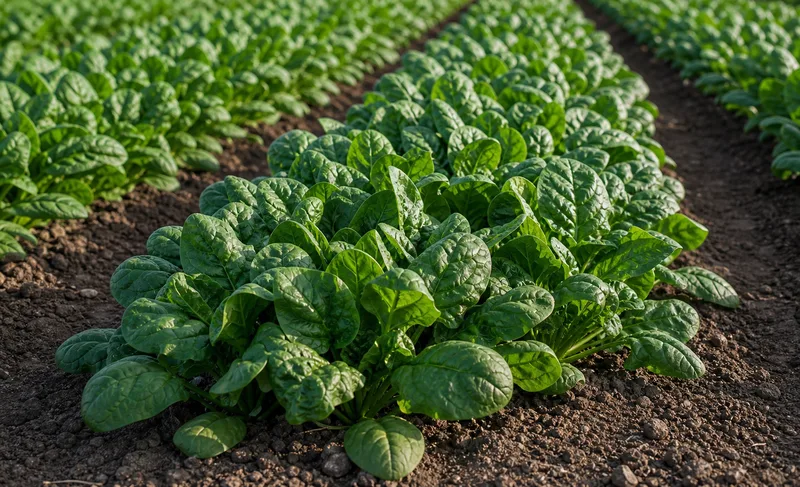
From a distance, spinach readiness is easy to overread. A thick canopy can hide small plants, stretched leaves, and damp pockets near the soil surface. Before deciding to harvest, check a few places by hand rather than judging only by color.
Good harvest leaves should feel full but not leathery. The petiole should bend without snapping harshly, and the inner leaves should still be clean and actively growing. If the bed is tall but the lower leaves are yellowing or the crown feels crowded, quality may already be slipping.
Keep moisture steady, then stop forcing growth
Spinach leaf quality depends heavily on even moisture. Dry soil slows leaf expansion and can make the texture coarse; over-wet soil hides root stress and makes harvest messy. The better target is a bed that stays evenly moist without standing water.
In the final days, watering should support texture, not push soft growth. If rain is coming or the bed is already heavy, delay irrigation and let the surface breathe. If the crop is in warm weather, the warm-weather spinach guide gives more detail on shade and cool watering.
Harvest the largest plants first
Spinach does not have to be taken as one uniform block. In many beds, the cleanest harvest begins with the largest plants and leaves the smaller plants a little more room. This also reduces crowding at the crown and keeps the second pass from becoming a collection of stretched, shaded leaves.
When cutting, avoid shaving the crown so low that regrowth becomes weak. If the plan is a single harvest, clean cutting and quick cooling matter more. If the plan is another light picking, leave the center alive and remove only leaves that are large enough to justify the cut.
Do not let fertilizer show up in the leaf
Late feeding can make spinach look stronger, but it can also leave the crop soft, uneven, or too lush for good handling. Earlier growth needs enough nitrogen and water, yet the last stage should be steadier and less forceful.
A practical check is whether the leaves are expanding naturally or being pushed into pale, tender growth that bruises easily. If the bed already has enough size, stop chasing more bulk and protect texture, cleanliness, and harvest timing instead.
Use each harvest to adjust the next sowing
The best record from a spinach bed is not only yield. Note where the leaves became coarse first, where water sat after rain, where plants were too dense, and which rows gave a clean second pass.
Those notes make the next sowing better. Spinach is short-cycle enough that small changes in sowing density, bed drainage, and harvest order can show up quickly in the next crop.