After corn begins rapid stem growth, management is no longer only about whether the plants are tall. The crop is building leaves, stalk strength, ear potential, and the foundation for tasseling at the same time. If water and nitrogen timing slip here, the result can show up later as smaller ears, weaker stalks, uneven grain fill, or wider differences across the field.
This guide follows the main corn establishment guide. That article focuses on planting depth, emergence, and stand uniformity. This one is narrower: water, nitrogen timing, root-zone access, and the transition from rapid growth into tasseling and grain fill.
Check field uniformity before adding more inputs
Before irrigating or sidedressing, walk the field. If plant height, leaf color, and vigor are uneven, the field should not be read only by its best rows. Strong areas may be ready for the next step, while weak edges or missed zones may still need diagnosis.
Corn does not use its highest nutrient demand in the earliest seedling stage. Demand rises sharply as the crop moves from vegetative growth into ear formation. If drought or nutrient shortage is already visible by this point, later correction may not fully recover ear size or kernel number.
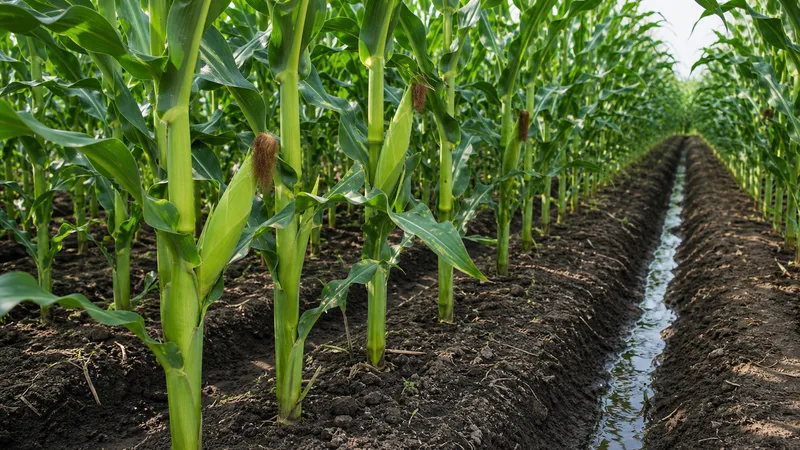
Manage water by the root zone, not only the surface
The surface can mislead. A wet surface does not always mean the active root zone has useful moisture, and a dry crust does not always mean the crop needs a heavy irrigation immediately. Soil moisture, midday leaf posture, field cracks, forecast heat, and root depth all matter.
The first major watering after rapid growth begins should be steady rather than dramatic. Too little water limits nutrient uptake; too much water in low spots can weaken roots and stalks. Drip, furrow, and rainfall-based systems differ, but the goal is the same: avoid sharp swings in the root zone.
Sidedress fertilizer where roots can use it
Corn sidedressing often disappoints when fertilizer stays on a dry surface. Around jointing and the large-whorl stage, nitrogen should reach the active root zone through placement, covering, rain, or irrigation. Surface application without moisture can look convenient but deliver uneven results.
Nitrogen is important in this window, but it is not the only factor. Earlier phosphorus and potassium supply, soil texture, rooting, plant density, and weather all shape the response. A field check before sidedressing is more useful than copying a fixed rate without context.
Tasseling and silking should not meet a water gap
The period around tasseling and silking is sensitive to moisture stress. If the root zone is dry or the crop is already losing strength, pollination and grain fill can suffer. On the other hand, overly wet, poorly aerated fields can leave stalks weaker and raise lodging risk later.
This is similar in principle to late-season rice water management: field crops are not simply waiting to mature. Roots, stems, and grain fill all need a stable finish.
Connect water and fertilizer records to harvest results
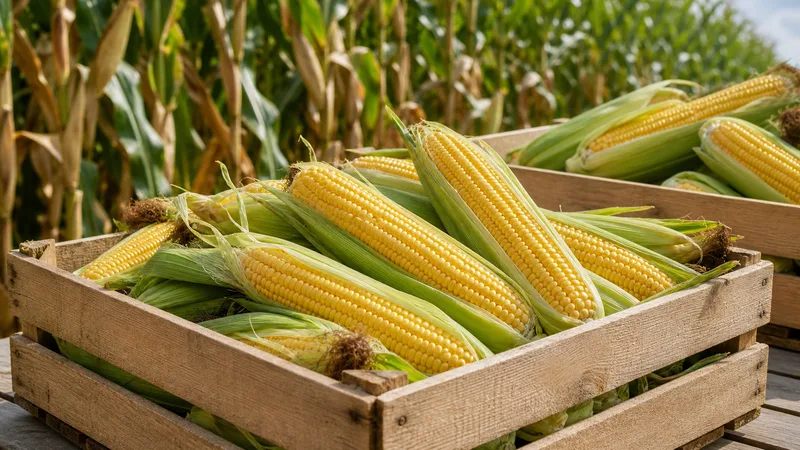
A good water and nitrogen record should not stop when the leaves look greener. Record sidedress timing, rainfall or irrigation, visible stress, tasseling uniformity, and final ear condition by field zone. If one area later has tip-back, shallow kernels, or lodging, those notes help trace the reason.
For the final stage, continue with the corn harvest timing guide. Together, the corn articles now form a clearer sequence: emergence, rapid-growth water and nitrogen, and harvest quality.