Before a sugarcane field looks like a field, it is a sequence of small decisions made at ground level. A stalk section is selected, set down in relation to the next one, and placed where the row can still be followed after soil is moved back into place. That first line is more than a place to put planting material. It is the working map for the people who will return to the field later.
Good establishment does not require every cane piece to look identical or every field to use the same calendar. It does require a row that stays understandable: where the work began, which sections belong together, where the turning space is, and what should be checked before the next task starts. This note focuses on that practical handoff rather than on a universal planting recipe.
Choose planting pieces as a group, not as leftover stalks
Vegetative planting material carries the field forward, so the first useful sort happens before it enters the furrow. Keep the pieces chosen for the same stretch together long enough to compare their condition and length of handling. A clean crate, a short shaded pause, or a clearly marked edge of the row can be enough to stop one group from becoming an unexplained mix of whatever was closest at hand.
This is not a call to reject every piece that looks different. It is a way to notice when a piece belongs to a different decision: perhaps it needs a closer check, perhaps it is intended for another short section, or perhaps it should not disappear into the row simply because the furrow is already open. Leaving that distinction visible is often more useful than rushing to make the ground look finished.
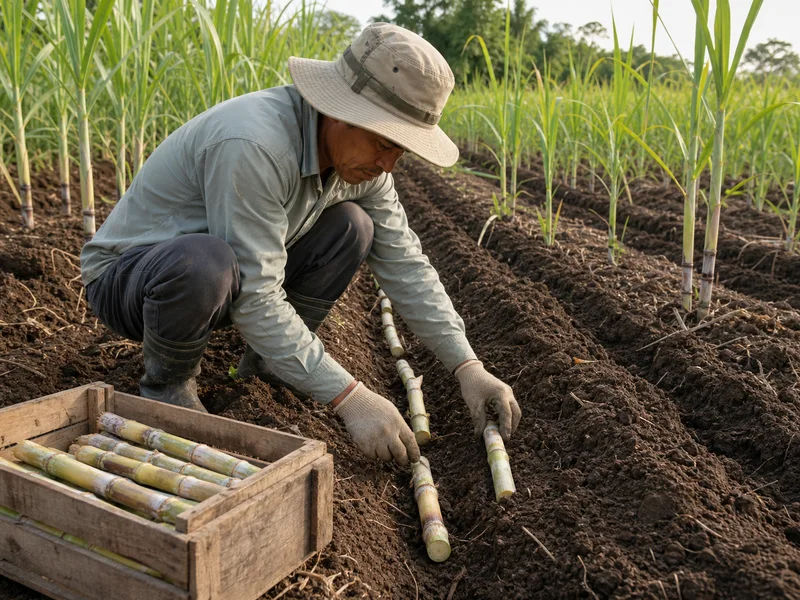
Lay the row so a return visit has an obvious starting point
Start at an end, a stake, or another stable reference that remains visible when the field is viewed from the path. Then place the cane pieces in a deliberate sequence rather than scattering them forward from several directions. The line does not need to be perfect to be informative. It only needs to answer a simple question later: where does this planting pass begin, and where did it stop?
That same habit helps in field designs where two crops meet. The sunflower and soybean boundary guide looks at a visible dividing line between neighboring crops; a sugarcane row has a different purpose, but both benefit when a boundary is made useful before the plants fill in.
Leave room for the work that follows the planting
A planting row is easier to manage when the space beside it still tells the worker where to walk, where soil was last moved, and where the next observation can begin. Avoid treating every open patch as something that must immediately be filled or covered. A small readable gap at the end of a pass can be a better handoff than a row that looks continuous but no longer has a clear working order.
This becomes important after weather changes too. The corn field after heavy rain note follows a different crop and a later stage, but it makes the same practical point: field conditions are easier to assess when the previous work has left clear places to begin looking.
Record the line in plain language before moving on
The end-of-task note can stay small: which row was completed, where the planting material changed, and which short section deserves a second look. It does not need to turn a field into a spreadsheet. A person returning after a few days should be able to join the work without rebuilding the whole story from memory.
When emergence begins, use that same line to compare sections without forcing a single explanation onto the entire field. Look first at the row as it was laid down, then at what is actually visible above the soil. The purpose of the planting map is not to promise uniform growth. It is to make the next observation more honest and the next decision easier to explain.