Spring wheat recovery should not be managed as one flat field. After winter or a cool early season, the field often contains strong strips, thin edges, compacted patches, and wetter low spots at the same time. A single watering or fertilizer decision can help one zone and push another zone too far.
The main wheat growing guide focuses on planting depth, cover, and weak field edges at establishment. This guide starts later, when wheat is greening up and tillers are deciding whether they will become useful heads or disappear before stem elongation.
Walk the field before choosing a spring schedule
A calendar can suggest when spring work usually begins, but the field should decide what happens first. Check the center, edges, wheel tracks, low areas, lighter soil, and any late-emerging strips. The question is not simply whether the wheat is green; it is whether each zone has enough plants, active tillers, and soil moisture to support recovery.
Weak patches need a different pace from thick, dark, fast-growing patches. If the whole field is treated like the weakest part, strong areas may grow too lush and become more vulnerable to lodging later. If the whole field is treated like the best part, weak areas may never build enough heads.
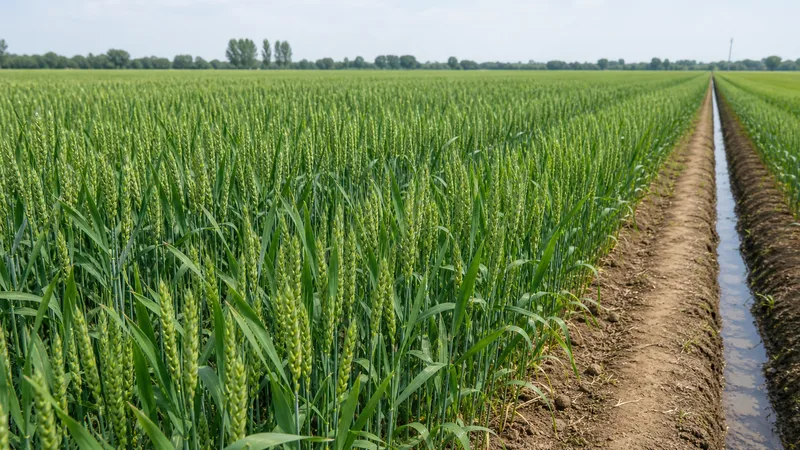
Soil moisture is more useful than leaf color alone
Leaf color changes quickly with cold, wind, recent rain, and early growth. Soil moisture changes the next decision more directly. A wheat stand with acceptable moisture may need light soil work and time, while a dry weak stand may need water before it can use added nutrients.
Do not judge only the surface. Early spring soil can look dry on top while still holding moisture below the crown zone, or it can look damp while the root zone is compacted and short of air. Digging a small check in several field zones often explains why wheat that looks similar from the road is recovering differently.
Weak wheat should be encouraged, not rushed
Thin or late wheat often benefits from gentle early attention: opening the surface crust, conserving moisture, and avoiding stress while new roots and tillers restart. Heavy irrigation or heavy feeding before the plant is ready can waste inputs and may not solve the real problem if the root zone is cold, compacted, or too wet.
When weak plants begin producing new leaves and active roots, water and nutrition decisions become more effective. The aim is to help useful tillers survive, not to force the canopy to look dense for a few days.
Strong wheat may need restraint
A thick stand is not automatically a safe stand. Dense wheat that receives early water and nitrogen without need can stretch, shade its lower leaves, and become harder to keep upright later. Strong zones should be checked for crown strength, plant density, and soil moisture before being pushed.
Restraint can be an active decision. Waiting until stem elongation begins, splitting work by field zone, or delaying water in already moist strong areas may protect the crop more than treating spring greening as a race.
Surface work can protect both moisture and roots
Light surface loosening can break crusts, reduce unnecessary evaporation, and warm the upper soil after cold wet periods. It should stay shallow enough to protect crowns and roots. The purpose is not deep disturbance; it is to help air, warmth, and moisture balance return around the plant base.
Fields with clods, crusting, or sealed wheel tracks deserve more attention because water movement and root activity are uneven there. Where the soil is already loose and moist, extra passes may do little except add traffic.
Connect spring recovery with the later grain-fill risk
Spring management is where many later wheat problems start. A crop pushed too hard early may lodge or run out of balance during grain fill; a crop left weak may never carry enough heads. The later wheat grain-fill and lodging guide is easier to apply when spring decisions have already separated weak zones from strong ones.
Good spring recovery is not about making every part of the field look identical immediately. It is about giving each zone the amount of water, soil attention, and timing it needs so the final stand is strong enough, but not overgrown.