Late-season rice may look as if it is only waiting for harvest, but several decisions still matter: whether shallow water should remain, when the field should begin drying, whether the soil can carry harvest equipment, and whether maturity is even across the field.
The existing rice guide on level fields and early water management focuses on the foundation. This article looks later, from heading and grain fill toward harvest, when water management needs to support grain filling without leaving the field too soft to cut.
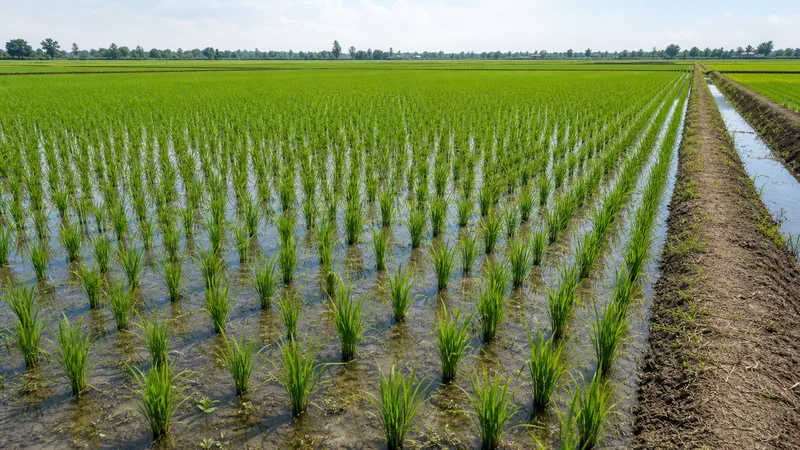
Do not cut water suddenly during grain fill
During grain fill, rice panicles are still building weight. If the field dries sharply at this stage, leaves can lose function and grain filling may become less even. In fields that are not level, high spots can dry first while low spots stay wet, making maturity more uneven.
Holding water deeply is not the answer either. Long periods of deep water can reduce root-zone air and delay field drying later. A steadier approach is to keep the field moist with shallow water or wet-dry movement that supports filling while preparing for harvest conditions.
Field drying should follow soil support, not only the calendar
Many growers think about drying by date, but fields behave differently. Heavy clay, low areas, deep earlier water, and slow drainage all change when drying should begin. Fast-draining areas also should not become too dry too early.
The purpose of drying is not to stress the rice. It is to let the field gradually carry harvest traffic. Walking the field, checking how deeply your foot sinks, and comparing field edges with the center can be more useful than a fixed date alone.
Lodging risk should be judged before harvest day
If the field stays wet late, root support and lower-stem strength can weaken. When panicles are heavy or wind and rain arrive, lodging risk rises. Once rice lodges, harvest slows down and grain can become dirtier, wetter, or more prone to loss.
This is similar to corn harvest timing, where stalk strength and field access matter before cutting. The crops differ, but late-season maturity, field support, and lodging risk need to be read together.
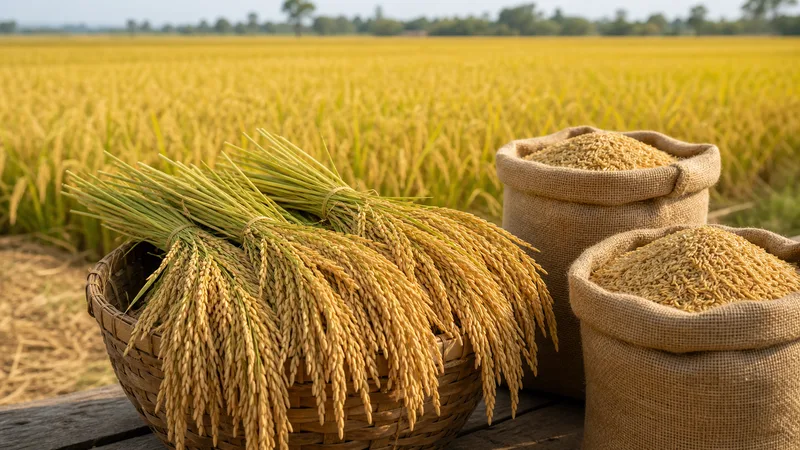
The harvest window is not about every plant matching perfectly
Edges, low spots, stronger areas, and weaker patches often mature at different speeds. Waiting for every part of the field to match perfectly is rarely realistic, but harvesting from the earliest yellow area alone can also be misleading.
Before harvest, sample more than one part of the field. Check panicle color, grain firmness, green grain share, lodging risk, and whether the field can support equipment. This is close to wheat maturity checks, where weak edges and grain dryness both matter.
Use harvest problems as field notes
If some areas are wetter at harvest, lodge earlier, carry more green grain, or stay too soft for equipment, those are not only harvest problems. They point back to field level, water movement, fertility, and drying rhythm earlier in the season.
Late rice management works best when grain fill and harvest access are planned together. Drying too early can weaken grain fill; drying too late can leave the field soft and lodging-prone. Reading water, field support, and maturity together gives harvest decisions a stronger base.