Apple harvest quality is often decided before the first bin is filled. Bag removal, light exposure, fruit turning, field moisture, and the order of picking can change how evenly fruit colors and how much damage appears after handling.
The main apple growing guide covers tree shape, crop load, and cooling after harvest. This article stays closer to the final weeks before picking: when to remove bags, how to improve color without sun injury, and why the harvest should usually move through the orchard in more than one pass.
Do not remove bags only by the calendar
A calendar date is only a starting point. Apples inside bags need enough time to lose the green background color, but the exact moment changes with cultivar, elevation, weather, canopy density, and the sales target. Fruit that still looks green under the bag often needs more time; fruit that has begun to look old or yellow may have waited too long.
Before removing a large block of bags, open samples from several parts of the orchard. Compare fruit from the sunny side, shaded side, upper canopy, inner canopy, strong trees, and weaker trees. The goal is to remove bags when the batch can color evenly, not merely when one tree looks ready.
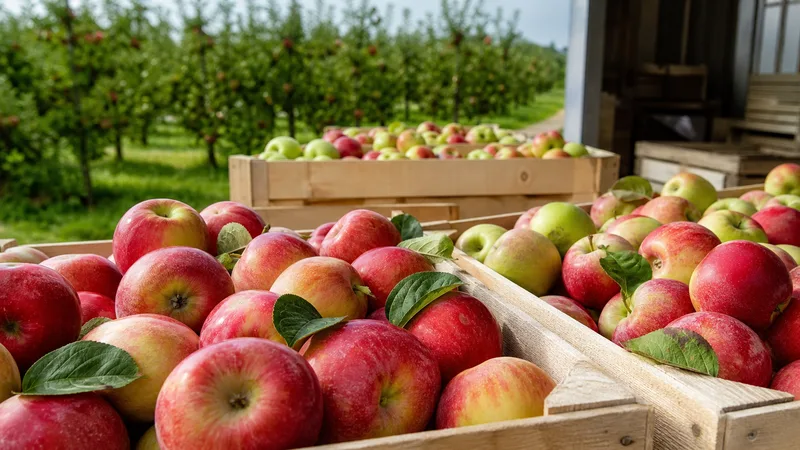
Weather after bag removal matters as much as the removal date
Bagged fruit moves from a protected microclimate into direct orchard conditions. A hot, bright period immediately after removal can cause sun stress, while dull weather with little day-night temperature change may slow coloring. The best choice is often a cooler, stable window rather than the first available work day.
Moisture also matters. Extremely dry trees and hot fruit are less forgiving during bag removal and turning. The aim is not to push water at the last minute, but to avoid a stressed canopy when fruit suddenly receives more light.
Light improvement should be gradual
Good color needs light, but stripping too many leaves or opening the canopy too aggressively can expose fruit faster than it can adapt. Remove only the leaves and shoots that directly block marketable fruit, and keep enough functional leaf area to support the tree.
This is where the earlier apple pruning and fruiting wood guide connects with harvest work. A canopy that was balanced earlier needs less emergency leaf removal later. A crowded canopy forces growers to make rougher choices close to harvest.
Turn fruit only when it can be handled safely
Fruit turning can help the shaded side color, but it should be gentle and timed. If the sun side has colored while the shaded side remains pale, rotate the fruit carefully without twisting the stem. Forcing fruit that does not move easily can break the stem or loosen the apple before harvest.
Turning is not a substitute for earlier canopy balance. It is a finishing step for selected fruit, especially where buyers expect a more even red surface or where fruit will be sorted by appearance.
Pick by maturity zones, not by orchard pride
One pass through the orchard is rarely the best quality plan. Fruit on the outside of the canopy, upper sections, lighter crop-load trees, and warmer field edges may mature ahead of shaded interior fruit. Picking everything at once mixes fruit that should be sold, stored, or held for a few more days.
For better quality, plan the harvest around maturity zones. Start with fruit that has reached the right color and firmness, then return for slower zones. This protects the best fruit and reduces the amount of under-colored or over-mature fruit in the same lot.
Gentle handling protects the color you worked for
Late-season color work is wasted if picking causes bruises, stem punctures, or skin rub. Pick with short fingernails, lift the fruit rather than pulling hard, keep stems intact, and avoid dropping fruit into deep containers. Sorting should separate bruised, sun-stressed, undersized, or poorly colored fruit before cooling or delivery.
Apple quality is not one decision at harvest. It is the sequence of bag removal, light management, gentle fruit turning, maturity-zone picking, and fast sorting after harvest. When those steps fit together, the final fruit looks more uniform and handles better after it leaves the orchard.