Walk into a cherry block in early summer and the fruit may still look small, but the canopy can already be making the harvest harder. Upright shoots shade the inner branches, picking lanes become narrow, and fruit that should color evenly begins to mature in separate pockets.
This article looks at the summer pruning pass before harvest pressure builds. For site choice, drainage, pollination, and the basic orchard system, use the cherry growing guide. Here the job is narrower: keeping light, water, and picking access balanced while the crop is still on the tree.
A dark interior is an early warning
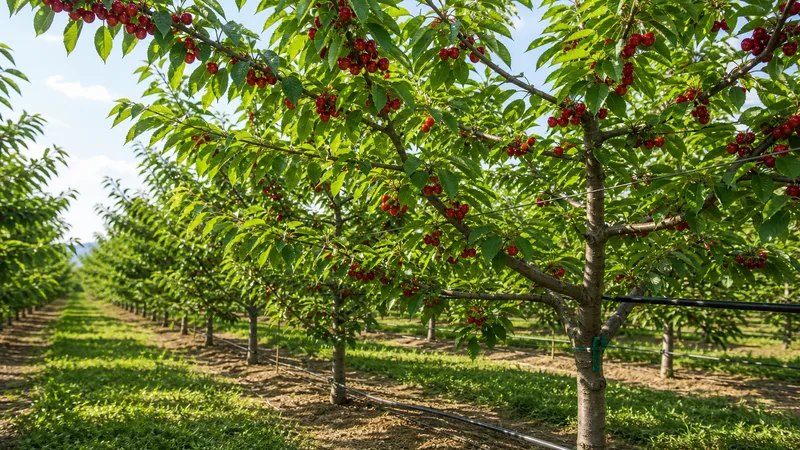
A cherry canopy can look productive from the outside while the inside is already too shaded. When inner leaves stay pale, fruit color lags, and workers cannot see through the lower canopy, the tree is not only dense; it is becoming harder to harvest cleanly.
Check the tree from the row, then step inside the picking path. Useful summer pruning should let light reach fruiting wood without stripping the tree bare. The aim is not a thin tree, but a tree where fruit, leaves, and hands all have enough room.
Pull and position before you cut
Not every upright shoot needs to be removed. Some branches can be opened by tying, spreading, or redirecting while they are still flexible. Pulling branches into a better angle can reduce top dominance, improve light, and create fruiting wood without leaving unnecessary pruning wounds.
Cut first only when a shoot is clearly crossing, crowding the center, blocking a picking lane, or shading fruit that should be coloring. If every strong shoot is removed at once, the tree may respond with another flush of growth, which brings the same shading problem back later.
Pinch strong growth while it is still manageable
Summer shoot control works best before the shoot becomes a thick problem. Pinching or shortening vigorous growth at the right stage can slow it, encourage smaller side growth, and keep the canopy from racing ahead of the crop.
The timing matters. Too early, and the tree may simply push more growth. Too late, and the shoot has already shaded leaves and fruit for weeks. A practical pass is to identify the shoots that are stealing light or vertical space, then handle only those instead of treating the whole tree the same.
Water swings show up in the fruit
Cherry roots are shallow enough that water changes can show quickly in the crop. During fruit enlargement, dry soil can reduce size and firmness, while sudden heavy water after a dry spell can raise cracking risk. The solution is not constant wetness, but steadier moisture.
Before harvest, check soil at more than one depth and more than one row position. Low strips, compacted wheel tracks, and dry edges may need different decisions. Water management should support fruit expansion without making the root zone heavy or unstable.
Keep the harvest route visible
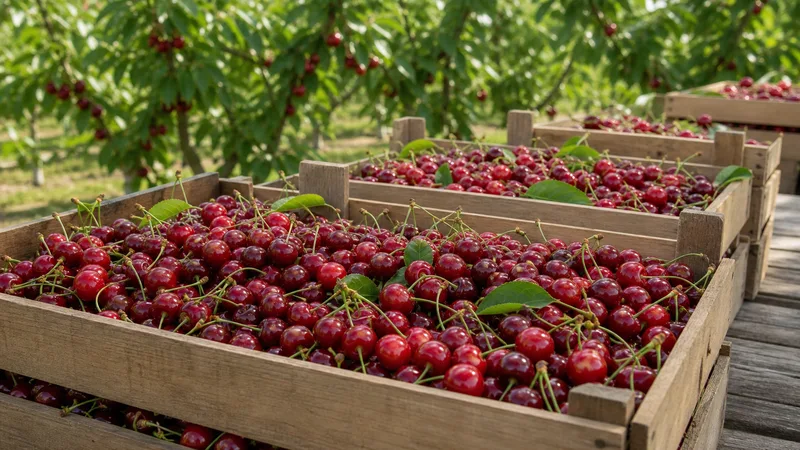
A canopy that closes too tightly also slows the crew. If ladders, hands, or picking containers cannot move smoothly, fruit is more likely to be squeezed, dropped, or mixed from different maturity zones.
This is where pruning and harvest handling connect. A clean picking route helps workers separate ripe fruit from slower fruit, and it reduces the time cherries spend in heat. After picking begins, gentle sorting becomes the next quality step; the cherry postharvest recovery guide covers that handoff from fruit handling back to tree recovery.
Do not borrow too much leaf area from next season
The temptation in a shaded tree is to cut hard and see instant light. Cherries still need active leaves to finish the current crop and support the following season. Removing too much useful leaf area can trade one problem for another.
A better summer pass removes the worst shading first: straight-up shoots, inward shoots, crowded forks, and branches that hide fruit from inspection. Keep well-placed leaves that feed fruiting wood. This is similar to other fruit trees where crop load and summer canopy work must be judged together, such as the pear fruit-load and summer pruning guide.
Make the next pass smaller
Good summer pruning is not a one-time rescue. After the first pass, come back and ask whether the tree stayed open, whether fruit color evened out, and whether water moved through the block without creating wet pockets.
If the second pass is small, the first pass was probably close. If the second pass feels like starting over, the tree may be too vigorous, too crowded, or watered in a way that keeps pushing vegetative growth when the fruit needs steadiness.