Jujube trees can look productive in summer while the orchard is quietly becoming harder to manage. New shoots keep extending, fruit are setting or sizing, the canopy closes in, and the harvest path that looked clear in spring starts to disappear.
The main jujube growing guide focuses on orchard layout, tree height, and row pressure. This article starts later in the season, when summer pruning, water rhythm, root-zone air, and harvest access need to work together. It has more in common with the practical timing in the peach June shoot and fruit-load guide: keep the tree workable before the crop becomes difficult to handle.
Summer pruning should make light and labor possible
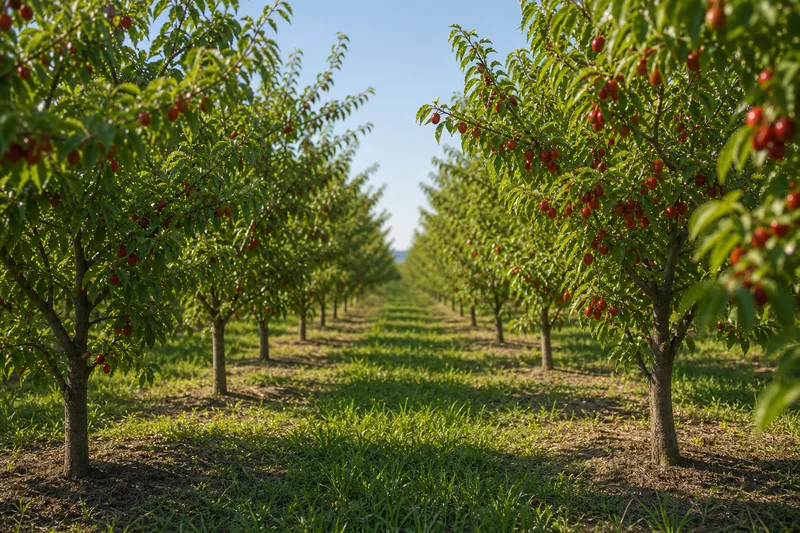
Summer pruning in jujube is not just a shorter version of winter pruning. The first question is whether light, airflow, and people can still move through the canopy. If the inner canopy is dark, fruit inspection, picking, and sorting all become harder later.
Start with shoots that crowd the center, weak growth that adds shade without carrying useful leaf area, and branches that cross or press into better-positioned fruiting wood. Bud rubbing, shoot tipping, and branch positioning should all serve the same purpose: keep fruiting sites visible and keep the tree from closing before harvest.
Tipping and branch positioning depend on vigor
When new shoots are too vigorous, tipping can reduce wasteful growth and help the tree put more attention back into fruiting wood and young fruit. But a weak tree with limited functional leaf area should not be handled like a vigorous tree. Keep enough healthy leaves to feed the crop, and remove growth that mainly blocks light or competes for space.
Branch positioning has the same logic. The goal is not to make every branch lie flat; it is to soften overly upright growth and open space for light. Very tender shoots can break, while older shoots are harder to move, so smaller adjustments made at the right time are usually better than one heavy correction. The same principle shows up in citrus canopy light and airflow work: structure matters because it makes later orchard work easier.
Water management changes with the fruit stage
Jujube trees tolerate dry conditions better than many fruit crops, but that does not mean fruit-sizing trees should be left under long water stress. Bud break, flowering, early fruit development, and fruit enlargement all place different pressure on the root system and canopy.
Water should be matched to soil texture, weather, tree vigor, and crop load. Avoid both long dry spells and a root zone that stays wet and poorly aerated. In small orchards, the useful target is often the active root area near the canopy edge rather than only the soil next to the trunk. Furrow, basin, drip, or stored-hole irrigation ideas can all work when they keep water steady without sealing the soil.
Root-zone air matters as much as one deep watering
Jujube roots spread widely, and many absorbing roots work in the upper soil. Surface crusting, poor drainage, and compacted soil can make irrigation less effective because roots still struggle to breathe. Mulch, shallow cultivation where appropriate, organic matter, and clear drainage all help keep the root zone functional.
Fertilizer and water should not be placed only against the trunk. Working closer to the outer canopy line is often more useful and reduces the chance of root injury. When the root zone stays active, summer pruning and fruit enlargement support each other instead of competing for the tree's limited energy.
Harvest access is built before harvest week
Fresh jujube fruit have thin skin and lose value quickly when they are bruised, squeezed, or picked wet. If the canopy is already blocking the picker, fruit are harder to see and easier to damage. Summer pruning should therefore leave space not only for sunlight, but also for hands, containers, and careful movement through the row.
For fresh-market fruit, picking by hand in several passes is usually gentler than knocking fruit down all at once. Keep the stem when possible, handle fruit lightly, and sort out damaged, stemless, or unevenly mature fruit during picking. Avoid harvesting immediately after rain or before dew has dried, because wet fruit are more likely to lose appearance and storage quality.
How this fits with the basic guide
If you are still deciding spacing, tree height, or early training, start with the jujube growing guide. If the trees are already bearing, use this article as a summer check: is the canopy too dense, is water swinging between dry and wet, and can fruit still be picked without damage?
Do not treat pruning, watering, and harvest as separate jobs. A productive jujube tree needs one continuous condition through summer: enough light in the canopy, enough air in the root zone, and enough access to remove fruit cleanly when it is ready.