After cherries are picked, the orchard can feel as if the hardest work is over. The tree does not see it that way. Fruit growth and harvest use a large part of the tree’s stored energy, and the weeks after picking often overlap with flower-bud formation, summer heat, rain, and renewed shoot growth. If this period is ignored, the problem may not show immediately. It can appear next season as weaker bloom, uneven fruit set, or poorer fruit uniformity.
For planting, drainage, pollination partners, and picking routes, start with the broader cherry growing guide. This article focuses on the postharvest window: keeping leaves working, helping the tree recover, opening the canopy, and connecting fruit sorting with next year’s crop potential.
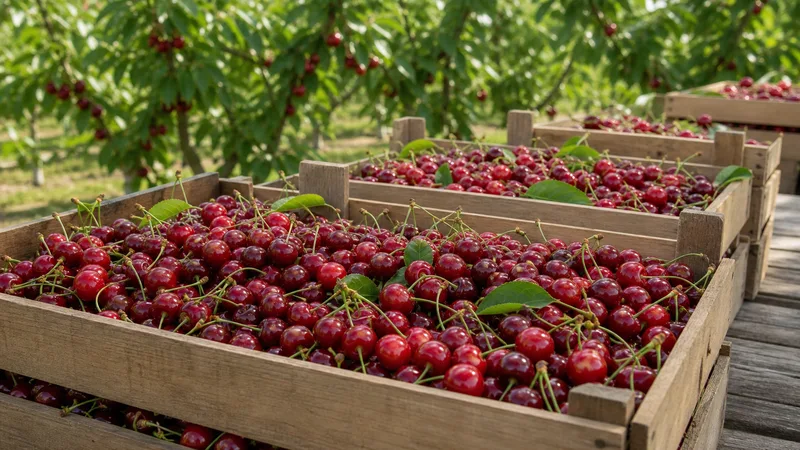
Handle fruit gently before sorting causes more damage
Cherries bruise and soften more easily than many orchard crops. After picking, fruit should not be repeatedly dumped, left in direct heat, or mixed with damaged fruit for long. Sorting is not only about appearance. It separates maturity, size, color, and damaged fruit so one weak group does not lower the value of the whole batch.
Even a small orchard benefits from a shaded holding area. Keep containers shallow, shorten the carrying route, and remove bruised, overripe, underripe, or debris-mixed fruit early. Gentle harvest work makes every later step easier.
Tree recovery should follow crop load, not a fixed habit
Postharvest feeding and water decisions should reflect tree vigor, crop load, and leaf condition. Trees that carried a heavy crop or show weak leaf function may need earlier support. Strong trees that carried a light crop should not simply be pushed harder, because excessive shoot growth can compete with flower-bud development.
The logic is close to apple crop load and fruiting wood management: after harvest, the question is not only what the tree produced this year. It is whether the tree can rebuild enough strength for next year’s bloom and fruiting wood.
Leaves still matter after the crop is gone
Cherry leaves keep feeding the tree after harvest. They help rebuild reserves and support the buds that will matter next season. If the canopy is too dense, the inner leaves are shaded, or leaves decline too early, the tree may look green while its useful leaf work is already reduced.
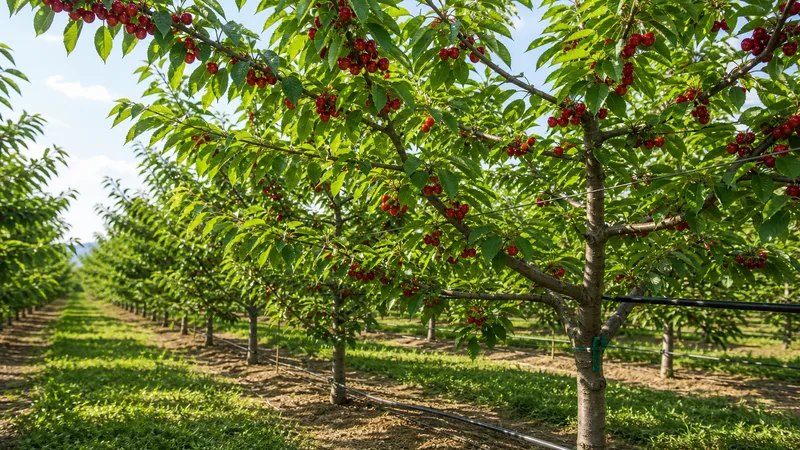
Summer pruning should open the canopy without stripping it
Postharvest pruning should first remove branches that are crowded, upright, crossing, heavily shading the center, or no longer useful. A branch that still carries good position and future fruiting value may need direction or shortening rather than complete removal.
Heavy pruning can remove too much leaf area and may stimulate unwanted regrowth. A steadier approach is to start with the branches that most block airflow, light, and harvest access. The principle is similar to citrus canopy pruning for light and harvest access: airflow is useful, but an empty canopy is not the goal.
After harvest, drainage can matter more than watering
Cherry roots are sensitive to poor drainage. If harvest is followed by hot, wet weather, check drainage channels, low spots, and row middles quickly. Long periods of wet soil can weaken roots, while prolonged dry soil can reduce leaf function. The goal is a stable root zone, not a constantly wet orchard.
Short dry periods after harvest may help control excessive vigor in some orchards, but that does not mean the trees should be neglected. Read the soil, leaves, and weather together. Irrigation, drainage, shallow cultivation, and groundcover management all affect how well the tree recovers.
Postharvest notes are better than next-year guesswork
The best records after cherry harvest are not only yield totals. Note which canopy sections were slow to pick, which branches produced smaller fruit, which rows drained poorly after rain, and which trees held strong leaves after harvest. Those details show where pruning, drainage, crop load, or harvest routes need adjustment.
Harvest is not the end of the cherry season. It is the start of the next one. When sorting, tree recovery, leaf function, and canopy work are connected, the orchard is less dependent on last-minute fixes next spring.