When a citrus canopy becomes tall and crowded, pruning is not the only job that gets harder. Light stays on the outside, fruiting wood shifts outward, and picking routes become slower. Citrus pruning works best when it serves a clear purpose: bring light into the canopy, keep access open, and leave room for useful renewal growth.
This article builds on the broader citrus growing guide. The goal is not to make the tree look bare. It is to remove the branches that block light, cross through the canopy, hang into access lanes, or keep the useful fruiting area from renewing.
Start by checking whether light reaches the inside
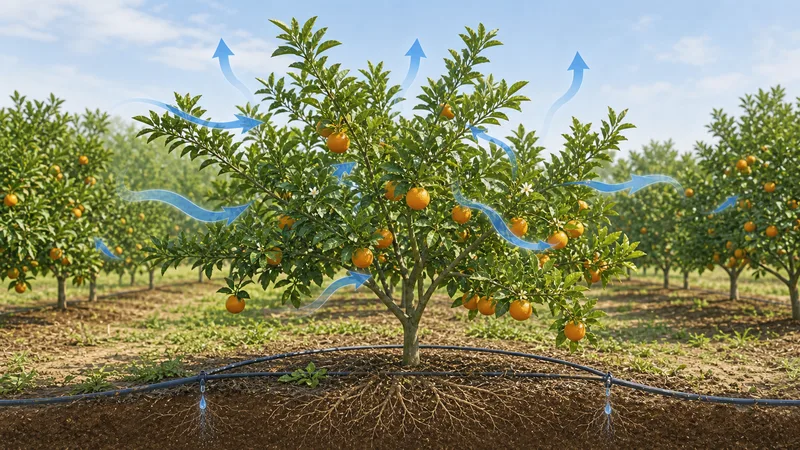
Many citrus trees look vigorous from the outside while the inner canopy becomes weak and shaded. When the outer layer gets too dense, fruiting shifts toward the edge of the tree and harvest work becomes more awkward. Before cutting, look from the row, from under the canopy, and from several sides of the tree.
A large correction is not always the best first step. It is often better to remove obvious crossing, inward-growing, overlapping, or long-shading branches first. The aim is not an empty tree. The aim is a canopy where the remaining leaves and fruiting wood work better.
Young trees and bearing trees need different pruning decisions
Young citrus trees need structure. The main job is to build a balanced framework, keep tree height from getting away too early, and leave enough useful leaf area for growth. Heavy trimming just to make the tree look tidy can slow the tree down.
Once the tree is bearing, the pruning question changes. The grower has to balance fruiting, renewal wood, light, and harvest access. That is similar to the thinking in the peach guide on pruning and renewal wood: build the frame first, then manage crop load and useful branch replacement.
Airflow does not mean stripping the canopy
Better airflow is not the same as severe pruning. Citrus is evergreen, and leaves are part of the tree’s working system. If too much canopy is removed at once, a vigorous tree may respond with strong shoots that quickly make the structure crowded again.
A steadier approach is to remove part of the shading and poorly placed wood each time, while keeping well-positioned fruiting and renewal branches. After pruning, watch where new shoots appear. That tells you whether the canopy was opened in the right places or simply stimulated into another crowded flush.
Picking routes belong in the pruning plan
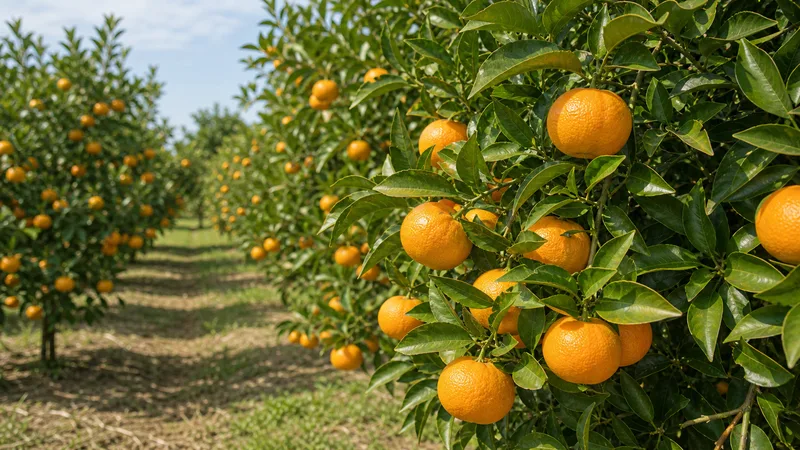
At harvest, a dense outer canopy, low-hanging limbs, and narrow row access all slow the work down. Fruit can also be rubbed or bumped during picking and movement. When pruning, it helps to ask whether a person can reach the fruit, place a container, and move through the row without fighting the branches.
The same practical idea appears in grape canopy and cluster-load management. Citrus and grapes grow very differently, but fruit quality and harvest work both depend on light, airflow, and access distance.
Record where the canopy closes first
Citrus pruning is not a one-time correction. Variety, rootstock, row spacing, irrigation rhythm, and crop load all affect how new shoots grow after pruning. The most useful record is not only how much wood was removed, but where the canopy closed first afterward.
If the same side, height, or row space becomes dense every year, the issue may not be pruning alone. Tree height, spacing, water rhythm, and crop load may all be part of the pattern. Keeping those notes makes the next pruning pass more precise instead of another late rescue job.