Kiwifruit pruning should not begin with the question of how many canes can be left. A vigorous canopy can still have poor renewal, and a tidy-looking cut can still leave the vine short of useful wood for next year. The first job is to separate cane roles: fruiting wood, renewal wood, and canes that are simply crowded, crossed, shaded, or badly placed.
This is the pruning-focused companion to the main kiwifruit growing guide. The main guide stays useful for establishment, trellis setup, water, fruit quality, and harvest handling. This page is narrower: winter pruning, renewal canes, summer tying, and keeping fruiting wood easy to replace.
Sort cane roles before making cuts
Winter pruning is the best time to read cane position and maturity because leaves are out of the way. Instead of cutting by length first, sort canes into three working groups: canes that can carry next season's fruit, strong canes kept for renewal, and canes that should be removed because they are weak, crossed, crowded, or poorly placed.
Fruiting canes need good position, maturity, and light. Renewal canes need to sit near the places they will replace. If every good new cane is removed, next year's crop has to rely on older or weaker wood, and the trellis becomes harder to keep balanced.
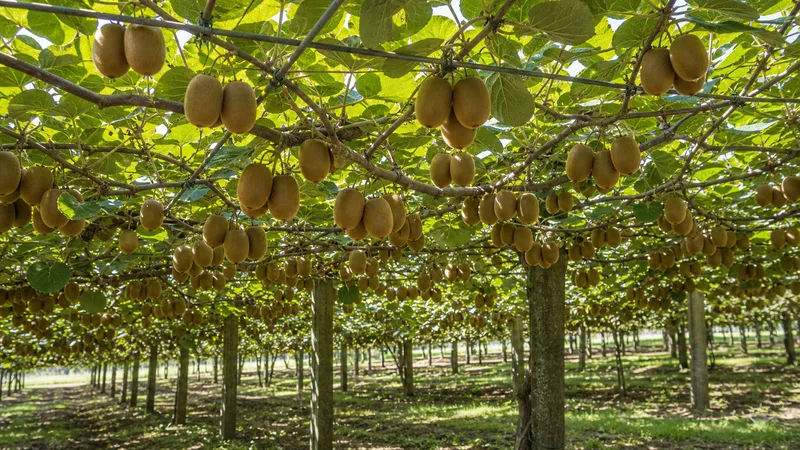
Renewal canes need good positions early
A kiwifruit trellis becomes difficult when renewal wood is treated as an afterthought. Better pruning starts during the growing season, when promising new canes can be guided into useful positions and kept in enough light to mature well before winter.
More renewal canes are not always better. Too many thicken the canopy; too few leave no replacement wood. A practical check is whether each section of cordon has a usable cane nearby without overlapping the fruiting zone or hiding the fruit layer.
Use summer tying to prevent winter repair work
Summer work should not wait until the canopy has already become a tangle. Tie and guide new shoots in stages, secure canes that are moving in wind, and remove or redirect obviously crossed or shaded growth. The goal is not to strip leaves away; it is to keep the trellis readable.
When summer growth is too strong, heavy cutting is not always the answer. First check canopy density, cane count, light, and crop load. The same annual logic appears in the peach renewal wood guide: pruning is a system for replacing wood over time, not a single cleanup event.
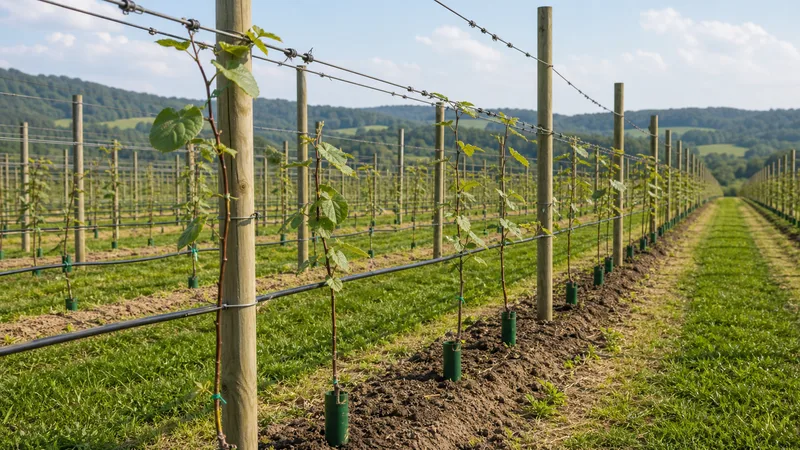
Do not hide fruit inside a thick leaf layer
Once fruit is set, canopy work should keep fruit visible enough to inspect and harvest. Fruit buried deep inside a leaf layer is harder to judge for size, maturity, and picking order. At the same time, cutting the vine too open can remove useful leaf protection and push more unwanted regrowth.
A useful canopy lets each trellis section be read clearly: fruiting cane, renewal cane, leaves, fruit, and access all have a place. This is close to the idea in the grape trellis guide, where vine balance matters more than simply filling every space.
Photograph pruning results, not just the crop
Take photos from the same spots before winter pruning, after winter pruning, before flowering, during fruit sizing, and after harvest. Add short notes on which canes were kept for fruiting, where renewal canes were left, and which trellis sections gave the most even fruit.
If the same section needs major correction every year, the problem is usually not one bad cut. It is more often a missing renewal rhythm. Once cane roles are clear, this page supports the broader kiwifruit guide instead of repeating the general message that kiwifruit needs a trellis.