The last stage of an onion crop is easy to rush. Once the tops begin to fall, the bulbs may look almost ready, but harvest quality still depends on water transition, skin maturity, careful lifting, and patient curing. Pulling too early can leave the neck and outer layers soft, while waiting too long can expose the crop to wet soil and uneven drying.
This article continues from the broader onion growing guide. Early management focuses on seedlings, spacing, and steady growth; late management turns those decisions into harvest timing, curing, sorting, and storage quality.
Top fall is a signal, not a single rule
When onion tops fall over, the crop is moving toward maturity, but the field may not be uniform. Edges, low spots, and slower-draining beds can behave differently from the center. A distant view of yellowing leaves can hide bulbs that are still soft-necked or patches that are already drying faster.
After top fall begins, check several parts of the bed. Look at bulb size, outer skin drying, and whether the neck is beginning to tighten. If many plants still have heavy green tops and thick necks, harvesting too quickly can make curing harder.
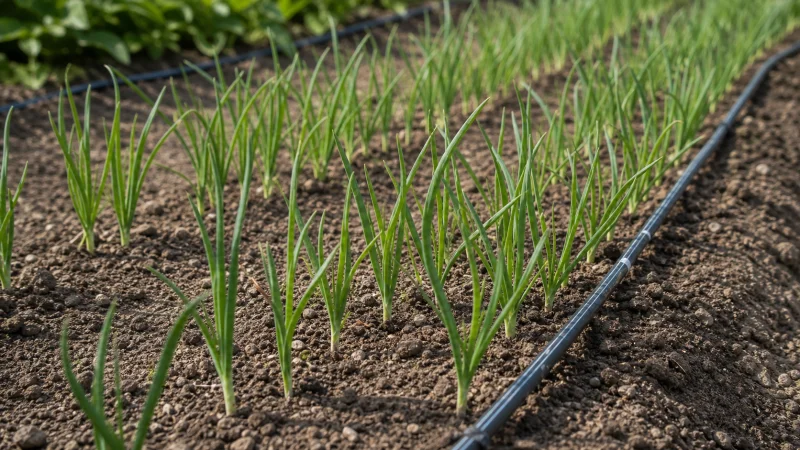
Moisture should ease down before lifting
Near harvest, onions do not need heavy watering to keep tops growing. If the bed swings between wet and dry, the neck and outer layers may not dry evenly. Low wet areas can also make curing more difficult after lifting.
The same late-season logic appears in garlic harvest and curing decisions. Root and bulb crops do not need to look greener at the end. They need a steady transition from active growth to firm bulbs and dry outer layers.
Lift gently and cure with airflow
Onions can lose storage quality through rough handling. When the outer skin is still drying, bruising, hard pulling, or tossing bulbs can create problems that only show up later. In a small bed, loosening the soil before lifting is often better than pulling hard from the tops.
After harvest, avoid packing bulbs tightly right away. Spread them in a shaded, airy, rain-protected place so the neck and outer layers can continue drying. Strong sun and damp piles both create problems; one can stress the surface, while the other slows drying and traps moisture.
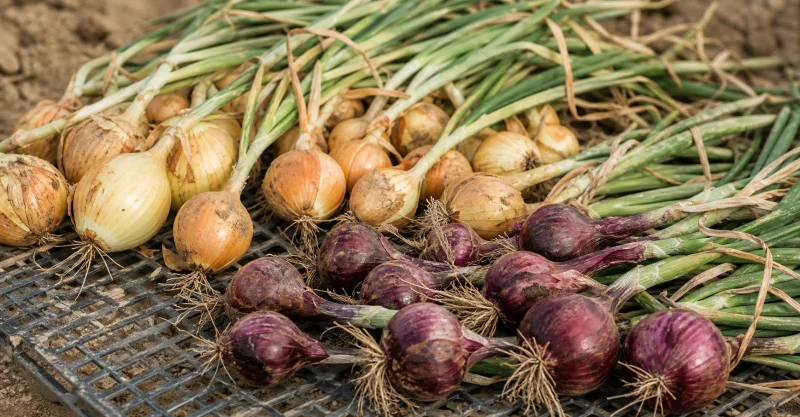
Sort before storage, not after problems spread
Once onions are cured, they should not all be treated the same. Bulbs with broken skins, thick necks, pressure marks, or remaining dampness are better used first. Bulbs with firm necks, dry skins, and similar size are better candidates for longer storage.
This is similar to potato harvest checks and careful handling: harvest is not the finish line, but the start of storage quality. Separating weaker bulbs early keeps a few poor keepers from affecting the rest of the batch.
Keep notes on where drying was slow. Record which beds fell late, which spots stayed wet, and which batch showed more skin damage after curing. Those notes are more useful next season than the harvest date alone because they point back to spacing, moisture, and drainage decisions.