A bed of green onions can look ready from the path while still holding several different stages in the same row. A thicker run may be easy to lift and bunch today; a shorter stretch nearby may be better left in place; another section may simply need a clearer look at the base before a decision is made. Harvesting the whole bed as one event turns those differences into an avoidable sorting problem.
A calmer approach is to let the row set the pace. Choose a short section that can be lifted, checked, and carried away without losing track of where the pass began. The goal is not to make every green onion reach one exact size. It is to leave a clean, understandable harvest line for the next visit.
Start where the row is already easy to read
Before lifting the first plant, walk along the bed and look from the leaves down to the soil line. Notice where the stems are standing in a similar pattern, where the row becomes thinner, and where plants begin to overlap or hide one another. This is a field comparison, not a demand for uniformity. It helps a grower choose a section that can be handled without repeatedly stopping and starting.
Begin at a row end or another visible reference point. Moving from a known edge makes it easier to see where the harvest pass should stop. A random handful taken from several places may fill a crate, but it leaves little information about what remains in the bed.
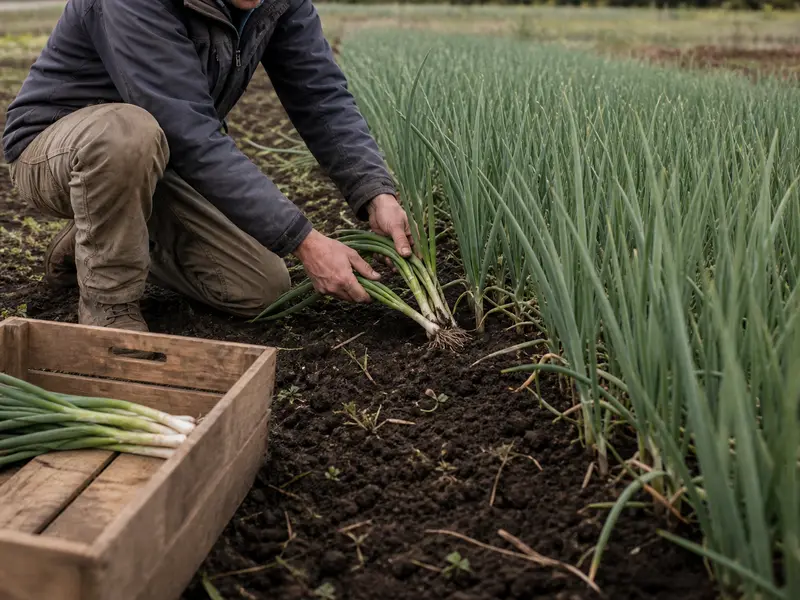
Keep the stopping point visible
After a short section has been lifted, take a moment to look back at the ground rather than stepping immediately into the next plants. A visible stopping point gives the row a simple history: this stretch was ready to come out, and the next stretch still belongs to the next decision. It is especially useful when more than one person returns to the same bed.
Do not use the harvest line as a promise that every remaining plant has a problem. A mixed section may only need more time or a second look. The practical distinction is between leaving a section deliberately and leaving it because the work became hard to follow.
Separate fresh bunches from a storage crop
Green onions are usually handled for freshness, so their leaves, roots, and clean appearance remain part of the harvest decision. Lift and place small groups carefully enough that soil and damaged leaves do not become hidden under a deep pile. A simple crate or tray is useful because it keeps the work visible while the row is still being harvested.
This differs from a mature bulb-onion crop prepared for curing and storage. The onion curing and storage guide follows that later, drier handoff; green onions are being read for a fresh-use route instead. Keeping the distinction clear prevents a general onion rule from being applied to the wrong harvest.
The next pass begins with what you left behind
At the end of the pass, the useful record can be very small: where the lifted section ended, which side of the bed looked more even, and which short stretch deserves a return look. The remaining onions do not need a label on every plant. They only need to remain readable enough for the next harvest to start from a real observation rather than from a vague memory.
Where an allium bed is cut rather than lifted, the after-harvest question changes. The garlic chives regrowth note looks at a bed that stays rooted after cutting. Green onions leave the bed with the harvest, but both crops benefit when the worker can still see what was taken and what will be revisited.