Carrot root shape matters, but in summer and early fall the first challenge is often simpler: getting an even stand. Hot weather dries the surface quickly, carrot seed is small, and emergence can be slow. If the first few days swing between wet and dry, the bed may end up with gaps, uneven seedlings, and difficult thinning.
For the full discussion of carrot root shape, forking, splitting, and harvest checks, start with the main carrot growing guide. This article is narrower: it focuses on warm-season sowing and how to keep the seedbed stable long enough for seedlings to emerge.
In warm weather, the surface layer must not keep drying out
Carrot seed should not be buried deeply, but shallow sowing exposes it to drying. Before sowing, the bed should already have useful moisture. After sowing, a thin and even cover of fine soil helps the seed stay connected to that moisture without being buried too heavily.
Do not rely on a hard watering after sowing to fix a dry bed. Heavy water can move seed, crust the surface, or leave uneven cover. Light, repeated watering is usually safer when weather is hot. This is similar to warm-weather spinach emergence: the point is not simply more water, but a surface that stays suitable for germination.
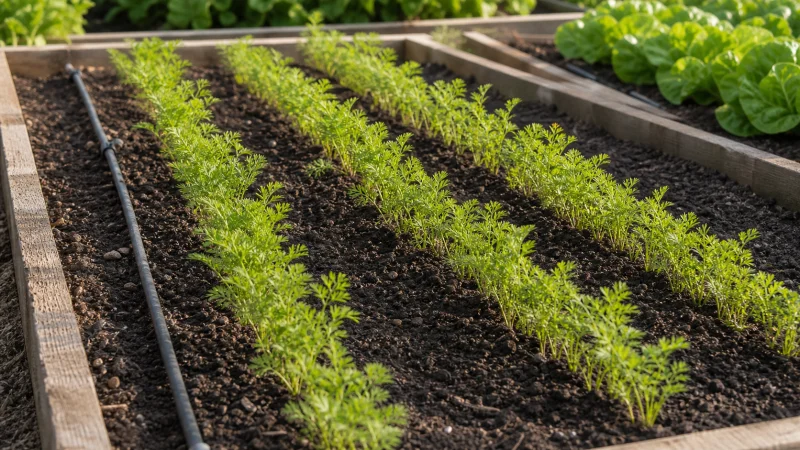
Temporary cover should help emergence, not trap seedlings
In hot sowing windows, a light cover such as straw, thin mulch, or shade cloth can reduce surface drying during the most sensitive period. The purpose is to help seed survive the days before emergence, not to keep young carrots in a dark, stagnant space.
Once seedlings begin to appear, adjust or remove the cover gradually so the plants get light and airflow. Remove it too late and seedlings may stretch; remove it too suddenly and the surface can dry hard. The right timing depends on weather and bed moisture, not a fixed number of days.
Ridges or flat beds still need drainage and loose soil
Summer and early fall sowings often face heat, short storms, and quick changes in soil moisture. Flat beds are easy to manage in small gardens, but repeated watering can tighten the surface. Ridges can improve drainage and keep the root zone looser, especially where rain comes in bursts.
Whichever bed shape is used, avoid low spots that crust after rain. A young carrot root begins choosing its path early. What looks like slow emergence above the surface may already be a root-zone problem below. This is related to radish sowing and harvest timing, but carrots give even less room for late correction.
Thin early before crowded seedlings bend the stand
Growers sometimes sow a little more seed in warm weather because emergence is less reliable. That can reduce empty rows, but it also makes early thinning more important. Once the first true leaves are present, remove the weakest and most crowded seedlings first.
A second thinning pass can come later when plant size is clearer. The goal is not to save every seedling. It is to leave enough room for the main roots to develop without pushing each other off line. Carrot tops may still look small while the roots are already setting direction.
After the roots begin sizing, moisture swings still matter
Getting seedlings up is only the first step. If the bed dries too hard and then receives heavy water during root bulking, roots can become rough, split, or uneven. Moisture rhythm should stay steady from emergence through sizing, not just during the first week.
Near harvest, pull a few roots before deciding that the whole bed is ready. Check length, diameter, surface condition, and cracking. This is similar to trial digging potatoes before harvest: underground crops should not be judged only from the leaves.
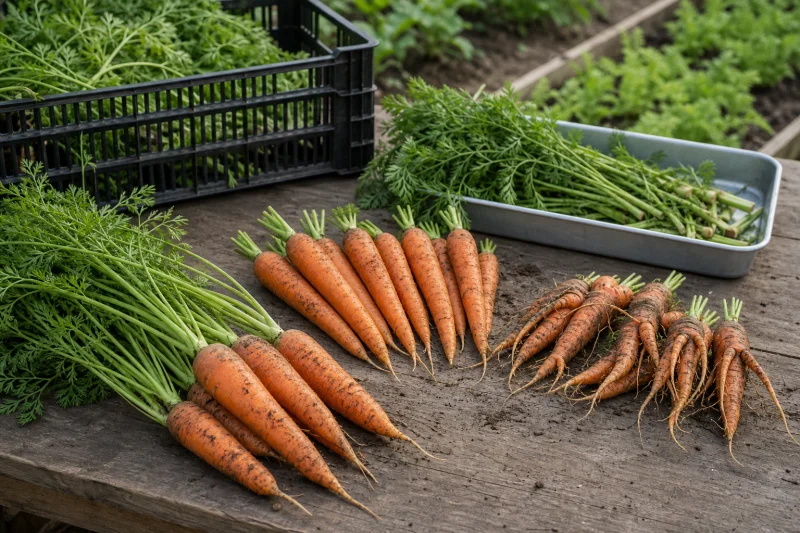
Summer carrots need a smaller, more flexible plan
Warm-season carrot sowing carries more risk than cool-season sowing. Instead of filling the whole bed at once, a smaller first sowing can show whether moisture, cover, and timing are working. The next sowing can then be adjusted rather than repeating the same problem.
The practical goal is not heavier management everywhere. It is careful early management: fine soil, shallow cover, steady moisture, short-term shade, and timely thinning. Once emergence and early spacing are stable, root shape and harvest quality have a much better chance.