Yellow chives are not a separate crop from garlic chives. They are produced when new chive growth is kept away from light so the leaves stay pale, tender, and mild. The difficult part is not simply making leaves yellow; it is keeping them straight, clean, and unrotted while they grow in a dark, humid space.
The main garlic chives guide explains crown recovery, row airflow, and repeated cutting. The winter rest and covering guide focuses on root strength before protected growth. This article looks at yellow chives specifically: cutting back green leaves, excluding light, managing air, controlling moisture, and choosing the right harvest window.
Strong crowns come before pale leaves
Yellow-chive forcing works best when the parent chive plants have enough stored strength. After a green chive cut, the crown needs time to rebuild. Rows should be clear, the bed should drain well, and old leaves or weeds should not be trapped under the future cover.
Choose chive types that tolerate low light, grow upright, and do not collapse easily after softening. Soil should be loose enough for roots to breathe, but firm enough to support the plants. Much of the final quality is decided before the black film, straw cover, or soil cover goes on.
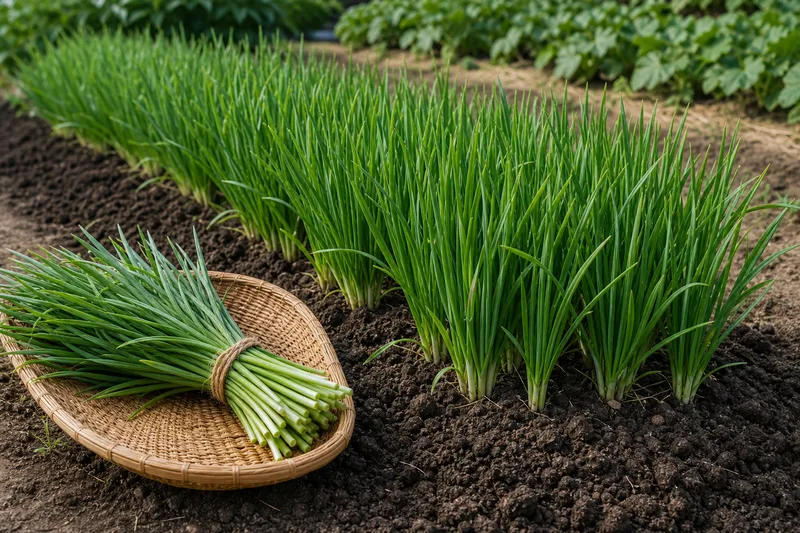
Cutting back green leaves needs a safe stub
The first cut removes green leaves that have already seen light so new growth can develop under darkness. Do not cut so low that the crown or growing point is injured. A small above-ground stub, often around 4-5 cm, gives the plant a safer point to regrow from.
After cutting, avoid sealing the bed into a wet, airless space immediately. Give the cut surface a short recovery period before soil covering, straw covering, or black-film covering begins. That short transition matters because later growth happens under higher humidity and lower airflow.
Different covers still need the same balance
Yellow chives can be produced with repeated soil covering, straw shelters, small black-film tunnels, or other light-blocking covers. The materials differ, but the balance is the same: keep direct light away from the new leaves while leaving enough controlled ventilation to prevent heat and moisture from building up.
Soil covering can soften the leaf sheath, but the cover should not bury the heart of the plant too deeply. Soil that is too thick, compacted, or wet can suffocate young growth. Straw and black-film systems are easier to set up, but edges must be sealed against light while vents or offset openings keep the inside from becoming stagnant.
Darkness should not mean a sealed tunnel
Yellow chives need darkness, but they do not need a permanently sealed tunnel. The first few days after covering can be kept very dark. Once new growth begins to stretch, short ventilation periods in the morning or evening help release moisture without exposing the crop to strong light.
Moisture is a quality issue, not only a growth issue. Tender yellow leaves are easily damaged by dripping covers, standing water in furrows, excessive humidity, or heat trapped under film. Water should follow the soil: moist enough for active roots, but never waterlogged. The same basic idea appears in onion curing and harvest handling, where moisture control shapes the quality after the field work is done.
Harvest by feel, not only by the calendar
Under small tunnels or straw covers, yellow chives may be ready after a few weeks, but the exact timing depends on temperature, crown strength, and the covering method. Days after covering are only a guide. Height, color, firmness, and leaf texture tell more about whether the crop is ready.
Harvest when leaves are pale, tender, and still holding shape. Avoid cutting during very wet periods if possible, and handle bunches gently. Repeated washing can damage soft leaves, so remove soil and broken or yellowing pieces carefully before bundling.
After one cut, let the crown rebuild
Yellow chives should not be forced endlessly without recovery. After harvest, remove the cover, let the plant return to light, and support crown rebuilding with measured water, nutrition, and loose soil. Too many covered cuts in a row can weaken the stand even if the first harvest looks good.
For a small trial, keep the cycle simple: grow a strong chive stand first, leave a safe stub when cutting, block light without sealing out air, manage humidity carefully, and give the crown light again after harvest. Good yellow chives are not made by darkness alone; they come from a full cycle that keeps the plant alive and balanced.