Chinese cabbage can lose quality quickly after harvest, especially when heads are cut warm, wet, or over-mature. A field that looked acceptable in the morning can turn into cracked heads, wilted wrapper leaves, bruised ribs, or soft areas if harvest, cooling, sorting, and packing do not match the sales route.
The main Chinese cabbage growing guide covers spacing, moisture, and head uniformity before harvest. This guide starts when the crop is nearly ready and focuses on deciding when to cut, how to reduce field heat, and how to sort heads before they enter delivery or short storage.
Harvest timing is a quality decision, not only a size decision
Chinese cabbage should not be left in the field just because the heads can still gain size. Over-mature heads often handle poorly, split more easily, and lose storage strength faster. Heads cut too early may be lighter and looser, but heads cut too late can lose market quality even if yield looks higher.
The right harvest window depends on the market. Same-day local sale can accept a slightly different maturity from boxed delivery or short cold storage. Walk several zones of the field and check head firmness, wrapper leaves, base condition, and whether the batch is maturing evenly.
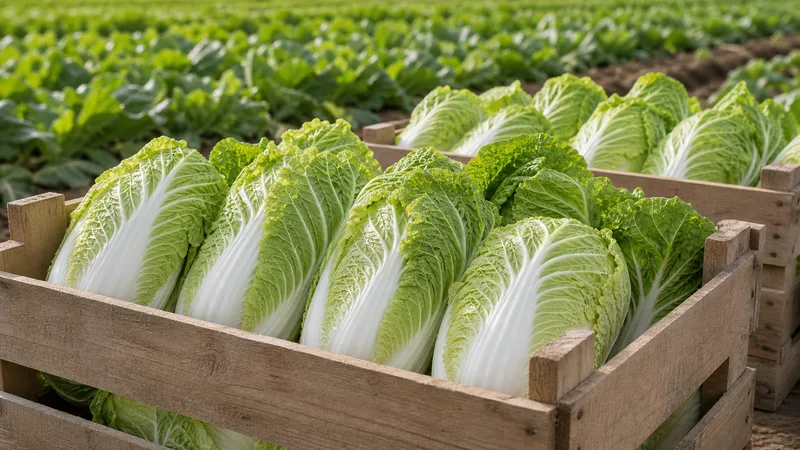
Cut when leaves are dry and field heat is lower
Warm heads with wet leaf surfaces are harder to hold. Harvesting after rain, heavy dew, or midday heat increases the work needed later because water and heat stay trapped between leaves. If possible, cut during a cooler part of the day after leaf surfaces have dried.
When rain is forecast and the crop is ready, it may be better to harvest a marketable portion before the weather changes. Waiting through a wet period can create more trimming, more rejected leaves, and a shorter shelf life.
Cooling starts before the crop enters storage
Precooling is not only a facility step. It starts with shade, air movement, and keeping harvested heads out of direct sun. If cold storage is available, move sorted heads there quickly. If not, keep the crop in a shaded, ventilated place and avoid thick piles that trap heat.
Chinese cabbage holds a large amount of water. Cooling should reduce field heat without drying the head. A head that wilts during handling may still be edible, but the wrapper leaves and cut base will make it look older than it is.
Sort before packaging hides the problems
Sorting should happen before heads are wrapped or boxed. Remove loose, yellowing, torn, or heavily bruised outer leaves, but do not trim so aggressively that the head loses protection. Separate cracked, soft, uneven, or rain-stressed heads from the better batch.
This is where harvest records become useful. If one part of the field gives more split heads or more trimming waste, note it for the next crop. The cause may be spacing, moisture swings, late harvest, or uneven head maturity.
Packaging should protect without sealing in heat
Packaging needs to match the delivery path. Heads going to nearby buyers may need simple protection from bruising and moisture loss. Heads going through longer delivery need more consistent sizing, cleaner cuts, and packaging that limits dehydration without sealing in trapped heat.
Plastic wrap, bags, crates, and boxes can all work in the right setting. The key is to pack only after the crop has cooled enough and after damaged heads have been removed. Packing warm heads too tightly can make a clean harvest look tired by the time it reaches the buyer.
Harvest notes improve the next planting plan
Postharvest quality often points back to field decisions. If heads are uneven, compare the harvest with the earlier spacing and moisture checks in the base guide. If the crop holds poorly even when heads look full, the issue may be late harvest, wet cutting, poor cooling, or mixed maturity inside one batch.
Good cabbage handling is practical rather than complicated: cut at the right maturity, keep the crop dry and cool, sort honestly, and package for the actual sales route. Those steps protect the value already built in the field.