A celery bed can look beautifully full from the path and still be difficult to manage inside the row. The first warning is often not weak growth, but the small things workers stop being able to see: the base of the stalks, the soil surface, and whether water is sitting in one strip while another strip dries.
This is a field-note article rather than a full celery guide. For the crop cycle from seedlings to harvest, use the celery growing guide. Here the question is narrower: after transplanting, is the spacing still open enough for roots, airflow, and hand work?
Full rows are not always useful rows
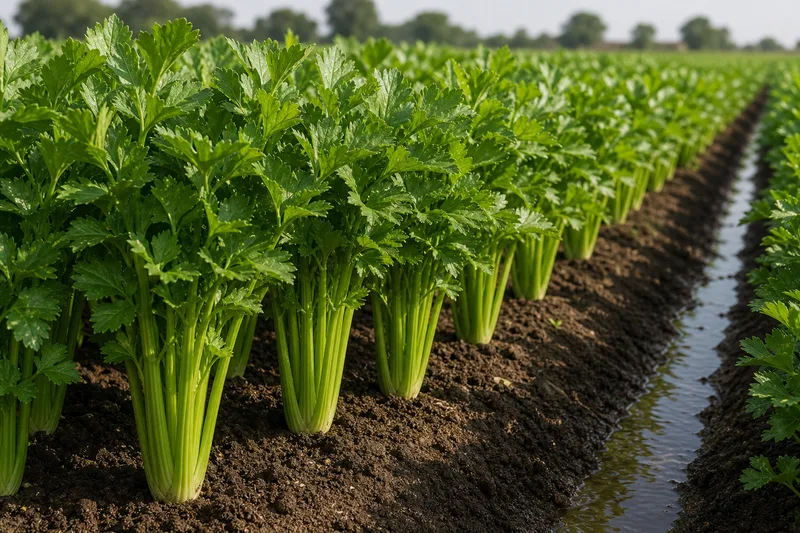
Close spacing can make a young celery bed look efficient. Later, the same bed may become hard to ventilate and harder to water evenly. If leaves from neighboring plants close too early, the row base stays hidden, and the grower has fewer chances to notice compacted soil, weak plants, or uneven moisture.
A useful row lets the canopy fill gradually. Workers should still be able to see down the line, check the plant base, and move water or mulch decisions by actual condition instead of guessing from leaf color above.
Check the root zone before judging the leaves
Celery reacts quickly when moisture swings, but the leaf surface can mislead. Midday droop may be heat stress rather than a dry bed; dark green leaves may still sit over a root zone that is too wet. The better check is the top root layer: does it crumble, smear, or hold steady moisture?
If the bed is dry only on the surface, heavy watering can be unnecessary. If the root zone is sticky and sealed, more water will not solve the problem. This is where row spacing matters: an open base makes the soil readable.
Use a short reset before the bed closes
There is a brief window after transplanting when the bed can still be corrected. Weak gaps can be marked, irrigation lines checked, and crowded spots thinned or adjusted before the canopy hides the row. Waiting until stalks stretch makes every fix rougher.
A simple field pass can answer four questions: which rows dry first, which rows stay wet, where plants are too crowded, and where workers cannot inspect the base without bending leaves. Those answers are more useful than one general watering rule for the whole block.
Harvest texture starts with access
Later celery quality is often discussed as stalk tenderness or toughness, but field access is part of that result. If spacing and water rhythm make the bed hard to inspect, harvest decisions become less precise and texture problems are easier to miss.
The later-stage article on celery stalk texture and harvest timing covers that final window. This earlier field note is the quieter part of the same work: keep the row readable while there is still time to adjust it.