Cucumber seedlings often look strong when the leaves are large, but transplant success depends more on the root ball, seedling age, weather, and steady moisture after planting. If plants are held too long in trays or pushed too hard right after transplanting, early growth can pause before the vines ever reach the trellis.
This article fills in the step before the main cucumber growing guide. The broader guide covers vines, airflow, and harvest rhythm; here the focus is on seedling quality, transplant timing, root recovery, and what to watch before training begins.
Do not let the seedling stage run too long
Cucumbers like warm growing conditions, so sowing time should work backward from the real transplant window. Protected spring crops may start earlier, while open-field or autumn crops need local frost, heat, and cooling patterns considered. A calendar date is less useful than asking whether night temperature, soil temperature, and the next few days of weather are stable enough for planting.
A sturdy cucumber seedling is not simply the largest plant in the tray. Look for a root ball that holds together, open leaves, short internodes, and active growth without stretching. When seedlings stay in cells too long, roots can circle at the bottom and recovery after transplanting may slow down.
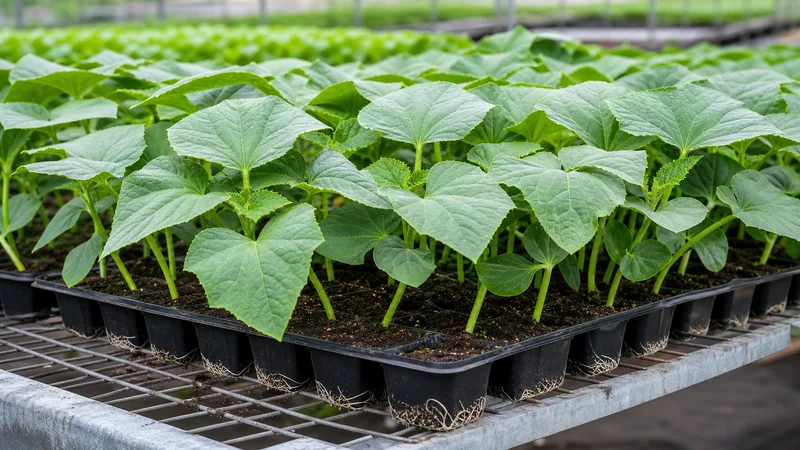
Prepare the bed before the plants arrive
The bed should not swing between dry and wet before transplanting. Dry soil slows root contact, while a saturated bed can leave roots short of air. A steadier approach is to plant into evenly moist soil, keep the root ball intact, and water in well enough for roots and soil to settle together.
Weather matters too. Planting after frost risk has passed is only part of the decision; strong wind, long rainy spells, and midday heat can all make recovery harder. Late afternoon planting on a stable day often gives seedlings a gentler start. The same principle appears in the pepper transplant recovery guide: let roots adjust before asking the plant to grow hard.
Give recovery time before heavy training
In the first days after transplanting, watch the growing point, new leaves, and leaf firmness. When the roots begin to work, new leaves open more evenly and midday wilt becomes less severe. Moisture should stay steady, but frequent heavy watering or early heavy feeding can create more stress than growth.
If the plant has not settled, rushing into strong fertilizing, tight pruning, or early trellis work can push it off balance. It is better to stabilize bed moisture, airflow, and night temperature first, then move into training and fruit-setting management as the plant starts growing again.
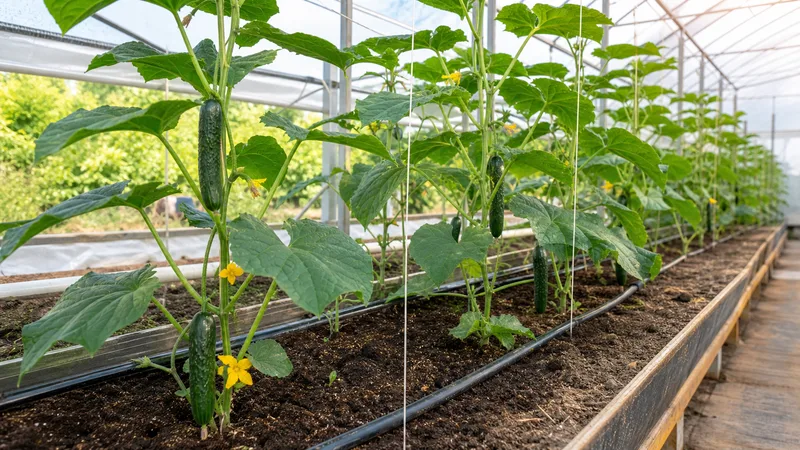
Three signs to check before training
First, look for new leaves and active roots. New leaf expansion usually means the plant is connecting with the bed. Second, check whether leaves still wilt for long periods during the day. If they do, check moisture, root condition, and ventilation before adding fertilizer. Third, watch internode length. Low light, warm nights, and too much water can all stretch seedlings.
Batch timing matters as well. Similar to lettuce succession planning, cucumber seedlings should not be forced into one oversized batch if the transplant window is narrow. Smaller, better-timed batches keep seedlings at the right age and make later harvest rhythm easier to manage.
Keep notes from seedling to first training
Record sowing date, emergence speed, transplant date, recovery time, and the first training date for each batch. Later, compare those notes with harvest consistency. The best nursery schedule is usually the one that gives steady recovery and fewer gaps, not the one that simply produces the biggest seedlings.