Cucumber plants often look productive just before they become difficult to manage. The vines reach the top of the support, older leaves crowd the lower canopy, fruit hide behind tangled stems, and watering starts to swing between too much and too little.
The main cucumber growing guide covers the full crop from roots to airflow and harvest. The cucumber seedling guide focuses on transplant recovery before vines climb. This article starts later, when the first harvests are underway and the goal is to keep picking without exhausting the plant.
Lower vines before the canopy becomes a wall
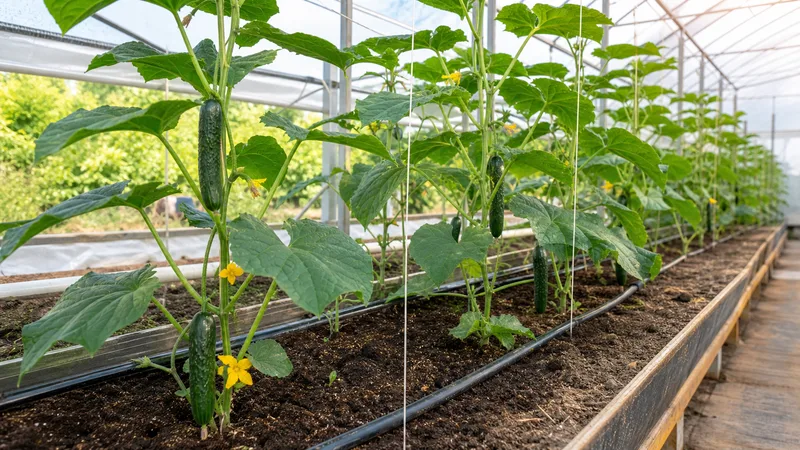
In supported cucumber systems, vines eventually need to be lowered or redirected so the growing point remains reachable and the fruiting zone stays in a workable position. Waiting until stems are pressed against the top support makes the job harder and increases the risk of breaking vines.
Lower vines gently, following the natural bend of the stem. Do not pull hard against the direction of growth. A smaller adjustment made on time is better than a large correction after the vine has become thick and stiff. The goal is a plant that can still be inspected, trained, watered, and harvested without stress.
Keep enough working leaves after lowering
One common mistake is lowering vines too far at once and leaving too little functional leaf area. Cucumber fruit are produced quickly, and the plant needs enough healthy leaves to feed the next set. If older leaves are piled on the ground or pressed together, they should be removed gradually, but the plant should not be stripped.
Remove leaves that are clearly old, shaded, or blocking work near the base. Keep enough upper and middle leaves to support current fruit and new flowers. This is similar to eggplant fruit-load pruning: pruning helps only when it keeps the plant readable without taking away too much working leaf area.
Water should follow fruit demand, not a fixed habit
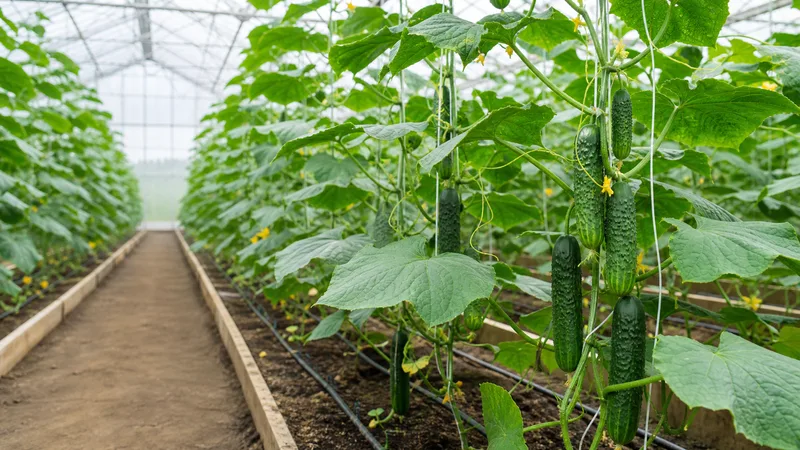
Cucumbers need steady moisture, especially once harvest begins, but steady does not mean flooding. Roots still need air. Heavy watering after a dry spell can push uneven fruit growth, while repeated wet conditions can weaken the root zone and make the lower canopy harder to manage.
Read the plant and the bed together. A thin growing point, drooping tendrils, dark stressed leaves, or narrow pointed fruit may signal water shortage. Pale soft growth, overly vigorous leaves, or bent fruit can appear when water and growth are out of balance. Use small, timely irrigation and avoid turning every hot day into a heavy watering event.
The same practical idea appears in tomato watering and fruit cracking: fruiting vegetables often suffer when water changes too sharply from one week to the next.
Picking late slows the next cucumbers
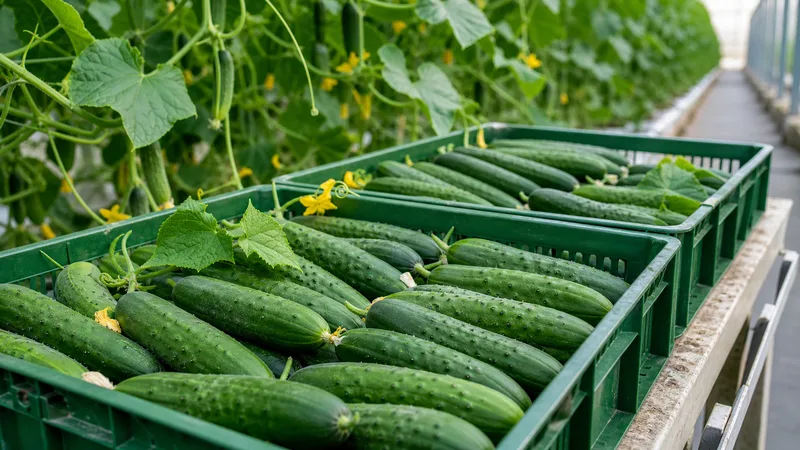
Cucumber harvest rhythm affects the whole plant. Fruit left too long draw energy from new flowers and young fruit. They also hide smaller cucumbers, making the next harvest less even. Regular picking is not only a harvest job; it is a crop-load decision.
Pick fruit at the size and texture suited to the use. Small fresh-use cucumbers, longer slicing cucumbers, and market fruit may have different size targets, but all benefit from consistent picking. If fruit quality starts to vary, look back at vine access, water rhythm, and leaf crowding before blaming the variety.
Use vine work to find future problems early
Every time vines are lowered, tied, or harvested, check the same details: Are fruit easy to see? Are old leaves piling near the base? Is water collecting under the canopy? Are the most productive vines also the hardest to reach?
These small checks help keep the crop from turning into a dense wall of leaves. Cucumbers are fast, so management needs to be frequent and light. Lower the vines before they are hard to move, water before the roots are under obvious stress, and pick before fruit become a burden on the next flush.