After the first heavy harvest, an eggplant row can look uneven very quickly. Some plants still push firm new shoots from the lower canopy, while others keep a few fruits but have thin leaves, weak stems, and an unstable root zone. Cutting every plant back to the same height treats those two situations as if they were equal.
This guide focuses on renewal after a crop has already carried fruit. For the broader crop cycle, keep the basic eggplant growing guide separate in your planning, then use this article when the question becomes whether an older plant is still worth carrying.
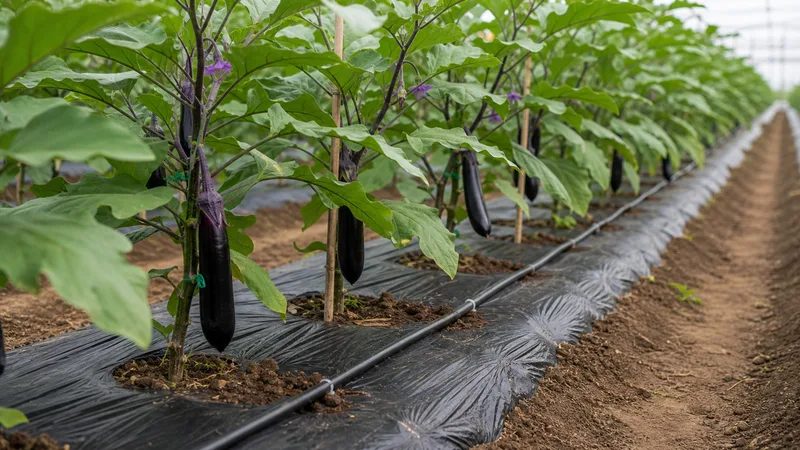
Decide whether the plant is still worth renewing
The first question is not how many fruits are still hanging. A better check is whether the lower leaves still have substance, whether the main stem base remains firm, and whether the root zone responds normally after irrigation. Plants that stay limp, flower weakly, or show long empty sections often produce weak shoots after pruning.
Plants with useful regrowth usually have visible buds or young side shoots in the middle or lower canopy. Their leaf color is still alive, and the soil does not swing from dry stress to standing wet. Those plants can be renewed in stages, allowing new shoots to take over instead of stripping the canopy all at once.
Prune for the shoots you want to keep
Regrowth pruning is not just shortening the plant. It is a way to redirect light and stored strength toward shoots that have a real chance of carrying the next fruit set. Before cutting, choose two or three shoots with good position, outward direction, and enough space to develop.
Remove weak inward shoots, low crowded growth, and tired fruiting sections that no longer support the plant well. Leave some healthy leaf area behind. If too much leaf surface is removed at once, water movement changes abruptly and the new shoots may slow down instead of taking off.
Restore water rhythm before pushing feed
A common mistake is to prune, see a smaller canopy, and immediately apply heavy water and fertilizer. After cutting back an older plant, the top demand is lower, while the root system may still be tired from the earlier fruit load and heat. The first goal is even root-zone moisture, not a sudden push.
Once new leaves expand and shoot tips are moving, feeding can return more steadily. The same principle appears in eggplant fruit load and pruning decisions: fruit numbers only make sense when the roots and canopy can support them together.
Keep the rebuilt canopy open
Renewed eggplant plants should not be allowed to turn into a dense tangle. As new shoots lengthen, remove crossing growth, low leaves that trap moisture, and shoots that grow back into the center of the row. The goal is a canopy where flowers, young fruit, and harvest paths remain visible.
If eggplant is grown near other warm-season crops, do not copy the same watering rhythm across everything. The recovery period can look similar to the adjustment described in the cucumber lowering and harvest guide, but an older eggplant plant often responds more slowly after pruning.
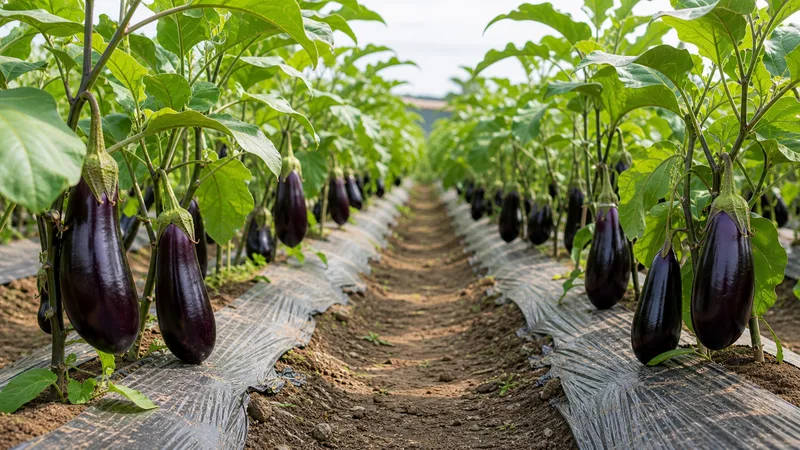
Let the first renewed fruit set stay light
The first fruit set after renewal should be modest. If too many fruits are held too early, the new shoots can become tired before they build enough leaf area. Watch fruit gloss, stem angle, and shoot posture, then increase the load only when the plant keeps growing while carrying fruit.
If flowers remain scattered, fruits become irregular, or shoots never regain lift, the crop may not be worth extending. Renewal is useful when it adds a stable harvest window. It is not useful when it keeps a tired row in production only to produce uneven fruit.